United Kingdom has accused Russia of undermining international peace efforts by escalating aerial attacks on Ukraine after Kyiv offered to extend a ceasefire aimed at reducing civilian casualties and creating room for negotiations.
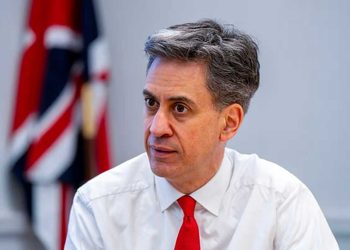
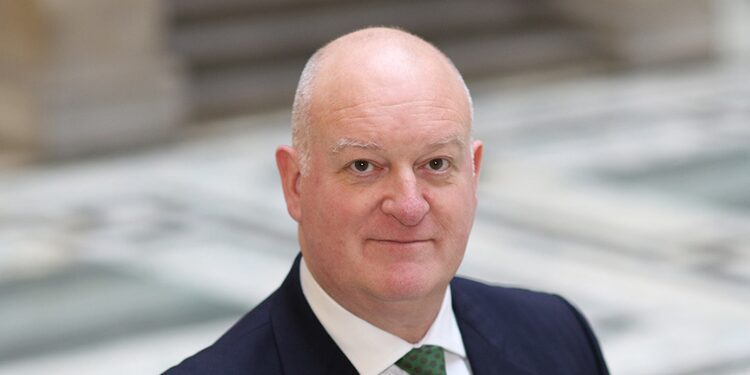
Speaking at the Organization for Security and Co-operation in Europe (OSCE), the Head of the UK Delegation, Neil Holland, condemned what he described as Russia’s continued targeting of civilians and civilian infrastructure, warning that Moscow’s actions contradicted any claims of pursuing peace.
According to Neil Holland, Ukraine had acted “in good faith” by supporting the extension of a ceasefire brokered by the United States in an attempt to reduce violence and encourage dialogue.
However, Russia responded with the largest aerial assault since the full-scale invasion began.
“In the 24 hours up to the morning of 14 May, Russia launched more than 1,470 drones and 56 missiles at Ukraine, the highest number fired in any 24-hour period since the full-scale invasion began.”
Neil Holland
The attacks reportedly caused significant casualties in Kyiv, where Ukrainian authorities said 24 people were killed and 47 were injured after a residential building was struck. Children were among the victims.
He argued that while Ukraine had sought ceasefires to protect civilians and support diplomatic efforts, Russia was instead using temporary pauses in fighting to regroup militarily and prepare further attacks. “Russia seeks ceasefires for convenience, spectacle and military advantage,” he added.
Neil Holland also pointed to a broader pattern of attacks across Ukraine, noting that civilian areas and essential infrastructure continued to face bombardment despite international calls for restraint.
According to figures cited by Neil Holland, at least 238 Ukrainian civilians were killed and 1,404 injured in April alone, marking a 13 per cent increase from March and the highest monthly civilian casualty figures since July 2025.
Holland further warned against allowing repeated attacks to become normalised.
He added, “If we lose our sense of shock, we weaken the principles this Organisation exists to uphold.”
“But credibility in peace efforts is demonstrated through actions, not declarations. Russia can show a willingness to move in that direction at any time: by stopping these attacks, by engaging constructively, and by choosing restraint over violence.”
Neil Holland
UK Expands Military, Humanitarian and Economic Support for Ukraine
Britain also reaffirmed its commitment to supporting Ukraine militarily and politically while continuing to work with international partners to ensure that attacks on civilians are not ignored
According to government figures, UK has now committed up to £21.8 billion in support for Ukraine since the start of Russia’s full-scale invasion. The package includes £13 billion in military assistance, up to £5.3 billion in non-military aid and a further £3.5 billion in export finance support aimed at reconstruction and defence projects.
British officials indicated that, the UK remains one of Kyiv’s leading international partners and will continue supporting Ukraine “for as long as it takes.”
On the diplomatic front, the UK and France are jointly leading efforts under the so-called “Coalition of the Willing” to support Ukraine’s future security arrangements.
UK, France and Ukraine also signed a Declaration of Intent relating to the possible deployment of multinational forces to Ukraine in the event of a ceasefire agreement.
British support has extended beyond military assistance into long-term political and economic cooperation through the UK-Ukraine 100 Year Partnership. The agreement covers areas including defence, technology, trade, science and recovery.
Military assistance remains one of the largest areas of British involvement. UK has pledged to sustain £3 billion annually in military aid to Ukraine until at least 2031.
British government confirmed that over £600 million in additional air defence support has already been committed this year alone, including funding aimed at protecting Ukraine’s energy infrastructure from Russian missile and drone attacks.
Furthermore, UK announced its largest-ever drone support package for Ukraine, with plans to deliver at least 120,000 drones throughout the year.
Moreover, under Operation INTERFLEX, Britain has now trained more than 62,000 Ukrainian personnel since the invasion began.
Beyond military support, Britain has continued expanding humanitarian and recovery assistance. UK has committed up to £577 million in humanitarian aid for Ukraine and neighbouring regions, including support for frontline communities, winter assistance programmes and demining operations.
British-backed demining programmes have reportedly helped clear more than one million square metres of land while providing explosive ordnance education to thousands of civilians.
In the energy sector, the UK has committed more than £490 million to strengthen Ukraine’s energy resilience, including repairs to damaged infrastructure and support for green energy projects.
UK has additionally supported efforts to investigate war crimes and hold Russian officials accountable. Funding has been provided to Ukraine’s domestic war crimes investigations, the International Criminal Court and programmes aimed at tracing Ukrainian children allegedly deported by Russia.
READ ALSO: Gold and Oil Drive Ghana’s Total April Exports To $11bn