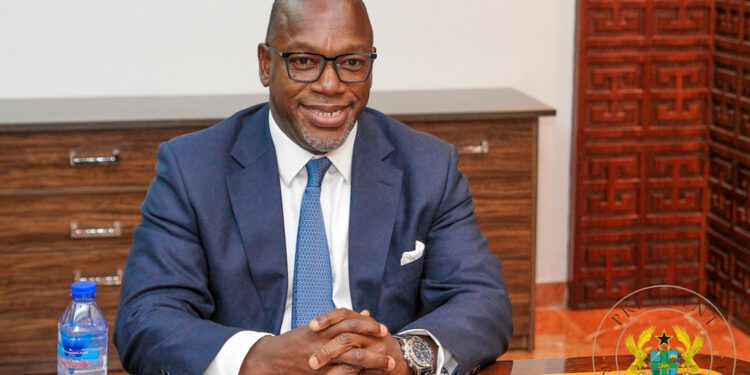
A defining moment may have arrived for Ghana’s economic future, and the nation cannot afford to let it slip away.
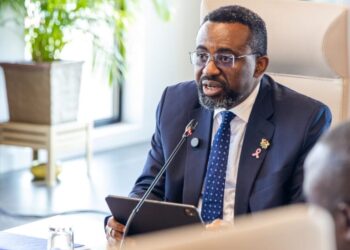
That was the powerful message delivered by Edward Effah, Founder of Fidelity Bank Ghana, as he addressed business leaders, policymakers and government officials at the 10th Ghana CEO Summit 2026.
Speaking under the theme, “The CEO-Government Compact 2026: Accelerating Ghana’s Economic Transformation,” Mr. Effah urged Ghana’s private sector and government to forge a structured partnership capable of driving industrialisation, job creation and sustained economic growth.
Addressing an audience that included President John Dramani Mahama, ministers of state, the Governor of the Bank of Ghana and leading CEOs, Mr. Effah described the current economic environment as a rare opportunity that must not be wasted.
“There is a tide in the affairs of men, which, taken at the flood, leads on to fortune. The tide is here. We have macroeconomic stability, demographic pressure, a regional opportunity, a technology window, and a government willing to lead. We can either take this moment, or watch it pass.”
Edward Effah
His remarks set the tone for what many attendees described as one of the most ambitious economic transformation proposals presented at the summit.
Ghana’s Strong Economic Foundation
Mr. Effah acknowledged the significant progress Ghana has made over the past decade.
According to him, the country’s Gross Domestic Product has expanded from approximately $56 billion in 2016 to an estimated $115 billion today, making Ghana the eighth-largest economy in Africa.
He also pointed to improvements in key economic indicators, including inflation, which currently stands at 3.3 percent, and gross international reserves, which have reached an impressive $13.8 billion.
These achievements, he noted, demonstrate the resilience of the Ghanaian economy and provide a strong foundation for accelerated development.
However, he cautioned that macroeconomic gains alone are insufficient if they do not translate into opportunities for ordinary citizens.
The Youth Employment Challenge
Despite the encouraging economic indicators, Mr. Effah highlighted a pressing national concern that continues to threaten Ghana’s future prosperity.
He revealed that approximately 1.5 million young Ghanaians are currently not in employment, education or training.
The figure, he argued, underscores the urgent need for deliberate action to create jobs and unlock productive opportunities for the country’s growing youth population.
“To transform our economy and to create jobs, we, the private sector and the government, urgently need to work together.”
Edward Effah
His call resonated strongly with summit participants, many of whom have repeatedly identified youth unemployment as one of Ghana’s most critical development challenges.
A New Compact for National Transformation
Central to Mr. Effah’s vision is the establishment of a CEO-Government Compact designed to align public policy with private sector investment and execution.
The proposal consists of two major pillars.
The first is the creation of a National Economic Transformation Council chaired by the President. The council would be responsible for setting measurable national targets, removing bottlenecks, accelerating reforms and monitoring implementation.
The second pillar is an operational Transformation Delivery Unit staffed by professionals and focused on priority sectors including agribusiness, technology and digitalisation, manufacturing, energy, infrastructure and financial services.
Mr. Effah further proposed that the Delivery Unit be established through an Act of Parliament to ensure continuity beyond political transitions.
Drawing inspiration from globally respected institutions such as Singapore’s Economic Development Board and Rwanda’s Development Board, he stressed the importance of building structures that endure and consistently deliver results.
The $25 Billion Investment Vision
Perhaps the most striking element of the proposal was the scale of investment being targeted.
Mr. Effah called for the mobilisation of approximately $25 billion over the next five years to support priority sectors and accelerate economic transformation.
The financing strategy would involve a blend of commercial banks, development finance institutions, international partners and direct private investment.
According to him, such an investment package is necessary if Ghana hopes to sustain economic growth between seven and ten percent annually, double its export base and absorb roughly 500,000 new entrants into the labour market each year.
The proposal represents one of the most comprehensive private sector-led development visions presented in recent years.
Private Sector Ready to Deliver
Mr. Effah insisted that Ghana’s business community stands ready to support a credible transformation agenda.
He cited the COVID-19 Private Sector Fund, spearheaded by Fidelity Bank, which mobilised GH¢48 million and delivered the Ghana Infectious Disease Centre within just 100 days.
He also referenced the successful implementation of the Energy Sector Levies Act, which helped resolve approximately GHS10 billion in sector indebtedness.
These examples, he argued, demonstrate what can be achieved when government and business work together toward a common objective.
“With a clear transformation agenda which identifies priority areas, investment needs and returns for investors, the private sector will step up to the plate, work with government and deliver, as it always does.”
Edward Effah
As Ghana seeks to chart its next chapter of development, the economic conditions are aligning, the opportunities are visible, and the institutions can be built. The question now is whether leaders across government and business will seize the tide that has arrived and turn it into lasting prosperity for generations to come.