Ghana is accelerating investment in solar energy through a series of flagship projects; however, the country still has significant ground to cover if it is to achieve its target of increasing renewable energy’s share of the national power mix to seven per cent by 2027.
With installed renewable capacity standing at about 280 megawatts, roughly five per cent of total electricity generation, the government is banking on a pipeline of public and private sector investments to close the gap over the next two years.
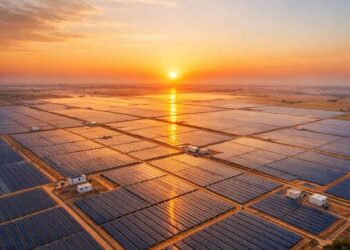
The renewed push is anchored by the 200-megawatt Dawa Industrial Enclave Solar Park, which forms part of a broader strategy to add about 1,400 megawatts of renewable energy capacity under Ghana’s National Energy Transition Framework.
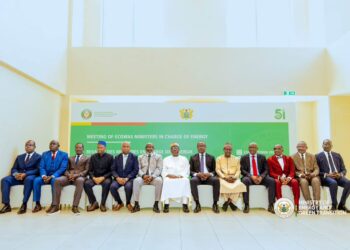
The country’s renewable energy drive also complements Ghana’s broader position on Africa’s energy transition. Speaking recently at the Africa Energy Forum in Cape Town, Energy and Green Transition Minister John Abdulai Jinapor argued that the continent’s transition must support industrial growth while expanding energy access, a position explored in an earlier The Vaultz News report.
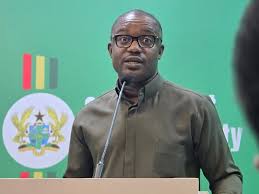
“Africa must pursue a just energy transition on its own terms, one that expands access to reliable energy, supports industrial growth, and promotes clean cooking solutions.
“This approach will successfully address energy poverty and deliver a sustainable future without leaving anyone behind. We must ensure that climate action goes hand in hand with economic growth, job creation, and poverty reduction.
Hon. John Abdulai Jinapor, Minister for Energy and Green Transition
Dawa Solar Park Leads Expansion
At the centre of Ghana’s renewable energy agenda is the Dawa Industrial Enclave Solar Park, where Minister Jinapor broke ground in November on an initial 200-megawatt solar facility.
The project is expected to supply electricity directly to industries operating within the enclave, supporting efforts to improve power reliability while reducing dependence on conventional sources of generation.
Government intends to expand the project to 1,000 megawatts over time, making it one of the country’s largest renewable energy developments.
The Dawa initiative also fits into government’s broader objective of adding about 1,400 megawatts of renewable generation over five years as part of the National Energy Transition Framework.
To guide that ambition, the Ministry of Energy and Green Transition is finalising an updated Renewable Energy Master Plan for 2026 to 2030. Estimated at US$3.4 billion, the roadmap is expected to strengthen the renewable energy value chain while providing a framework for monitoring progress towards national targets.
More Projects Add Momentum
Beyond Dawa, several projects are contributing to Ghana’s expanding renewable energy portfolio.
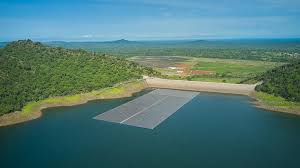
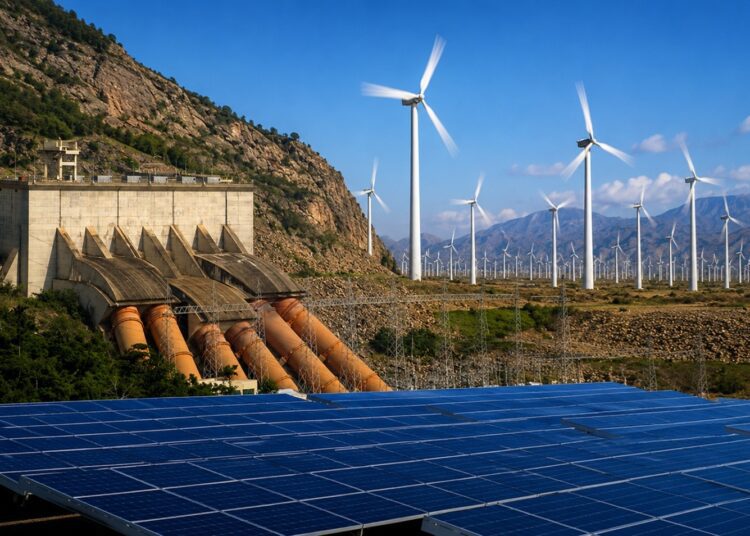
The Bui Power Authority’s floating solar project on the Black Volta currently generates five megawatts of electricity and is expected to expand to 65 megawatts.
In northern Ghana, a 50-megawatt solar plant in Yendi is already feeding electricity into the national grid, helping diversify power generation and strengthen supply.
Private investment is also gathering pace. LMI Holdings is pursuing plans to develop up to 1,000 megawatts of renewable energy capacity within the Dawa Industrial Enclave by 2030, signalling growing confidence in Ghana’s clean energy sector.
Together, these investments reflect increasing collaboration between government and the private sector to accelerate renewable energy deployment.
Beyond Generation Capacity

While expanding installed capacity remains essential, energy experts say long-term success will depend on developing a stronger domestic renewable energy ecosystem.
Benjamin Boakye, Executive Director of the Africa Centre for Energy Policy (ACEP), has argued that Ghana should complement its renewable energy investments with local manufacturing, technology development, and skills training, rather than relying predominantly on imported equipment.
Building domestic expertise would help create jobs, deepen local participation across the renewable energy value chain and strengthen Ghana’s capacity to maintain future infrastructure.
It would also position the country to capture more value from Africa’s growing clean energy market.
Meeting The 2027 Target
Despite the growing pipeline of projects, Ghana still faces a considerable implementation challenge. Renewable energy capacity has increased gradually over recent years despite successive policy initiatives aimed at accelerating deployment.
Meeting the seven per cent target by 2027 will depend largely on how quickly projects such as Dawa move beyond their initial phases into full commercial operation.
Financing, transmission infrastructure, land acquisition, grid integration and timely project execution will all influence whether the country achieves its stated ambitions.
Industry observers note that while Ghana has established a clear policy direction for renewable energy, success will ultimately be measured by projects completed rather than projects announced.
The coming months are therefore expected to be critical as government works alongside private investors to translate investment commitments into operational capacity.
If delivered on schedule, the current pipeline could significantly reshape Ghana’s electricity mix while strengthening energy security, supporting industrial growth and advancing the country’s transition towards cleaner sources of power.
For now, however, the figures show that Ghana remains some distance from its own renewable energy target. The challenge ahead is no longer defining the vision, but ensuring that implementation keeps pace with ambition.
READ ALSO: Wande Coal Teams With Wizkid For Highly-Anticipated Oshey Single