One hundred and fifty seven (157) migrants have been rescued after a boat attempting to cross the English Channel caught fire, prompting a major multinational rescue operation involving French and British emergency services.
The incident unfolded after the overcrowded vessel, carrying migrants attempting to reach United Kingdom, suffered an engine fire while travelling through one of the world’s busiest and most dangerous shipping routes.
According to the French maritime authorities, all 157 people aboard were safely rescued and transported to the northern French port of Boulogne-sur-Mer, with no fatalities or serious injuries reported.
The rescue comes at a politically sensitive moment for the United Kingdom, just a day after Prime Minister Andy Burnham pledged that his government would be “relentless” in tackling irregular migration across the Channel while also expanding safe and legal pathways for those seeking protection.
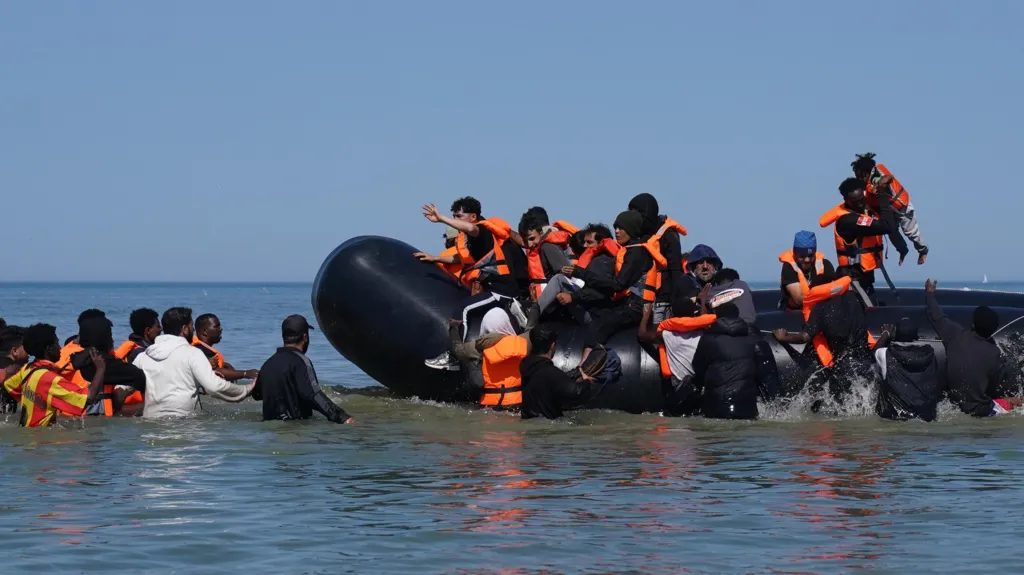
The most recent incident highlights the risks faced by migrants trying the dangerous sea journey in crammed inflatable boats that are sometimes unprepared to endure the difficult Channel weather.
Despite repeated warnings from government and humanitarian agencies, thousands of people risk their lives every year in an attempt to reach British shores, making the route one of Europe’s most controversial migration corridors.
The French maritime prefecture of the Channel and North Sea reports that the boat left the French shore on Monday night and ran into problems during the night.
When five people on board needed to be rescued, emergency personnel first gave help. The remaining passengers, according to the authorities, refused assistance and persisted on travelling on toward United Kingdom.
“Determined to reach the United Kingdom, migrants crossing the Channel in small boats refused assistance offered by French emergency service, accepting it only in situations of extreme emergency.”
Officials explained that because of the “structural fragility” of the overcrowded inflatable vessel, emergency teams decided against forcing an intervention at that stage, fearing that any attempt to transfer passengers could increase the risk of capsizing.
When the ship’s engine caught fire, everything drastically changed. According to authorities, the boat’s condition quickly deteriorated as a result of the fire, prompting an immediate rescue effort involving resources from both France and the United Kingdom.
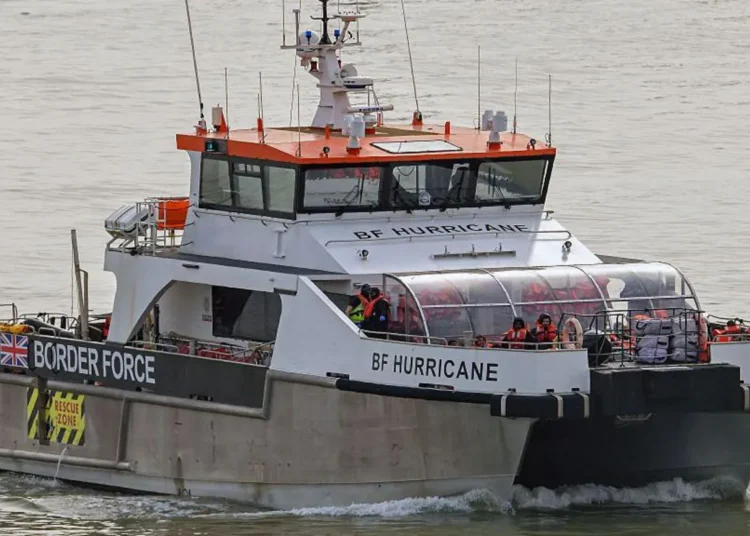
The Royal National Lifeboat Institution (RNLI) Eastbourne lifeboat and UK Border Force patrol boats BSC Contender and BSC Courageous were among the British vessels that reacted alongside French rescue boats.
British forces saved the remaining 54 migrants, while French rescue workers removed 103 from the burning ship. After that, all of the survivors were moved to Boulogne-sur-Mer, where medical staff awaited their evaluation.
The successful rescue prevented what could have become another deadly Channel tragedy. Over recent years, dozens of migrants have lost their lives attempting the hazardous crossing, prompting repeated calls for stronger international cooperation to dismantle criminal smuggling networks while expanding safer alternatives for those fleeing conflict, persecution and poverty.
Channel Rescue Renews Concerns Over UK Migration Strategy
The latest rescue operation has once again placed migration at the centre of political discourse in Britain, where successive governments have struggled to curb irregular crossings despite increased enforcement measures and cooperation with French authorities.
Speaking during a visit to Dover on Monday, Prime Minister Andy Burnham acknowledged that migration remains one of the public’s foremost concerns and pledged to intensify efforts against organised people-smuggling networks operating along the Channel.
The Prime Minister indicated that enforcement resources targeting trafficking gangs had been doubled on both sides of the Channel, reflecting closer operational cooperation between British and French authorities.
However, Burnham argued that stronger border enforcement alone would not resolve the issue. He stressed that the government also intends to develop “a system that offers safe routes for people,” signalling a broader approach that combines security measures with expanded legal migration pathways for eligible asylum seekers.
Meanwhile, opposition parties have continued to challenge Labour’s approach.
The Conservative Party argued that the government has yet to fulfil its promises on reducing irregular migration, while Reform UK maintained that a tougher deterrence strategy is required.
The party stated that, if elected, it would deploy the Royal Navy to prevent migrant boats from reaching British waters.
For humanitarian organisations, however, this serves as another reminder of the life-threatening risks associated with irregular Channel crossings.
Smugglers frequently use overcrowded inflatable boats with unreliable engines and inadequate safety equipment, leaving migrants vulnerable to fires, engine failures, harsh weather and heavy commercial shipping traffic.
French authorities noted that many migrants refuse rescue during the early stages of emergencies because they fear being returned to France before completing their journey to Britain. Such decisions, officials warned, can significantly increase the danger when mechanical failures or deteriorating weather occur unexpectedly.
READ ALSO: ‘No Lessons Learned’: Expert Warns DR Congo’s Ebola Outbreak Mirrors Past Failures