Colombia’s new government is facing its first major national emergency as rescue teams race against time to find survivors trapped beneath rubble following a powerful 7.4-magnitude earthquake that struck the country’s western region.
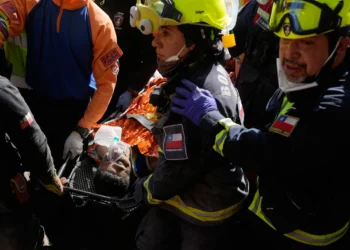
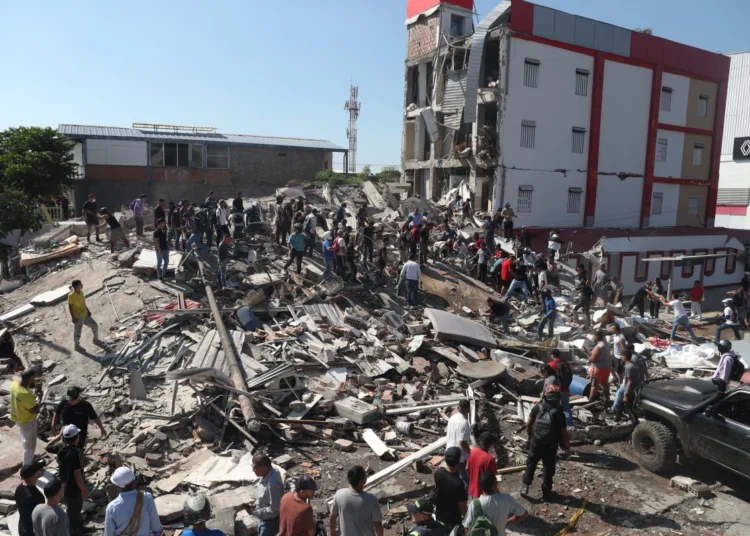
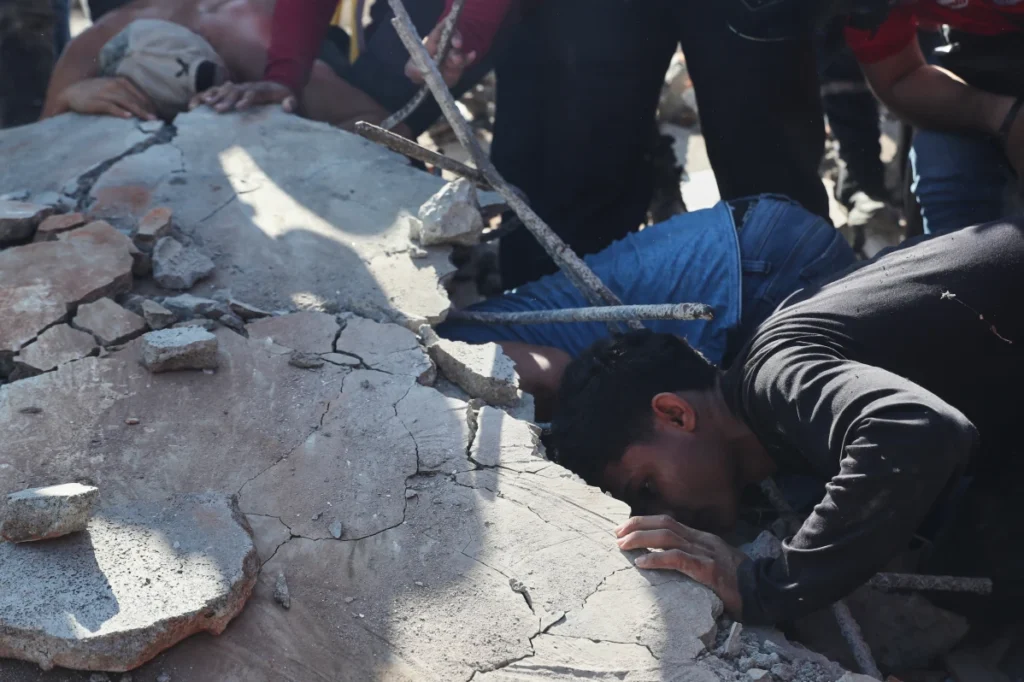
Search and rescue operations resumed across dozens of cities and towns as soldiers, emergency workers and families searched through collapsed buildings for survivors. More than 3,000 people were reported missing, many of them believed to be trapped under debris.
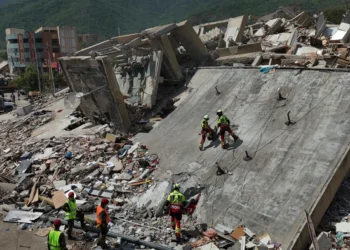
The scale of the disaster has remained uncertain particularly in Choco, the region surrounding the earthquake’s epicentre. Local authorities in Cali, Pereira, Choco and Manizalez reported at least 179 deaths across the four areas, while the federal government’s latest estimate put the death toll at 111. About 1,600 buildings were reported damaged or destroyed, leaving thousands of families facing the loss of homes and uncertainty over the fate of relatives.
The disaster has also exposed the longstanding challenges faced by Choco, one of Colombia’s poorest and most neglected regions. Much of the region is difficult to access, with communities separated by dense jungle and waterways and often reachable only by boat or aircraft. Those geographical challenges have complicated efforts to determine the full extent of the destruction and deliver emergency assistance to affected communities.
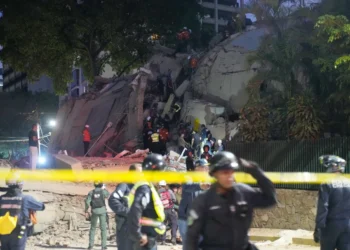
Local authorities reported that about 80 percent of El Cairo, a town of roughly 7,000 residents, was damaged. In Pereira, at least 58 buildings collapsed, while Cali Mayor Alejandro Eder said at least 40 buildings had been destroyed.
Rescue workers and residents have been working together to clear the rubble, with volunteers forming human chains to move large pieces of concrete by hand. Soldiers, emergency personnel and families have joined the search, hoping to locate people who may still be alive beneath the wreckage.
The earthquake presents an immediate test for President Abelardo De la Espriella, who was sworn into office only days before the disaster. De la Espriella, a divisive political figure who campaigned on a pledge to launch an aggressive crackdown on criminal groups, has now been forced to turn his attention to one of the country’s worst natural emergencies.
The President travelled to Quibdo, the capital of Choco, on the night of the earthquake and announced the deployment of the country’s military and police resources. He said that the government had mobilised “the entire military and police apparatus” to support the response, including engineers, rescue personnel and search dogs. “Choco will never again be the ‘land of the forgotten,’” De la Espriella said, promising greater attention to a region that has historically struggled with poverty, limited infrastructure and insecurity.
The response has also included measures aimed at maintaining order in some of the worst-affected cities. Cali and Pereira imposed curfews on Monday night to prevent looting, while Pereira authorities temporarily banned privately owned vehicles from circulating to make roads more accessible to ambulances, police and rescue teams. “This has been a tragedy for the whole city, for thousands of families,” Pereira Mayor Mauricio Salazar told local media. “But here we are, and we will continue forward with the hand of God,” he added.
The earthquake has left communities across western Colombia shaken, particularly after a series of devastating earthquakes struck neighbouring Venezuela in late June. Those earthquakes destroyed hundreds of buildings and killed more than 6,300 people, heightening fears among residents in Colombia as aftershocks followed the latest tremor.
Strongest Recorded Earthquake
Colombia’s Geological Service described the earthquake as the strongest recorded in the country in the 21st century. Several aftershocks were reported following the main quake.
The Pacific region where the earthquake occurred lies along the Pacific Ring of Fire, a vast zone of seismic activity surrounding the Pacific Ocean and responsible for a large share of the world’s earthquakes.
As Colombia struggles to assess the damage and reach isolated communities, international assistance has begun arriving. The United States State Department announced $15.5 million in emergency assistance for shelter, food and other relief supplies. Governments across Latin America have also offered support.
For De la Espriella, however, the immediate challenge extends beyond managing the rescue operation. The earthquake has brought renewed attention to the inequalities between Colombia’s regions, particularly the difficulties faced by communities in Choco that lack easy access to transport, infrastructure and emergency services.
With thousands still missing and the full extent of the destruction yet to be established, the government’s response will be closely watched. The coming days will determine not only how many survivors can be rescued, but also whether Colombia’s new administration can translate its promise to bring greater attention to neglected communities into action during one of its first major tests.