
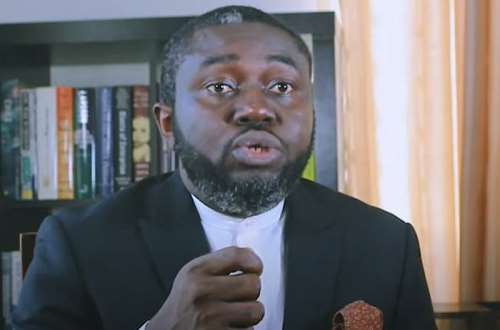
Private legal practitioner and activist Oliver Barker-Vormawor has endorsed Justice Gabriel Pwamang’s ruling dismissing Kojo Oppong Nkrumah’s injunction application against vacation court warrants and has proposed a five-term legal year calendar that he argues would resolve the underlying tension between judicial rest and case backlog exposed by the dispute.
Barker-Vormawor’s commentary arrives days after the Supreme Court dismissed Oppong Nkrumah’s bid to halt criminal trials during the legal vacation, and it shifts the conversation from the narrow legal question the Court settled toward a structural proposal aimed at the debate the ruling left open, whether Ghana’s two-month judicial recess still serves the system it was designed for.
Barker-Vormawor said he had read Justice Pwamang’s decision and found it well reasoned, going further to suggest the ruling may have effectively closed off the underlying constitutional case.
“If this was a full panel decision, I would have said I don’t see a pathway for the main suit to even continue after this decision,. In fact I would doubt that the Court’s jurisdiction has even been invoked.”
Private legal practitioner and activist Oliver Barker-Vormawor
He qualified that assessment by noting a full panel might view the matter differently when the substantive case is eventually heard.

Engaging Anyenini’s Point on Lawyers’ Rest
Barker-Vormawor also responded to commentary from legal analyst Samson Anyenini, saying Anyenini’s point about how lawyers plan and prioritise rest deserved serious attention rather than dismissal.
“This is not an issue we should sweep under the carpet,” he wrote, calling on the legal profession, the Rules of Court Committee and professional associations to take up the question of how the legal calendar and representation practices can accommodate rest periods.
He argued the disruption from the vacation period begins well before the recess itself formally starts. “The truth is that from June already, if not earlier, the upcoming vacation begins to affect how dates are taken for trials,” he wrote, describing two straight months of pause as a drag on how quickly cases move through the system.
Barker-Vormawor said he disagreed with Anyenini on one point, that the framework for managing lawyers’ rest must necessarily repeat existing arrangements. “That’s the familiar and how we have always done things,” he wrote, arguing that old habits should not stand in the way of innovative thinking.
He noted that questions about fairness have already begun to surface, pointing to comparisons between judges’ extended leave and the 21 days typically available to other public servants.
A Five-Term Calendar Built Around Ghanaian Names
Barker-Vormawor’s central proposal is a restructured legal year built around five terms rather than a single long vacation, modelled loosely on arrangements used in other jurisdictions.

Starting in 2027, he proposed the Sankofa Term running from January 11 to March 26, an Akan concept referring to retrieving what remains valuable from the past. The Kekeli Term, an Ewe word for light or illumination, would run from April 5 to May 28.
The Suhudoo Term, Dagbani for peace, would run from June 7 to July 30. The Paŋa Term, a Gurenɛ word for strength or power, would run from August 9 to September 24.
The Hejɔlɛ Term, Ga for peace or peacefulness, would close the year from October 11 to December 21. Barker-Vormawor set out detailed figures to support the restructuring.
Accounting for weekends and Ghana’s projected public holidays, he calculated the five-term calendar would yield approximately 213 sitting days in 2027, while preserving 42 formal recess days distributed across four breaks between terms rather than concentrated in a single continuous pause.
In total, he estimated approximately 152 non-sitting days across the year, factoring in weekends, public holidays, term breaks and the periods before and after the calendar year itself.
He was explicit that the proposal does not eliminate rest but redistributes it. “It redistributes it throughout the year while allowing the courts to sit more consistently and reducing the disruptive effect of a continuous two-month judicial vacation,” he wrote.
The Comparison to the Present System
Barker-Vormawor set his proposal directly against the current arrangement, under which the Superior Courts effectively enter the long vacation from around August 1 until roughly October 4.
He calculated that the present system yields approximately 192 sitting days in 2027 once weekends and public holidays are deducted, meaning his five-term calendar would add roughly 21 additional sitting days while still preserving 42 days of formal recess spread across the year.
He argued this structure would give lawyers and judges substantial periods of rest without the systemic disruption caused by a single continuous two-month shutdown, positioning the proposal as a middle path between the Chief Justice’s current vacation-warrant approach and the wholesale abolition of judicial recess that other commentators have floated in the wake of the dispute.
READ ALSO: Companies Told to Prepare for New ESG Reporting Era