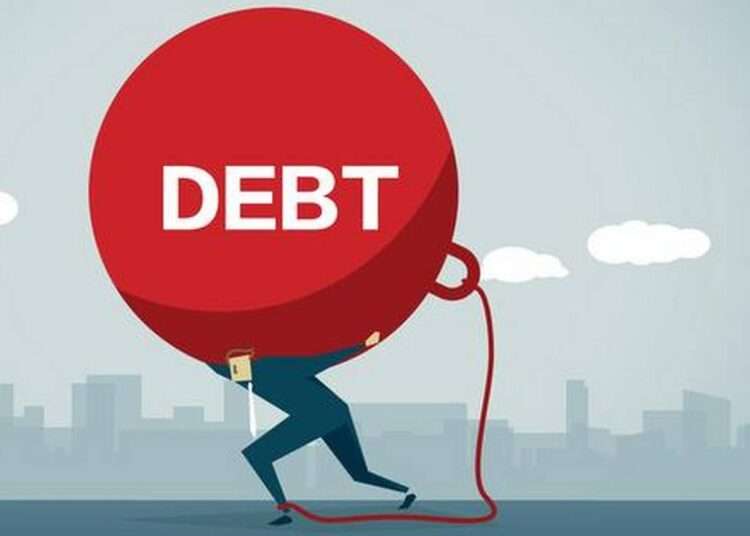
Ghana’s economic recovery could face a major setback as the country’s state-owned enterprises (SOEs) continue to carry a staggering debt burden of GH¢282 billion, Banking and Corporate Governance Consultant Dr Richmond Atuahene has warned.
The warning comes at a time when SOEs appear to have staged a dramatic financial turnaround, recording a consolidated net profit after tax of GH¢19.80 billion in 2025, compared with a GH¢2.25 billion loss in 2024.
However, Dr Atuahene believes the impressive profit figures could be masking deeper structural problems that remain unresolved within the state enterprise sector.
GH¢282bn Debt Raises Alarm
According to the State Interests and Governance Authority’s (SIGA) latest State Ownership Report, total liabilities of Ghana’s SOEs stood at GH¢281.99 billion in 2025.
The scale of the liabilities has raised serious concerns about the potential risks they pose to government finances and the broader economy.
The Electricity Company of Ghana (ECG) alone accounted for GH¢82.31 billion of the total SOE liabilities, highlighting the enormous financial pressures confronting some of the country’s most critical public enterprises.
Dr Atuahene warned that operating an economy while carrying such a huge SOE debt overhang could have severe consequences.
“And also, the magnitude of the debt, 282 billion. If you run an economy with such a debt overhang, I don’t know what you can do.”
Dr Richmond Atuahene
He added that the figure represents a significant portion of Ghana’s broader debt challenges.
“Debt overhang of over GH¢700bn; 282 is by the state enterprises. That is where we should have a little bit of concern and worry.”
Dr Richmond Atuahene
Profit Surge May Not Mean Efficiency
The latest SIGA figures show that SOEs significantly improved their financial performance in 2025.
Revenue increased by 28.12% to GH¢176.43 billion, while the combined net position moved from a GH¢2.25 billion loss in 2024 to a GH¢19.80 billion profit in 2025.
But Dr Atuahene cautioned against celebrating the figures without examining what drove the improvement.
He argued that some of the reported gains could have resulted from foreign exchange movements rather than genuine improvements in operational efficiency.
“As Professor Isaac Boadi of UPSA said, I look at it, and he called it a miracle. But if you dive deep into it, it’s not operational efficiency. It’s completely, it’s not operational efficiency.”
Dr Richmond Atuahene
For Dr Atuahene, the critical question is whether SOEs are becoming more productive and financially sustainable or merely benefiting from temporary accounting and foreign exchange effects.
“If you are moved by foreign exchange gains by 60%, then you are not talking about efficiency,” he said.

Cedi Depreciation Could Expose Weaknesses
One of the biggest risks identified by Dr Atuahene is the possibility of renewed pressure on the Ghanaian cedi.
He warned that if the local currency begins to depreciate significantly, some of the gains currently reflected in SOE financial statements could quickly disappear.
“Because other than that, when the reality comes, you’re going to have a hit. When I mean the reality, should the cedi begin to go downwards, then you’ll begin to see that we have a big problem.”
Dr Richmond Atuahene
The warning is significant because foreign exchange movements can have a major impact on enterprises with foreign currency obligations and transactions.
A weaker cedi could therefore increase financial pressures on already heavily indebted state enterprises, potentially forcing government to intervene with additional resources.
Are Ghanaians Getting Value?
Beyond profits and balance sheets, Dr Atuahene questioned whether SOE performance should be judged by financial results alone.
He argued that the ultimate test should be the quality and reliability of services delivered to citizens.
“Produce the figures, talk about profit, but the reality, like Professor said, what is the output?”
Dr Richmond Atuahene
He pointed to persistent concerns over essential public services.
“You’re not getting your light on. You’re not getting your water. But these people are being char-, these people are charging every now and then, declaring profit.”
Dr Richmond Atuahene
His comments raise an important question about how Ghana measures the success of public enterprises. An SOE may report a profit, but citizens may still experience unreliable electricity, water supply or other essential services.
Dr Atuahene therefore called for a broader assessment of performance using metrics that capture both financial sustainability and service delivery. “Are we measuring it by what measure? What metrics are we using?”
IMF Reform Pressure Intensifies
The concerns come as Ghana continues implementing economic reforms under its programme with the International Monetary Fund (IMF).
Dr Atuahene noted that SOE reform remains an important component of the country’s broader economic restructuring efforts.
“That is the reason why, in the IMF’s PCI, one of the ten fundamental reforms that we are being required to do is to look at these SOEs, which is very, very important.”
Dr Richmond Atuahene
The focus on SOEs reflects longstanding concerns about their financial performance, accumulated liabilities and potential fiscal risks.
For Ghana, the issue is particularly important because losses and debts accumulated by state enterprises can eventually become a burden on taxpayers if government is required to provide financial support.
‘Country Will Come to a Grinding Halt’
Dr Atuahene warned that Ghana cannot afford to ignore the structural weaknesses within its state enterprise sector.
He said the problems have existed for years and require urgent and sustained action.
“Those of us who are fairly old, where we’ve got this, our this problem, it has been with us.”
Dr Richmond Atuahene
He issued an even stronger warning about what could happen if the current situation is allowed to persist.
“And I have said it, and I’ve written a lot about it. If we go the way we are going with SOE, one day we will get up, and the country will come to a grinding halt.”
Dr Richmond Atuahene
The warning puts the GH¢282 billion SOE liability figure firmly at the centre of Ghana’s economic debate.
While the GH¢19.80 billion profit recorded in 2025 offers an encouraging headline, Dr Atuahene insists that the country must look beyond profits and address the debt, efficiency and service delivery problems underneath.
For Ghana’s economic recovery to remain sustainable, the challenge may no longer be simply getting SOEs to report profits. It may be ensuring that those profits reflect genuine operational efficiency, stronger governance, sustainable finances and better services for citizens.
READ ALSO: GEPA Showcases Ghana at GITEX Nigeria 2026