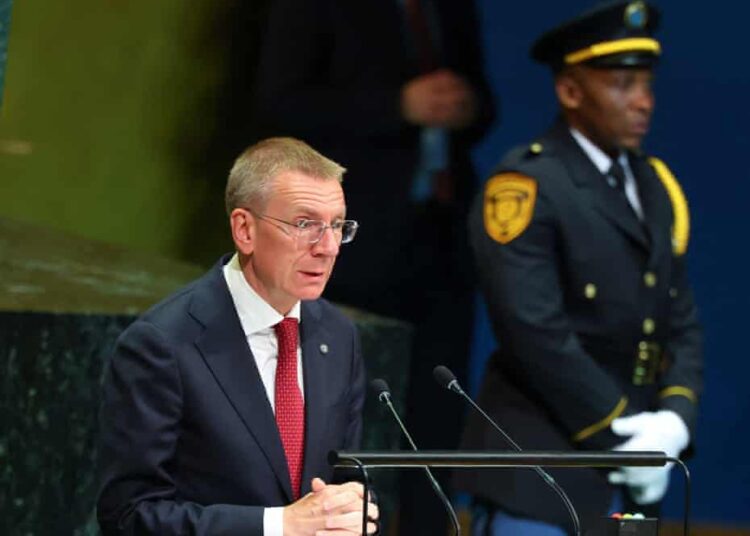
Latvian President, Edgars Rinkēvičs has joined growing calls for reform of the United Nations, warning that the organisation “cannot take its relevance for granted” as global security, geopolitical and climate challenges continue to intensify.
Addressing world leaders at the UN General Assembly, Rinkēvičs said that the international organisation must adapt to a changing global environment and remain capable of responding effectively to emerging threats.
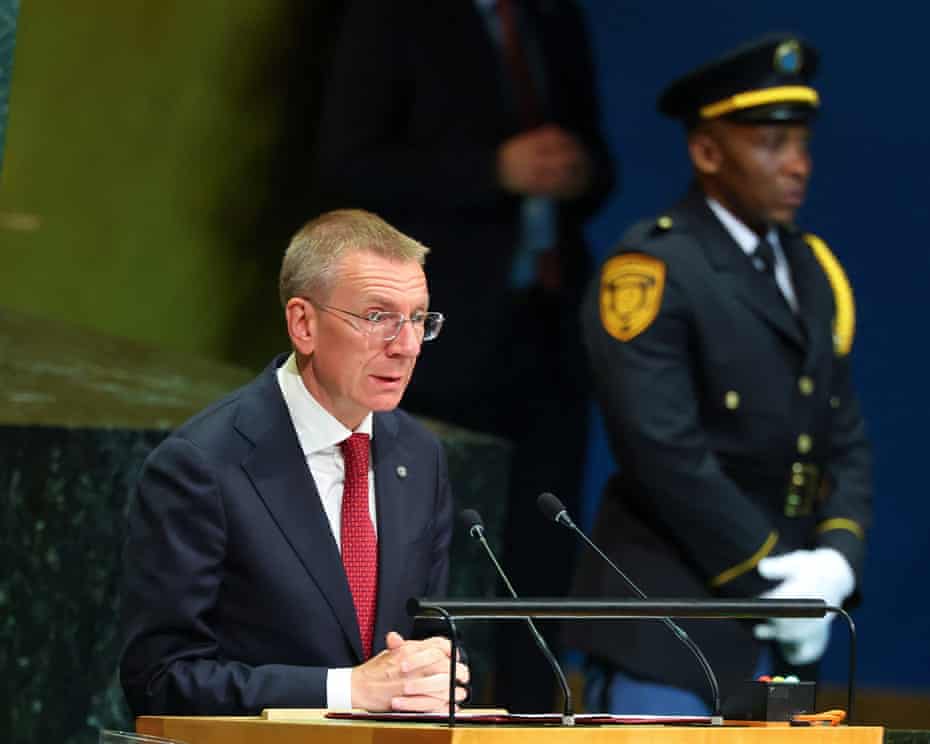
His remarks came as a number of leaders used their General Assembly speeches to question whether the institution adequately reflect the challenges facing the world.
Finland’s President, Alexander Stubb also called for UN reform, arguing that changes to the global order require changes within the organisation. Stubb said that the international system was under increasing pressure from conflict, declining trust and the weakening of international institutions.
Stubb called for significant changes to the UN Security Council, arguing that the organisation must reflect the realities of the contemporary international system. “The world has changed, so should the UN,” Stubb said in his address to the General Assembly yesterday.
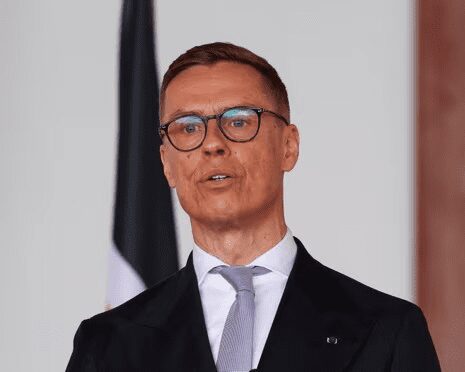
He proposed the creation of at least two new permanent Security Council seats for Africa, two for the Asia-Pacific region and one for Latin America. Stubb also argued that no single state should have veto power and proposed that a Security Council member that violates the UN Charter should have its voting rights suspended.
He called for a functioning Security Council and urged countries to find creative solutions to overcome the institution’s current impasses. Stubb also warned that the international system is facing a broader crisis of trust, saying that cooperation is being undermined by disregard for international rules and the weakening of institutions.
He described the world order as “breaking down” and said the rules-based system that had provided stability was under growing strain.
Rinkēvičs similarly stressed the need for greater international cooperation, saying that the threats confronting countries increasingly cross national borders. “We are in the same boat. Perhaps Noah’s Ark is no longer just a biblical story,” he said.
The Latvian President pointed to Russia’s war against Ukraine, instability in the Middle East and the effects of climate change as examples of challenges that cannot be addressed by individual countries acting alone.
He warned that the international rules-based order that had helped provide stability was under growing strain.
Rinkēvičs said that the threats facing countries were no longer necessarily distant, citing Russia’s war in Ukraine and the deteriorating security situation in the Middle East.
He also highlighted the growing consequences of climate change, stressing that environmental threats do not respect national borders. “Global climate change does not have borders or citizenship,” Rinkēvičs said.
He referred to extreme weather events, including heatwaves, rising sea levels and flooding, warning that such events can destroy homes, infrastructure and lives within a short period.
Rinkēvičs also referenced the catastrophic flooding in Nepal, where 33 Latvian citizens disappeared, as an example of how natural disasters can have international consequences.
Rinkēvičs Says Russia’s Actions Challenge Fundamental Principles Of UN Charter
Turning to the war in Ukraine, Rinkēvičs drew on Latvia’s own historical experience to argue that Russia’s actions challenge fundamental principles of the UN Charter. “Russia’s war against Ukraine strikes at the very heart of the United Nations charter,” he said.
He urged the international community not to ignore Russia’s actions and argued that Moscow has the ability to end the war by stopping its attacks and withdrawing its forces from Ukrainian territory.
“Russia is violating the very principles it is entrusted to uphold. Russia started this brutal war. Russia can end it. It can stop its attacks. It can withdraw its forces. It can leave Ukraine’s sovereign territory.”
Edgars Rinkēvičs
The Latvian President also warned of growing security concerns across eastern Europe, pointing to what he described as a broader range of threats short of conventional warfare.
He cited incidents involving drones, airspace violations and damage to critical infrastructure, arguing that such actions can undermine security even without developing into a traditional armed conflict.
“We sometimes call them hybrid threats, but it sounds as innocent as hybrid cars. In reality, those threats to international peace and security are as dangerous as conventional wars.”
Edgars Rinkēvičs
Rinkēvičs’ remarks placed the need for stronger international cooperation at the centre of his address, arguing that countries must work together to address threats that increasingly extend beyond national boundaries.
Both Stubb and Rinkēvičs therefore used their UN addresses to highlight the need for stronger international institutions and greater cooperation as countries confront war, geopolitical tensions, hybrid threats and climate-related challenges.