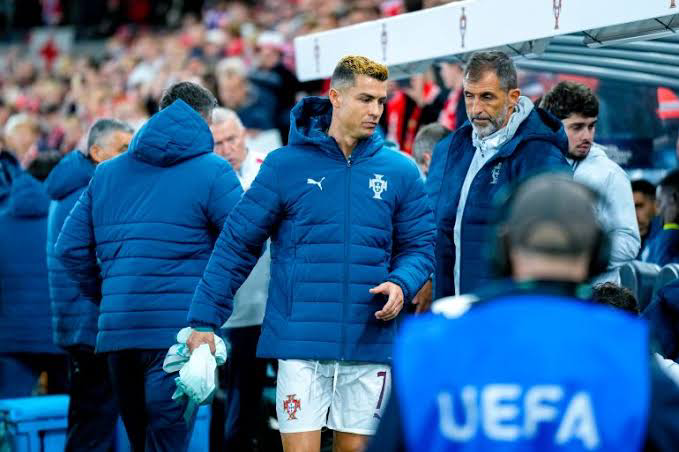
Cristiano Ronaldo has left the Portugal national team camp ahead of Thursday’s UEFA Nations League clash against Denmark, raising questions over whether the latest dispute involving the veteran forward and head coach Jorge Jesus is simply a temporary disagreement or something more significant.
The 41-year-old confirmed his departure after Jesus’ pre-match press conference earlier on Wednesday where the Portugal coach addressed questions about Ronaldo’s omission from the starting XI against Norway and denied that there was a personal dispute between them.
Ronaldo said his decision came after listening to Jesus’ press conference and subsequently speaking with Portuguese Football Federation president Pedro Proença.
“After the National Team Coach’s press conference, and following a conversation with the President of the Portuguese Football Federation, I made the decision to leave the National Team camp,” Ronaldo said in a statement released on social media.
The statement was notable for what it did not explain. Ronaldo did not disclose what was said between him and the federation president or precisely what in Jesus’ press conference prompted his decision.
Instead, he suggested that a fuller explanation would come later. “In due time, I will tell the truth to all Portuguese people about the reasons that motivated my departure from the national team, to which I have always dedicated myself,” he said.
For now, Ronaldo has chosen to close the immediate chapter by wishing Portugal and his teammates well ahead of their upcoming UEFA Nations League assignments.
His departure means Portugal will face Denmark without the player who has been the defining figure of its national team for more than two decades.
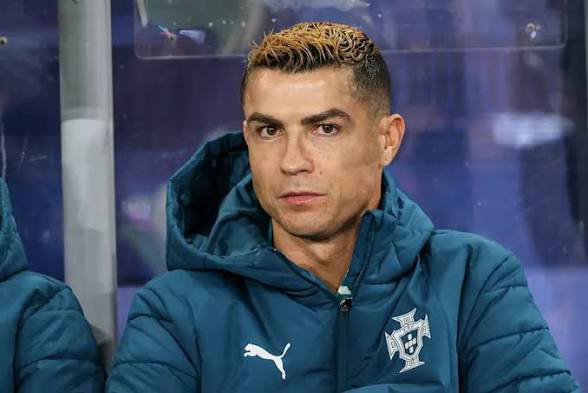
Ronaldo started Portugal’s 1-0 victory over Wales before being left on the bench for the 2-1 away win against Norway. The decision not to use him in Norway became the immediate backdrop to the growing tension.
Jesus, however, insists the decision was not a punishment or a sign of a deteriorating relationship.
Was This Really AboutRonaldo’s playing time?
The Portugal head coach explained that he had already agreed with Ronaldo that the forward would not play against Norway or Denmark, arguing that the decision formed part of a physical management plan.
“I told Cris that he would not play in the game against Norway or the game against Denmark. He would not play because I believed that was the right thing to do.”
Jorge Jesus, Portugal head coach
The relationship between the two is also unusual because Jesus is not a coach who has only recently encountered Ronaldo. He worked with the 41-year-old at Al Nassr before replacing Roberto Martínez as Portugal head coach. “I worked with Cris for a year. I didn’t arrive at the national team three months ago and meet Cris,” Jesus said.
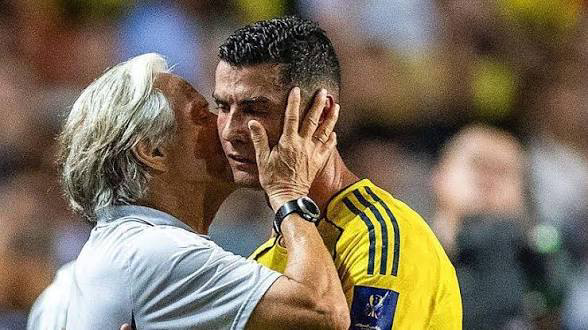
He also rejected the suggestion that Ronaldo had refused to accept the coach’s instructions or declined to train. “So, he never refused anything, and that is exactly what happened,” Jesus said.
Jesus’ explanation suggests that, from his perspective, the issue was fundamentally about managing Ronaldo’s workload and making decisions according to the needs of the team rather than the status of an individual player.
That argument becomes particularly important because Jesus explicitly compared Ronaldo’s situation with that of Bruno Fernandes.
“What does this tell you? It tells you something about the question I was asked earlier about a player having status, doesn’t it? Status is one thing. The rules are the same for everyone.”
Jorge Jesus , Portugal head coach
That is arguably the central issue behind the situation.
Ronaldo is not an ordinary squad member. He is Portugal’s captain, all-time leading scorer and most-capped player.
His career gives him an unprecedented status within Portuguese football, but Jesus has made it clear that this status will not automatically dictate his selection decisions.
The coach also insisted that there was no personal breakdown between the pair. “There is no issue at all,” Jesus said. “I have had issues with many players, but don’t turn this into an issue that does not exist.”
Yet the fact that Ronaldo has now left camp means there is clearly a disagreement of some kind, even if the precise nature of it remains undisclosed.
The federation president’s involvement adds another layer. Ronaldo says he spoke with Proença before deciding to leave, suggesting the matter had moved beyond a simple tactical conversation between player and coach.
That does not necessarily mean the relationship is beyond repair. Ronaldo’s statement does not announce his retirement, nor does it say that he has permanently withdrawn from the national team.
Instead, his wording leaves the door open for another explanation at a later date.
The Bigger Question for Ronaldo and Portugal
The timing makes the episode particularly significant.
At 41, Ronaldo remains central to Portugal’s ambitions despite being in the twilight of a remarkable international career.
He has made 234 appearances and scored 143 goals for Portugal, making him the most-capped player and all-time leading scorer in men’s international football.
He is also pursuing the extraordinary milestone of 1,000 career goals, with 979 goals currently recorded across his club and international career, leaving him 21 short. The Real Madrid legend said he would love to achieve this landmark in a Portugal shirt.
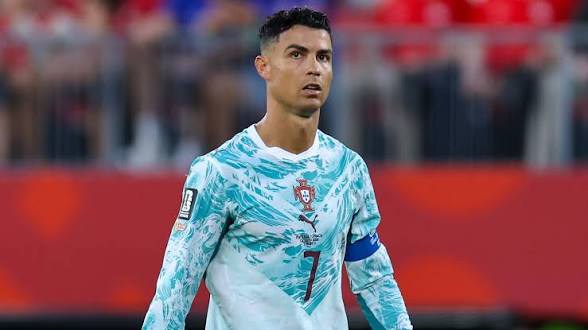
That pursuit gives the current situation another dimension. Ronaldo has not indicated that he is ready to walk away from international football, while Portugal are entering a new phase under Jesus.
The coach’s willingness to leave him out of matches, even after working with him at Al Nassr, suggests that Ronaldo’s position in the national team may increasingly be determined by tactical and physical considerations rather than his historical status.
Ronaldo’s decision to leave camp, meanwhile, shows that the transition may not be entirely straightforward.
There are therefore two competing narratives at present.
Jesus says he had a clear plan, Ronaldo accepted it and there was no personal dispute. Ronaldo’s statement, on the other hand, indicates that something about the coach’s press conference and his subsequent conversation with the federation president was significant enough for him to leave the camp.
Neither account, on its own, fully explains what happened behind closed doors.
That is why Ronaldo’s promise to reveal the reasons for his departure is potentially important. Until he provides that explanation, it would be premature to treat this as the end of his Portugal career.
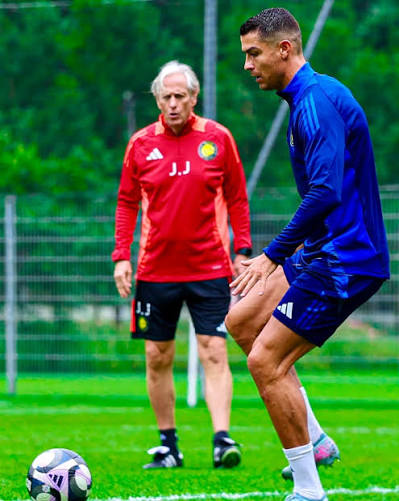
It could ultimately prove to be a temporary rupture between an influential player and a coach determined to establish his authority.
But it could also expose a deeper disagreement over Ronaldo’s role, status and future within the national team.
For now, the immediate consequence is clear that Portugal’s captain will miss the Denmark match.
The bigger question is what happens after it.
If Ronaldo returns to the squad and the relationship with Jesus settles, this episode could eventually become little more than a turbulent moment in the early stages of a new coaching era.
If he does not, Thursday’s absence could come to be viewed as the moment Portugal’s extraordinary Ronaldo era entered its final chapter.
READ ALSO: Netanyahu Says Pilot Arrested After Flydubai Plane Incident