The Bank of Ghana (BoG) has cautioned banks against pursuing rapid credit expansion without adequate risk assessment, warning that aggressive lending could eventually expose financial institutions to defaults, impairment charges and broader balance sheet pressures.
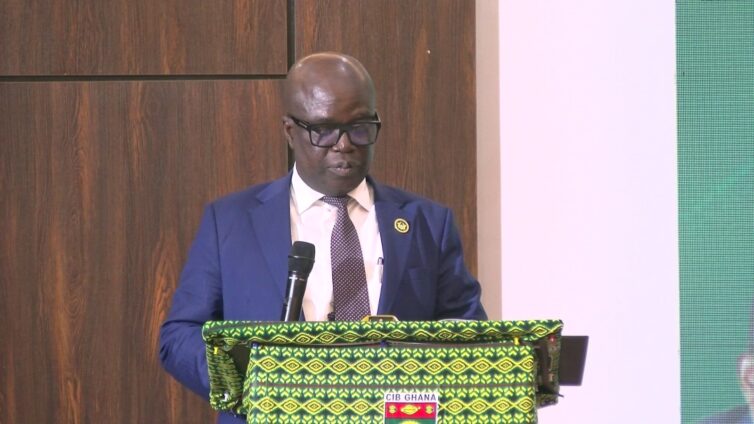
The warning was delivered on behalf of BoG Governor Dr Johnson Asiama by the Bank’s Director of Research, Dr Simon Harvey, during the Chartered Institute of Bankers Ghana’s third Post-MPC Policy Seminar.
The discussion comes at a time when the banking sector is paying closer attention to the transmission of monetary policy and the ability of lower policy rates to translate into more affordable credit for households and businesses.
Ghana’s Monetary Policy Committee maintained the policy rate at 14% after its 132nd regular meeting held on September 23 and 24, 2026. While the benchmark rate has fallen significantly from previous levels, the Bank of Ghana stressed that movements in the policy rate do not automatically result in immediate or proportional changes in lending rates.
Dr Harvey explained that banks have several costs and risks to consider when pricing loans.
“Banks must consider their cost of funds, credit risk, operating costs, capital requirements, expected losses, and the overall risk environment when pricing loans.”
Dr Simon Harvey
That reality means the cost of borrowing is influenced by more than the headline policy rate. Banks must assess whether borrowers can repay, how much capital must be committed to loans and the potential losses that could arise if credit quality deteriorates.
BoG warns against chasing loan volumes
The central bank also placed emphasis on the quality of credit expansion rather than simply the volume of loans issued.
According to the Governor’s remarks, credit growth must be productive and sustainable. A rapid increase in lending may appear positive on the surface, but weak underwriting standards can create problems that emerge later through loan defaults and higher impairment costs.
“Rapid credit growth without proper risk assessment can lead to defaults, impairment charges and ultimately weaken the banking system,” the statement cautioned.
The concern is particularly relevant as banks seek to respond to improving economic conditions and stronger demand for financing.
Greater availability of credit can support investment, business expansion, household consumption and job creation. However, lending that is not backed by proper credit assessment can place pressure on both individual banks and the wider financial system.
The Bank of Ghana therefore wants lenders to balance the need to support economic activity with the responsibility to protect the quality of their loan portfolios.
Lending rates depend on more than the policy rate
The seminar also highlighted one of the biggest challenges facing monetary policy: transmission.
A reduction in the policy rate can lower the benchmark cost of funds in the financial system, but the impact may take time to reach borrowers. Banks still have to account for funding costs, operational expenses, capital requirements and the risks associated with individual customers.
Dr Harvey noted that monetary policy transmission is neither automatic nor instantaneous. A policy rate adjustment therefore cannot be expected to produce an immediate, one-for-one movement in lending rates.
The Bank of Ghana said the effectiveness of monetary policy should instead be assessed through its broader impact on lending and deposit rates, credit availability, investment, consumption, employment and economic activity.
“The ultimate objective is to ensure that monetary policy decisions translate into outcomes that support price stability and sustainable economic growth,” the Governor’s remarks stated.
This places greater attention on what happens after an MPC decision rather than simply the announcement of the benchmark rate.
Banks and borrowers share responsibility
The central bank also pointed to the responsibilities of both lenders and borrowers in creating conditions for more affordable credit.
Banks, according to Dr Harvey, must strengthen credit assessment and risk management practices. Stronger underwriting can help financial institutions distinguish between productive borrowers and lending opportunities carrying excessive repayment risks.
Borrowers, meanwhile, must demonstrate discipline in meeting repayment obligations.
The quality of the banking sector’s loan portfolio remains closely linked to the broader economic environment. When repayment performance weakens, banks may respond by increasing risk premiums or tightening lending standards, potentially making credit more expensive or difficult to access.
That creates a cycle in which poor credit quality can undermine the very affordability of loans that businesses and households are seeking.
Stronger transmission requires policy credibility
The Governor’s remarks also stressed the importance of a credible and predictable monetary policy framework supported by fiscal discipline and an efficient banking sector.
Such conditions can strengthen the transmission of monetary policy and improve the ability of banks to channel funds into productive areas of the economy.
The latest seminar therefore went beyond the question of whether the policy rate should rise or fall. It focused attention on what happens inside the banking system once a monetary policy decision has been taken.
As Ghana continues to seek stronger economic growth while maintaining price stability, the quality of credit will remain an important part of that equation.
The challenge for banks is to expand lending without compromising underwriting standards. The challenge for borrowers is to use credit productively and honour repayment commitments.
Ultimately, the Bank of Ghana’s warning puts the spotlight on a delicate balance: expanding access to credit while ensuring that the pursuit of higher loan volumes does not create new risks for banks and the financial system.
READ ALSO: Ghana Builds Fiscal Buffers Ahead of 2027 Debt Pressure