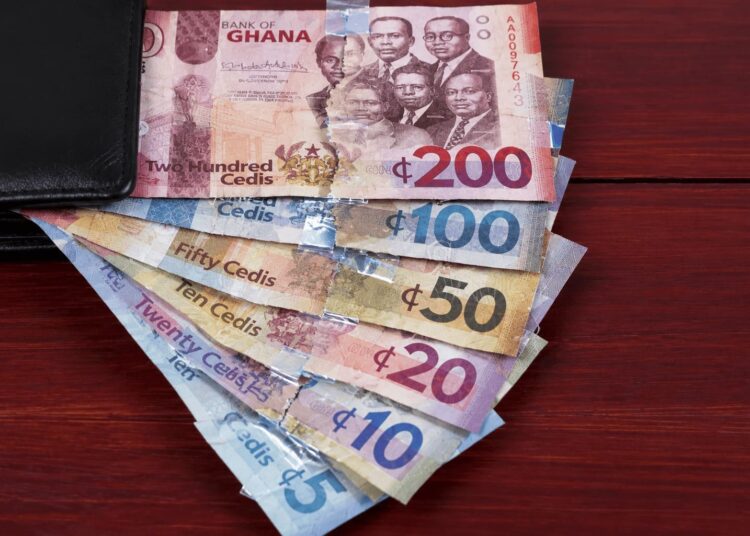
The Bank of Ghana (BoG) has issued a strong warning against the growing practice of repairing damaged Ghana Cedi banknotes with adhesive tape, glue, staples and other materials before putting them back into circulation.
The warning comes after a video circulating on social media showed individuals repairing and rejoining torn and soiled Ghana Cedi notes as part of what appeared to be a business activity.
The central bank has cautioned members of the public against participating in the practice, warning that improperly repaired banknotes could create problems for banks, automated teller machines (ATMs), currency processing equipment and individuals who receive them.
BoG Draws the Line on Damaged Cedis
According to the BoG, the Ghana Cedi is more than a medium of exchange. It is legal tender and an important national symbol, making the condition in which banknotes circulate a matter of concern for the central bank.
The BoG stated that “No person should engage in the repair, re-joining or other alteration of mutilated banknotes for re-issuance or recirculation.”
The central bank explained that such practices could undermine the integrity of the currency while creating difficulties in the cash management system.
This means individuals who find torn or damaged notes should not attempt to make them look usable again before handing them to another person or business.
Instead, the appropriate channel is to take the damaged note to a commercial bank for examination and possible replacement.
Taped Cedis Could Become a Costly Problem
A major concern raised by the BoG is that repaired notes may not simply be rejected by another person. They could also create problems for machines used throughout the financial system.
The central bank warned that “Banknotes that have been taped, glued, stapled or otherwise improperly repaired are unfit for circulation.”
Such notes may damage ATMs and currency processing machines, according to the BoG. They may also be rejected when presented for payment or exchange.
That could leave an unsuspecting member of the public holding a banknote that has little practical value in a transaction.
The potential financial loss is particularly significant because a person accepting a visibly repaired note may only discover the problem when attempting to deposit, exchange or use it.
The BoG therefore wants the public to stop treating damaged banknotes as items that can simply be patched up and returned to the cash cycle.
Social Media Video Triggers Public Warning
The central bank’s intervention follows the emergence of a video on social media showing people repairing damaged Cedi notes with adhesive tape.
The activity appears to have raised concerns because the repaired notes were reportedly being prepared for re-issuance as a business activity.
The BoG has responded by urging the public to stay away from such practices and report persons involved in the improper repair, rejoining or mutilation of banknotes.
The development also highlights a lesser-known part of Ghana’s currency management system. Damaged notes do not automatically become worthless, but their replacement must happen through established procedures rather than private repair.

Commercial Banks Are the Route to Replacement
The BoG said it has the sole mandate for managing Ghana’s currency and has directed the public to present mutilated banknotes to commercial banks for examination and replacement.
“All mutilated banknotes should be presented to a commercial bank for examination and replacement in accordance with the Bank’s laid-down procedures.”
BoG
There is also an important requirement for people seeking replacement of mutilated notes.
According to the BoG, “Where a mutilated banknote is presented for examination, more than half of the original banknote should be presented.”
This means members of the public should resist the temptation to throw away damaged notes simply because they appear badly torn. The proper step is to preserve the available pieces and take them to a commercial bank for assessment.
Public Told to Stop Repairing Torn Cedis
The BoG has specifically advised the public not to tape, glue, staple, rejoin or otherwise attempt to repair damaged banknotes for re-issuance or recirculation.
The central bank is also encouraging people to handle Ghana Cedi notes carefully to reduce unnecessary damage.
Its advice comes at a time when cash remains an important part of everyday economic activity, from market transactions and transport fares to retail purchases and payments involving small businesses.
Improperly repaired notes can complicate that process because the next person receiving the note may not know whether it will be accepted by a bank or machine.
The BoG is therefore asking the public to play a role in protecting the quality and integrity of the currency.
BoG Warns Against Turning Damaged Notes Into Business
The emergence of people repairing torn Cedis for re-circulation has added a new dimension to the management of damaged currency.
Rather than allowing individuals to determine whether a mutilated banknote should return to circulation, the BoG wants that decision handled through the banking system.
The central bank has urged members of the public to report individuals engaged in the improper repair, rejoining or mutilation of banknotes to the BoG or appropriate law enforcement authorities.
The warning closes with a strong appeal to the public: “RESPECT THE CEDI. IT IS OUR NATIONAL PRIDE.”
The BoG’s position leaves little room for informal repairs. Torn or damaged Cedis should not be patched together and passed on. They should be taken through the official examination and replacement process to protect both the currency and the people who use it.
READ ALSO: Kenya Intensifies Ebola Response After First Death