


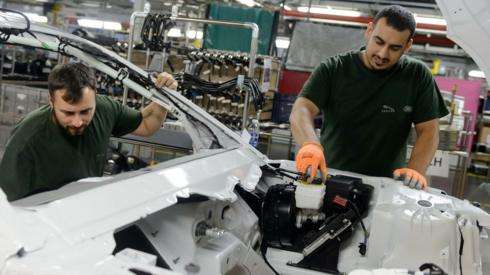
Ghana is positioning itself for stronger growth in the automotive manufacturing industry, with fresh projections from Fitch Solutions identifying the country as one of the most promising destinations for vehicle assembly investment in Sub-Saharan Africa outside South Africa.
The UK-based research firm believes Ghana has significant potential to attract new investments into vehicle assembly over the medium term, supported by government policies, incentives for local manufacturers and improving consumer confidence.
The outlook places Ghana alongside Kenya as one of the strongest near-term growth prospects for vehicle assembly in the region, raising expectations that the country’s automotive industry could become an increasingly important contributor to manufacturing activity, job creation and industrial development.
However, the anticipated growth comes with challenges, including the expiry of tax exemptions on locally assembled vehicles and the need to strengthen domestic supplier networks.
Fitch Identifies Ghana as a Rising Automotive Investment Destination
According to Fitch Solutions, Ghana’s automotive industry remains relatively small compared with established manufacturing markets, but its policy environment is creating opportunities for investors seeking to expand vehicle assembly operations in Africa.
“Ghana’s automotive industry remains smaller in scale but continues to benefit from supportive policy measures. The Auto Policy and local assembly incentives are encouraging investment, while improving consumer confidence should support demand growth.”
Fitch
The assessment highlights the importance of government support in attracting manufacturers and encouraging businesses to establish or expand assembly facilities in the country.
Ghana has been working to develop its automotive industry through policies intended to encourage local assembly, reduce dependence on imported finished vehicles and create opportunities for domestic businesses to participate in the automotive value chain.
The sector’s expansion could also generate employment across several supporting industries, including vehicle distribution, logistics, component manufacturing, maintenance and technical services.
Although Ghana is not yet a major vehicle manufacturing centre, Fitch Solutions believes the country has the potential to make gradual progress as investments increase and demand conditions improve.
Vehicle Production Expected to Rise in 2026
Fitch Solutions expects Ghana’s vehicle assembly output to increase modestly in 2026, reflecting the gradual expansion of the country’s automotive manufacturing activities.
“We forecast production to rise from around 4,700 units in 2025 to approximately 4,900 units in 2026. Although the expiry of the VAT exemption on locally assembled vehicles presents a near-term challenge, continued policy support should help increase local content and support gradual growth in assembly activity.”
Fitch
The projection represents an increase of approximately 200 vehicles, or 4.3%, over the period.
While the expected growth may appear modest, it points to continued expansion in an industry that is still developing its production capacity, supplier relationships and domestic market presence.
The expiry of the VAT exemption, however, could complicate the industry’s growth prospects by affecting the relative cost of locally assembled vehicles.
If the tax change increases prices, manufacturers could face additional pressure to maintain demand in a market where consumers must weigh the cost of locally assembled vehicles against imported alternatives.
The industry’s ability to sustain growth will therefore depend partly on the effectiveness of government policies, manufacturers’ pricing strategies and consumers’ willingness to purchase locally assembled vehicles.
Zonda Tec Expansion Signals Growing Investor Confidence
One of the strongest indications of Ghana’s automotive ambitions is the expansion of Zonda Tec’s assembly facility in Tema.
In September 2026, the company expanded its operations, increasing annual production capacity to 12,000 vehicles across passenger vehicles, commercial vehicles and electric vehicles.
The expansion is expected to create an estimated 1,000 jobs, offering a potential boost to employment and industrial activity.
The development is significant because it demonstrates that investors are willing to increase their production capacity despite the relatively small size of Ghana’s existing automotive manufacturing base.
Fitch Solutions considers the expansion evidence of continued investor confidence in the country’s assembly sector.
Increased capacity could also create opportunities for local suppliers, transport operators, technicians and other businesses that provide services to vehicle manufacturers.
The inclusion of electric vehicles in the facility’s production capacity is particularly notable as the global automotive industry gradually shifts towards cleaner transportation technologies.
However, translating additional production capacity into sustained industrial growth will require manufacturers to secure sufficient demand, develop reliable supply chains and maintain competitive production costs.
AfCFTA Could Unlock New Opportunities for Local Manufacturers
Beyond individual investments, regional integration could become an important driver of Ghana’s automotive industry.
Fitch Solutions noted that Ghana and Kenya could benefit from deeper regional trade relationships, particularly because supplier networks across their automotive industries remain relatively underdeveloped.
“AfCFTA’s [Africa Continental Free Trade Area] automotive framework creates scope for countries to participate in automotive value chains through components, materials and supplier industries rather than relying solely on final vehicle assembly. This should support gradual growth in local manufacturing activity as regional trade links deepen and sourcing becomes more integrated across African markets”.
Fitch
The framework offers Ghana an opportunity to expand beyond assembling imported vehicle components and develop a broader network of domestic manufacturers.
Local businesses could gradually participate in producing components, supplying materials and providing specialised services to assembly plants.
Such developments would help spread the economic benefits of automotive investment beyond vehicle manufacturers themselves.
Deeper integration under the African Continental Free Trade Area could also enable manufacturers to access wider regional markets, potentially improving the commercial case for establishing production facilities in Ghana.
Nevertheless, achieving these benefits will depend on the development of competitive suppliers, reliable infrastructure and trade arrangements that make cross-border production commercially viable.
Ghana Faces Competition Despite Positive Outlook
Despite the encouraging projections, Ghana is unlikely to emerge as a major automotive export hub over the medium term, according to Fitch Solutions.
The country’s manufacturing base remains relatively small, while the development of supplier networks and the expansion of domestic production will require sustained investment.
Competition from established automotive manufacturing markets could also limit the speed at which Ghana attracts major investments.
Even so, the outlook suggests that the country can gradually strengthen its position as a regional vehicle assembly destination.
The combination of supportive policies, growing production capacity and opportunities under AfCFTA provides a foundation for further development.
The immediate challenge will be to convert investor interest into sustained production growth while addressing tax-related concerns and encouraging more local businesses to participate in the industry.
If Ghana can maintain a supportive investment environment and strengthen its automotive supply chain, the sector could become an increasingly important part of the country’s broader industrialisation agenda.
For now, Fitch Solutions’ assessment places Ghana among the region’s most promising automotive assembly markets, with the potential to attract further investment even as it works through the structural challenges facing its manufacturing industry.
READ ALSO: SSNIT, Second-Tier Pensions Receive GH¢4.40bn Government Payment