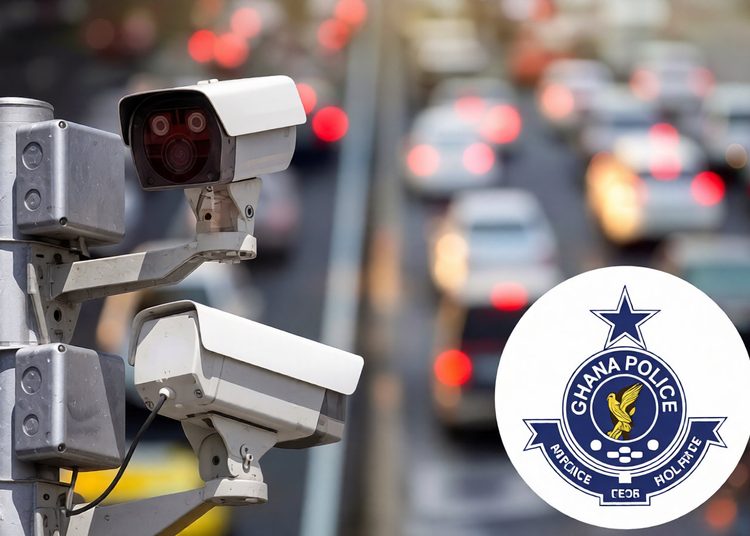
The Motor Traffic and Transport Department (MTTD) has outlined how the Traffitech GH system will digitally capture road traffic violations and notify vehicle owners, allowing motorists to respond to offences without necessarily undergoing the conventional police arrest process.
ACP Alexander Kwaku Obeng, Director of Education, Research and Training at the MTTD, explained that the initiative seeks to “strengthen road safety through technology-driven enforcement and evidence collection.”
“The procedure under the automated road traffic offences and fines system, which we have named TraffiTech GH, requires anyone who receives an electronic notice of violation, otherwise known as a traffic ticket, via text message to respond within two weeks (14 days). Within this period, the recipient is required to either pay the fine or indicate online, through the same system, their intention to contest the violation in court.”
ACP Alexander Kwaku Obeng
ACP Obeng explained that the electronic notification contains an “embedded link through which vehicle owners can examine the recorded violation.” The evidence may include photographs and video footage, alongside details such as the vehicle’s registration number, model, colour, location and the date and time of the alleged offence.

Furthermore, the system incorporates a reminder procedure for motorists who fail to respond within the prescribed period. By the seventh day, the police are required to send a reminder notice, giving the vehicle owner another opportunity to comply with the process or challenge the allegation.
The MTTD Director also clarified that Traffitech GH does not eliminate the option of appearing before a court. Motorists who dispute an alleged offence can indicate their intention to contest it through the digital platform, after which the police can support the proceedings with the evidence collected.
Explaining the rationale for the change, ACP Obeng pointed to the limitations of conventional enforcement, which often requires officers to apprehend motorists, process them at police stations and arrange subsequent court appearances. The digital procedure, by contrast, allows the evidence to reach the vehicle owner directly, reducing the need for an immediate physical encounter with the police.
He also linked the initiative to Regulation 242 of the applicable road traffic regulations, which provides for the digital acquisition of evidence relating to traffic violations. The framework is intended to ensure that alleged offences can be documented and addressed through a structured process.
ACP Obeng emphasised that motorists must take responsibility for their conduct even when enforcement officers are not visibly present. He explained that the availability of recorded evidence and the possibility of receiving an electronic ticket are intended to encourage compliance with traffic rules.
Traffitech GH Uses Mobile Cameras To Discourage Speeding
The Motor Traffic and Transport Department (MTTD) also reported encouraging early signs of behavioural change among motorists following the deployment of mobile traffic cameras ahead of the planned full rollout of Traffitech GH.
ACP Alexander Kwaku Obeng, the department’s Director of Education, Research and Training explained that the cameras are being deployed strategically to discourage speeding and improve compliance with road traffic regulations.
Rather than relying exclusively on fixed camera locations, the MTTD has incorporated cameras into unmarked police vehicles and uses additional units mounted on movable tripods.
“Bearing in mind that cameras can be located anywhere, whether in an approaching or a receding vehicle, drivers will always be encouraged to slow down. I can assure you that this strategy of embedding some of these cameras in our vehicles that operate on our roads nationwide, alongside collapsible cameras mounted on tripods that can be moved from one location to another, has had a very positive impact on motorists’ behaviour.”
ACP Alexander Kwaku Obeng
ACP Obeng explained that the department began intensifying public education and gathering evidence in September, ahead of the proposed November 1 commencement of full enforcement. During that period, vehicle owners received warning messages containing information about their vehicles and the alleged speeding incidents, alongside links to photographs and video evidence.

According to the MTTD director, this preliminary exercise was to alert motorists to the new enforcement approach and encourage them to reduce their speed before penalties were introduced.
Meanwhile, the department’s deployment strategy extends beyond Accra, with cameras operating or being positioned in locations including Takoradi, Kumasi, Sunyani, Tamale, Koforidua, Ho and Tema. ACP Obeng explained that the mobile approach enables officers to shift monitoring equipment between locations instead of depending on a single permanent installation.
The initiative responds to the department’s assessment that speeding remains a major contributor to road crashes and fatalities in Ghana. ACP Obeng cited human behaviour as a significant factor in crashes, noting that the police views technology as “a means of strengthening enforcement and encouraging motorists to comply with speed limits.”
He also explained that drivers should recognise built-up areas and adjust their speed accordingly, even when they cannot see a traffic camera or a police officer. Under the relevant road traffic rules, motorists are expected to exercise the judgement and discipline required to drive safely within populated areas.
READ ALSO: Cedi Recovers 1.2% Against Dollar After Recent Losses