Dr. Kenneth Bansah, a mining engineer and resource governance expert, has warned that the government’s reliance on low-income alternative livelihood programmes will fail to eliminate illegal small-scale mining, locally known as galamsey.
He explained that these interventions cannot match the substantial financial earnings generated from artisanal mining operations.
“Deploying low-income alternative livelihood programmes that cannot compete with earnings from mining will not solve the galamsey menace.”
Dr. Kenneth Bansah,
Expanding on this position, Dr. Bansah stressed that state-led economic diversification initiatives often fall flat because the income margins offered to artisanal workers are fundamentally uncompetitive compared to active mineral extraction.
He noted that anti-galamsey policies consistently collapse when state agencies attempt to redirect illegal miners into agricultural or craft-based ventures without addressing the economic disparities that draw individuals to small-scale gold mining in the first place.
Flawed Legal Frameworks and Regulatory Barriers
Addressing the structural impediments to formalization, Dr. Bansah highlighted that removing miners from illicit sites without providing accessible and workable legal pathways only pushes operations deeper underground.
He observed that many small-scale operators genuinely seek legitimacy but are routinely hindered by administrative bottlenecks.
The governance expert criticized the state’s persistent deployment of complicated, expensive, and lengthy licensing procedures that actively discourage miners from transitioning into the formal economy.
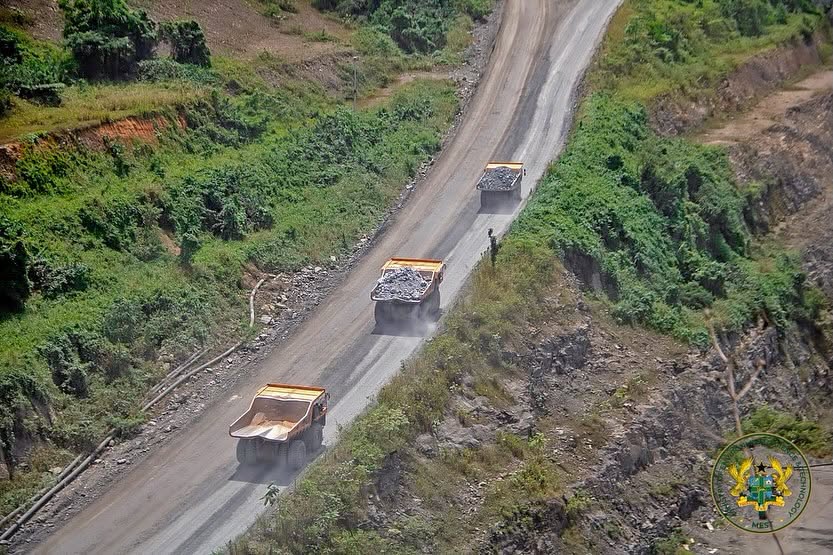
Furthermore, he pointed out that regulatory authorities frequently issue mining licences without ensuring access to suitable, mineralized land, leaving legal permit holders with useless tracks of land and forcing them into unauthorized zones.
Dr. Bansah also cautioned against arbitrary regularisation practices, emphasizing that formalizing miners at illegally occupied sites without assessing the environmental and technical suitability of those locations exacerbates land degradation and water pollution.
Structural Failures in Community Mining Schemes
Evaluating ongoing state interventions, Dr. Bansah expressed deep concern over the operational execution of local mining initiatives.
He asserted that establishing community mining schemes without adequate technical supervision, environmental safeguards, and strict accountability mechanisms merely replicates the hazards of galamsey under an official banner.
Without professional engineering oversight, these schemes continue to utilize unsafe pit excavation methods and unmonitored chemical processing.
Dr. Bansah noted that institutional monitoring must accompany legal status to prevent community concessions from degenerating into unregulated, hazardous sites that endanger local watersheds.
He reiterated that top-down regulatory actions routinely fail because authorities systematically exclude mining communities from decisions regarding site allocation, land governance, and direct enforcement measures.
The Need for Comprehensive Extractive Sector Reform
The urge for systemic reform stems from decades of failed enforcement drives that have cost millions of dollars while yielding minimal environmental recovery across Ghana’s mining belts.
Traditional military crackdowns and confiscation of equipment have historically produced short-term disruptions rather than permanent solutions, as disenfranchised operators routinely return to the riverbodies once security personnel withdraw.
Comprehensive policy reform is desperately needed to bridge the widening gap between mineral policy formulation and socio-economic realities on the ground.
A viable framework must prioritize viable land bank allocation, streamlined digital registration processes, and fair economic incentives.
By shifting from punitive clear-outs to structurally supported formalization, the country can protect vital water resources, safeguard rural livelihoods, and secure environmental stability for future generations.
READ ALSO: CTVET, UNESCO Promote TVET Awareness Among Effutu Students