Ghana’s ambition to expand renewable energy and build a green economy will depend not only on investment in generation infrastructure but also on its ability to develop home-grown technologies and technical expertise, the Energy Commission has said.
The Commission is therefore placing greater emphasis on helping young innovators move beyond developing prototypes to creating solutions that can be refined, financed and deployed commercially.
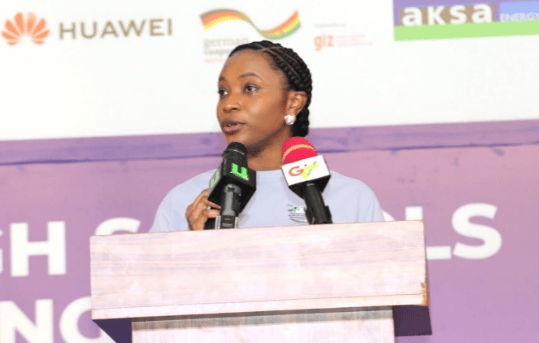
Acting Executive Secretary of the Energy Commission, Adwoa Serwaa Bondzie, reaffirmed this commitment at the seventh edition of the Commission’s Senior High Schools Renewable Energy Challenge in Accra, where she said the country’s energy future would be shaped significantly by the creativity and innovative capacity of its young people.
Her remarks highlight an important question for Ghana’s energy transition: how can promising ideas emerging from school laboratories be developed into technologies that serve households, businesses and underserved communities?
The competition, held under the theme, “Harnessing Renewable Energy to Power Ghana’s 24-Hour Green Economy,” brought together six schools in a Champion of Champions contest designed to showcase practical renewable energy solutions.
Kpando Senior High School emerged overall winner with 79 points, narrowly beating Dabokpa Technical Institute, which scored 78 points. Presbyterian Boys’ Senior High School (PRESEC), Legon, finished third with 75 points.
However, beyond the final rankings, the Commission’s renewed emphasis on commercialisation places the initiative within a broader effort to strengthen Ghana’s capacity to develop and deploy its own energy technologies.
From School Projects To Commercial Technologies
The challenge of commercialisation is particularly important because a prototype that performs well in a competition does not automatically become a product that can be manufactured, maintained and used at scale.
Student innovations may require further engineering, testing, technical certification, access to specialised equipment, intellectual property support and financing before they can become commercially viable.
The Commission’s programme provides an initial platform for identifying promising ideas, while its partnership with the Council for Scientific and Industrial Research (CSIR) offers an example of how selected projects can receive support beyond the competition.
According to the Energy Commission’s programme information, the two institutions established a memorandum of understanding to promote the long-term sustainability of the challenge and support the development of student projects towards real-world implementation.
One example cited by the Commission is a solar dehydrator developed by Kpedze Senior High School, which was selected for further refinement by CSIR, with the aim of commercialising the technology for agricultural produce processing.
The initiative illustrates the potential of school-based innovation to address practical economic needs, particularly in sectors where energy technologies can improve productivity and reduce post-harvest losses.
It also demonstrates why sustained technical support matters. Without a clear route from an initial invention to product development and market adoption, promising projects risk remaining exhibition pieces rather than becoming useful technologies.
Industry Partnerships Will Determine The Next Stage
The call for stronger collaboration between schools and industry was also reinforced by the Education Ministry.
In a speech delivered on behalf of Education Minister Haruna Iddrisu, Deputy Director Jemimah Boatemaah Osei urged businesses and other stakeholders to support student innovators through investment, partnerships and market opportunities.
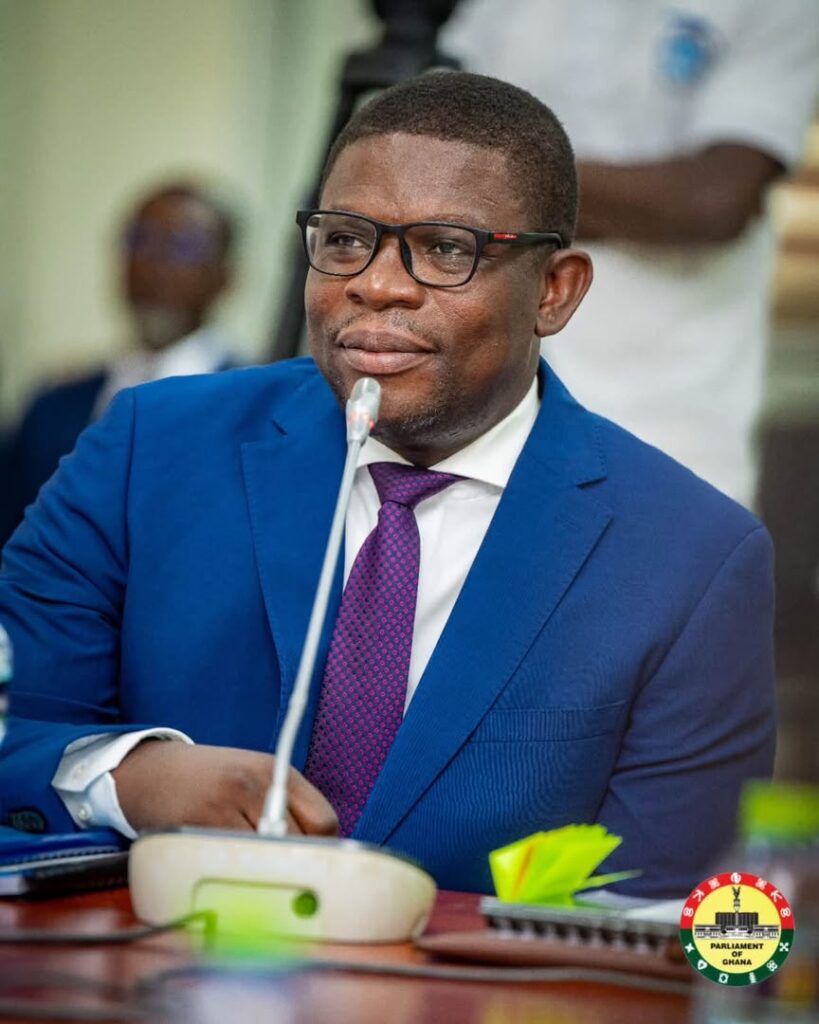
She said promising inventions were emerging from school laboratories but needed support to reach their full potential.
The Ministry’s position reflects the importance of connecting education with the practical requirements of the energy industry.
Students may develop technical ideas, but manufacturers, energy companies, research institutions and investors are better positioned to help determine whether those ideas can meet operational requirements and attract customers.
At the June 2026 launch of the seventh edition, Deputy Minister for Energy and Green Transition Richard Gyan-Mensah similarly urged participants to approach innovation with commercial and practical considerations in mind.
“I urge you to design projects that are technically sound, financially viable, scalable and socially impactful, and that the competition should serve as a platform for discovering future renewable energy and energy technology experts,”
That emphasis on financial viability and scalability is significant because Ghana’s energy transition will require more than the adoption of imported technologies.
Building local expertise and businesses capable of designing, producing, installing and maintaining energy systems could also strengthen domestic participation in the expanding green economy.
Youth Participation Must Extend Beyond Competitions
The commercialisation agenda also connects with the question of whether young Ghanaians can participate meaningfully in the economic opportunities expected from renewable energy expansion.
In a November 3 report, The Vaultz News examined concerns raised by the Strategic Youth Network for Development about the ability of young businesses to access financing, procurement opportunities and licensing arrangements under Ghana’s Renewable Energy Master Plan.
The report highlighted the risk that ambitious investment and employment projections could deliver limited benefits to young entrepreneurs if smaller firms lack the resources and institutional support needed to compete.
The distinction is important. Encouraging students to develop technologies is one part of building a local renewable energy industry; creating pathways for them to become engineers, researchers, manufacturers and entrepreneurs is another.
The Energy Commission’s challenge could therefore serve as an early stage in a broader innovation pipeline, provided that successful participants receive opportunities to continue developing their work after the competition.
The Commission’s official programme objectives include strengthening students’ research skills, promoting technological innovation in renewable energy and energy efficiency, and encouraging young people to develop solutions to climate and energy challenges.
Since its introduction in 2019, the initiative has expanded from a pilot involving schools in Greater Accra into a national programme attracting institutions from across the country.
The Commission reports that 119 schools from all 16 regions participated in the previous year’s challenge.
Turning Innovation Into Energy-Sector Capacity
The seventh edition also brought attention to the relationship between dependable electricity and the government’s 24-hour economy agenda.
Energy Commission Board member Prof. Ernest Asamoah stressed that reliable electricity must reach communities across the country if businesses and essential services are to operate consistently.
He urged students to develop technologies that respond to the everyday energy needs of farmers, market traders and rural healthcare workers.

That focus on practical applications is essential. Renewable energy innovation will have greater economic value when it addresses identifiable needs, such as powering agricultural processing, supporting rural health facilities and improving access to electricity in communities where grid extension is costly.
For the Energy Commission, the next measure of success may therefore extend beyond the number of schools participating or the projects presented at the annual competition.
It will also depend on how many innovations receive the technical and financial support required to reach the market, how many young people acquire relevant expertise, and whether locally developed technologies can contribute meaningfully to Ghana’s energy needs.
Kpando SHS’s victory provides recognition for student creativity. The larger challenge is ensuring that such creativity can develop into lasting technical capacity, local enterprise and practical solutions for the country’s energy transition.
READ ALSO: AFAG Questions NPA Bill’s Tariff Controls, Infrastructure Fund