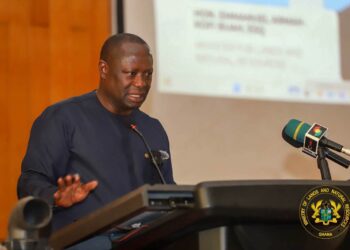
Dr. Steve Manteaw, Co-Chair of the Ghana Extractive Industries Transparency Initiative (GHEITI), has urged the government to move beyond broad policy pronouncements by outlining a concrete operational strategy to achieve its ambitious local gold refining targets.
Speaking on the feasibility of the state’s latest extractive sector directives, the governance advocate emphasized that expanding domestic value addition requires a transparent blueprint for securing the necessary processing infrastructure rather than relying solely on political commitments.
The call follows the presentation of the 2027 Budget Statement, in which Finance Minister Dr. Cassiel Ato Forson unveiled a policy aiming for 70 percent local refining of artisanal and small-scale mining (ASM) gold by December 2027, scaling up to 100 percent full domestic processing by the end of 2028.
While Dr. Manteaw expressed strong confidence in the technical viability of the policy and the latent potential of Ghana’s mineral sector, he noted that the budget fell short of detailing the specific mechanisms, timelines, and capital investments needed to bridge the current infrastructure deficit.
“You don’t just make promises, but you show how you’re going to do it, and it is the how that is not apparent to us,” Dr. Steve Manteaw urges the government.
Bridging the Refinery Capacity Deficit
During the media engagement, broadcast journalist Evans Mensah referenced recent reporting from the Ghana Gold Board (GoldBod) indicating that only 30 percent of Ghana’s ASM gold output is currently refined within the country.
He questioned whether the state possesses the institutional and technical bandwidth to expand domestic processing infrastructure rapidly enough to capture 70 percent of small-scale output within a single calendar year.
Jumping from 30 percent to 70 percent requires absorbing an additional 40 percent of output a massive logistical undertaking given that the ASM sub-sector accounts for over a third of Ghana’s total gold production.
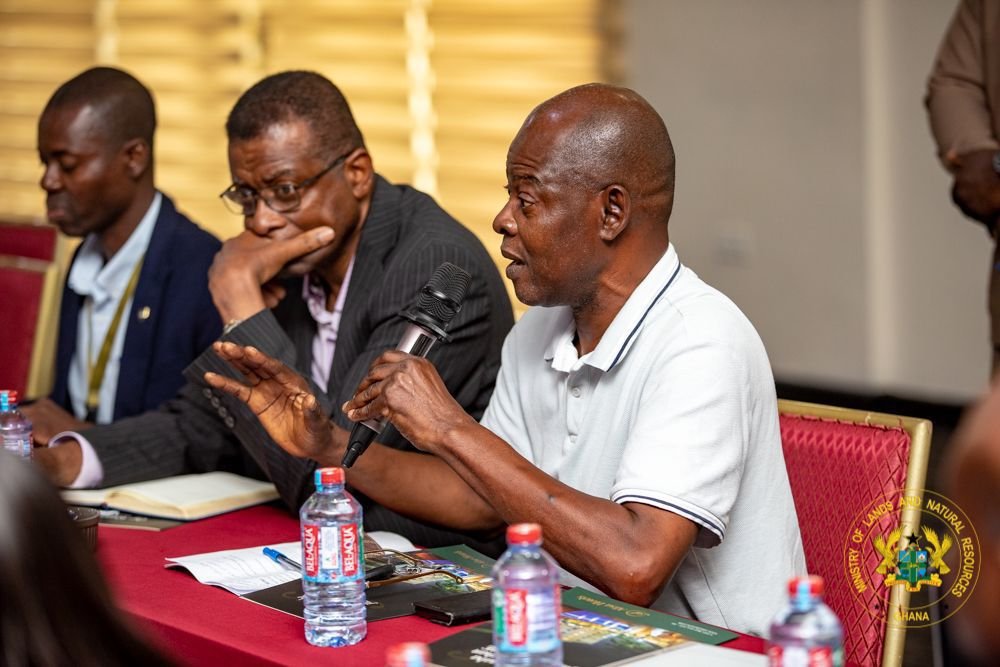
Addressing the capacity gap, Dr. Manteaw acknowledged that hitting the 2027 and 2028 milestones will depend heavily on expanding existing industrial throughput and onboarding new facilities.
He noted that GoldBod the sole state authority mandated to buy, assay, value, and export precious minerals is already exploring strategic avenues to scale up domestic refining operations.
“We definitely will have to increase that capacity, and I know GoldBod is working towards that,” Manteaw stated, pointing out that leveraging existing private refineries alongside state-backed expansions offers a pragmatic starting point.
Why Local Gold Refining Matters for Ghana’s Economy
For decades, Ghana has maintained its status as Africa’s leading gold producer, yet the vast majority of its bullion has been exported in raw, unrefined doré form to international hubs such as Switzerland, the United Arab Emirates, and India.
Exporting unrefined minerals deprives the domestic economy of substantial downstream revenue, high-skilled metallurgical employment, and valuable industrial linkages.
By retaining refining processes locally, Ghana stands to capture higher export earnings, strengthen its foreign exchange reserves, and support the Bank of Ghana’s domestic gold purchase and currency stabilization programmes.

Furthermore, full local refining is widely viewed by policy analysts as a critical instrument for curbing illicit financial flows and gold smuggling. When small-scale miners and aggregators are integrated into a formalized domestic refining ecosystem managed by GoldBod, state regulators gain end-to-end traceability over mineral supply chains.
As Dr. Manteaw observed during the discussion, achieving the 2028 target requires authorities to “reduce smuggling and get the feedstock” necessary to keep domestic refineries operating at optimal capacity.
Overcoming Certification and Supply Chain Hurdles
While the economic rationale behind the 2027 budget’s US$1.5 billion critical-minerals value-addition pillar is compelling, industry watchers warn that physical refinery construction is only half the battle.
For Ghanaian-refined gold to trade competitively on global bullion markets without incurring steep price discounts, local facilities must secure London Bullion Market Association (LBMA) Good Delivery accreditation.

Achieving LBMA certification requires years of rigorous auditing, strict adherence to environmental, social, and governance (ESG) standards, and verifiable conflict-free sourcing across the volatile ASM landscape.
Without a clearly articulated implementation framework detailing how GoldBod will guarantee consistent doré feedstock, finance refinery upgrades, and navigate international certification bottlenecks, stakeholders fear the 2028 target could face execution delays.
Consequently, GHEITI maintains that publishing an actionable, time-bound roadmap is essential to align private investors, small-scale miners, and regulatory agencies behind Ghana’s historic shift from raw mineral extraction to full value addition.
READ ALSO: Ghana’s Producer Prices Rise as Oil Inflation Hits 30.2%