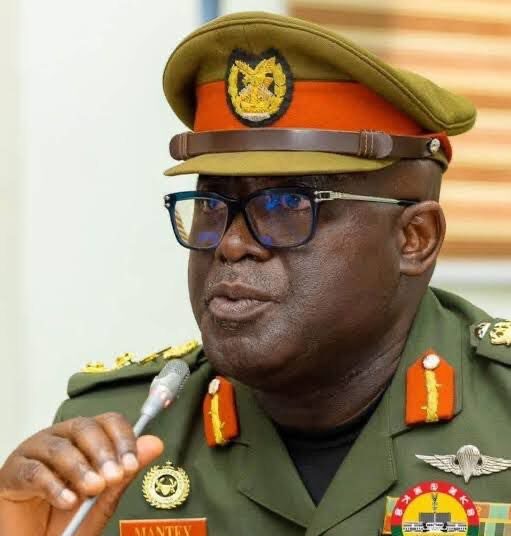
The Director-General of the Narcotics Control Commission (NACOC), Major-General Maxwell Obuba Mantey, has urged Ghanaian exporters to protect the integrity of their businesses by avoiding illicit drug activities, warning that criminal conduct within the export chain could undermine the country’s international trade reputation and commercial competitiveness.
Addressing members of the export fraternity at the Ghana Export, SME and Made in Ghana Fair (GEXPO 2026) in Accra, he emphasised that exporters must operate within the law and ensure their businesses are not exploited by drug trafficking networks.
His warning comes amid growing concerns over narcotics consignments linked to Ghana and intercepted in foreign jurisdictions, raising questions about cargo security and the country’s reputation as a reliable trading partner.
“The Agenda Is To Develop Our Country And Protect The Good Image Of Ghana,” Major-General Mantey said during a recent engagement with port operators, according to NACOC.
The warning highlights the commercial implications of drug trafficking for Ghana’s export sector, particularly at a time when the government is pursuing an accelerated export development agenda, promoting locally manufactured goods and seeking to expand the country’s access to international markets.
Export Reputation And Market Access
Ghana’s export industry depends significantly on international confidence in the quality, safety, traceability and integrity of goods entering foreign markets.
The Ghana Export Promotion Authority (GEPA) reported that the country’s non-traditional exports (NTEs) generated approximately US$5.01 billion in earnings in 2025, representing a 30.7 per cent increase over the US$3.83 billion recorded in 2024.
The performance reflects the growing contribution of processed and semi-processed products, including cocoa derivatives, agro-processed commodities, manufactured goods, textiles, handicrafts and other products to Ghana’s export earnings.
With more than 1,500 exporting firms involved in the country’s non-traditional export sector in 2024, maintaining the credibility of Ghanaian exporters is increasingly important to businesses seeking international buyers, distributors and investment partners.
Drug trafficking through commercial export channels could expose legitimate businesses to additional scrutiny, heightened cargo inspections, shipment delays and potentially increased compliance costs.
Although such consequences are not automatic, the possibility of criminal networks exploiting legitimate cargo creates risks for exporters operating in an increasingly regulated international trading environment.
Major-General Mantey’s appeal therefore places the responsibility on exporters, freight forwarders, shipping agents and other supply chain operators to exercise due diligence when dealing with clients, cargo documentation and commercial transactions.
GEXPO Promotes Export Expansion
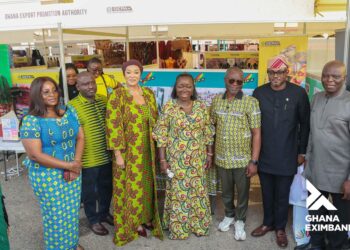
The warning was delivered during GEXPO 2026, which opened on November 18 at the Black Star Square in Accra and is scheduled to run until November 22.
The fair provides a platform for businesses to showcase Made-in-Ghana products, engage prospective buyers, establish commercial relationships and explore opportunities to expand into domestic and international markets.
The exhibition is expected to support the government’s Accelerated Export Development Programme by helping local enterprises improve their competitiveness and access international supply chains.
Major-General Mantey’s message consequently adds a security and compliance dimension to the commercial discussions taking place at the fair.
Drug Trafficking Threatens Commercial Credibility
Ghana’s recent drug trafficking incidents have heightened concerns about the possible exploitation of the country’s ports and export infrastructure by international criminal networks.
In September 2026, French customs seized nearly 3.9 tonnes of cocaine concealed in a container carrying plastic waste that had arrived from Ghana at the Port of Dunkirk. The consignment was estimated to have a street value of approximately €225 million.
The seizure triggered investigations by NACOC, resulting in arrests in Ghana and subsequent court proceedings involving suspects accused of participating in the alleged trafficking operation.
Also, in November, NACOC also announced arrests in connection with approximately 2.6 tonnes of cocaine seized in Valencia, Spain, in August, as investigations continued into the alleged roles of freight forwarders and other persons involved in the shipment.
These developments have intensified discussions about cargo security, export documentation, the responsibilities of freight forwarding companies and the need for stronger collaboration among security agencies and private-sector operators.
During a working visit to Tema Harbour in October, Major-General Mantey called for closer cooperation between agencies operating at the port to prevent narcotics trafficking.
“There should be no turf wars among agencies, but rather closer collaboration and information-sharing to prevent the Tema Port from being exploited as a transit point for narcotic drugs.”
Director-General of (NACOC), Major-General Maxwell Obuba Mantey
Compliance Critical To Export Growth
The NACOC warning underscores the importance of establishing transparent business practices and conducting due diligence on customers, suppliers, agents and freight intermediaries.
NACOC has previously reported significant enforcement outcomes. At the 33rd Meeting of Heads of National Drug Law Enforcement Agencies, Africa, in September 2026.
The Commission disclosed that intelligence led operations involving partner security agencies had resulted in 217 arrests, 165 prosecutions, more than 8.5 tonnes of assorted narcotic drugs intercepted and 45.4 million tramadol tablets seized during the period under review.
Protecting Ghana’s Trade Ambitions
GEXPO 2026 presents Ghanaian businesses with opportunities to strengthen their brands, secure new markets and increase export earnings.
NACOC’s intervention reinforces the need for commercial expansion to be accompanied by responsible business practices and stronger supply chain security.
The Commission’s appeal to exporters is that legitimate trade must remain separate from illicit drug activities, as criminal exploitation of commercial channels could damage the reputation of businesses and compromise Ghana’s broader export ambitions.
For Ghana’s growing export community, protecting the country’s international credibility is not only a security responsibility but also an essential component of sustaining business growth, attracting investment and expanding access to global markets.
READ ALSO:BoG Warns Ghana’s Economic Recovery and Inflation Gains Could Reverse in 2027