The Bank of Ghana (BoG) is pushing for a major rethink of how money moves across African borders, placing cheaper remittances, faster transactions and more reliable payment systems at the centre of efforts to deepen regional economic integration.
The move comes as businesses, households and individuals across the continent continue to face the burden of expensive cross-border transactions, delays in accessing funds and limited transparency in international payments.
At the heart of the Bank’s latest intervention is a call for regulators to move beyond broad international payment statistics and pay closer attention to the actual costs and challenges associated with individual payment corridors.
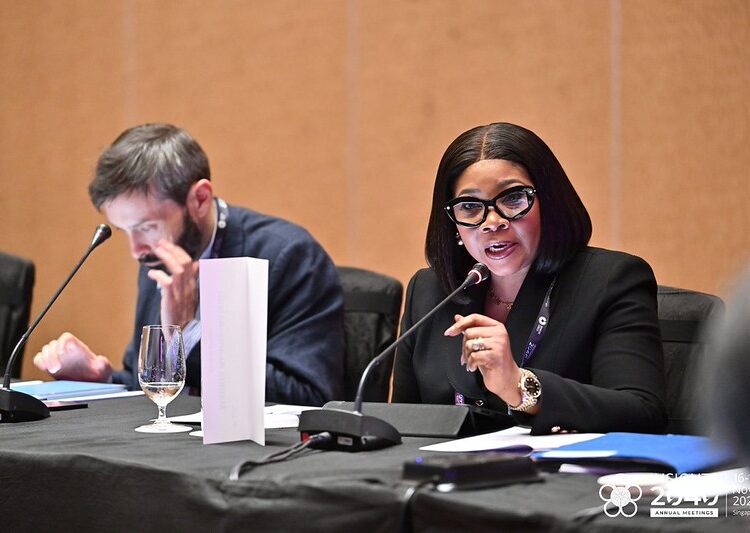
Second Deputy Governor of the Bank of Ghana, Matilda Asante-Asiedu, made the call at the Insights2040 Annual Meetings in Singapore, where central bankers, regulators, financial institutions and technology companies gathered to examine the future of financial services.
Her intervention places Ghana at the centre of an important conversation about how Africa can make cross-border payments more affordable and dependable, particularly at a time when digital financial services are becoming increasingly important to trade, investment and household livelihoods.
BoG Wants Regulators to Rethink Cross-Border Payments
Mrs Asante-Asiedu argued that improving cross-border payments requires a more targeted approach that recognises the different challenges confronting individual payment routes.
Rather than relying exclusively on global averages, she urged regulators to examine specific corridors to understand how much people pay, how long transactions take and whether recipients can access their money without unnecessary difficulties.
According to her, monitoring costs, transparency, reliability and access to funds along individual routes would help identify successful interventions while exposing weaknesses that require urgent attention.
The approach could prove significant for African economies, where the cost and complexity of moving money between countries can affect commercial activities, family support transfers and investment decisions.
Cross-border payments are particularly important to households that depend on money sent by relatives working in other African countries and abroad. Businesses also rely on efficient international payment channels to settle invoices, pay suppliers and maintain trading relationships.
High transaction costs can reduce the actual amount received by beneficiaries, while delays and unpredictable settlement processes create additional uncertainty for businesses and individuals.
The BoG’s position therefore reflects a growing recognition that payment connectivity must translate into tangible economic benefits rather than simply creating technical links between financial institutions.
Cheaper Remittances Could Strengthen African Trade
Beyond reducing transaction charges, the Bank of Ghana wants improvements in payment infrastructure to support broader economic activities across the continent.
Mrs Asante-Asiedu emphasised that connecting payment systems should deliver practical benefits, including stronger trade, remittances, investment and regional integration.
This is particularly important as African countries pursue deeper economic cooperation under the African Continental Free Trade Area (AfCFTA).
Although the agreement seeks to increase trade among African countries, inefficient payment arrangements can undermine the commercial opportunities created by lower trade barriers.
A business in Ghana trading with a supplier in another African country, for instance, needs a payment system that allows funds to move securely, quickly and at a reasonable cost.
When transactions become expensive or difficult to complete, smaller businesses may find it harder to participate in regional markets.
Reducing these barriers could improve the ability of African enterprises to compete, expand their operations and establish stronger commercial relationships across national borders.
The potential benefits also extend to remittance recipients, whose financial support from relatives and friends can be affected by transaction charges and delays.
Ghana and Singapore Deepen Digital Finance Cooperation
The Singapore meetings also provided an opportunity for Ghana to explore stronger cooperation with one of the world’s leading financial and technology centres.
During the visit, Mrs Asante-Asiedu met Singapore’s Minister of State for Foreign Affairs and National Development, Alvin Tan, to discuss opportunities for closer collaboration.
Their discussions covered financial innovation, digital payments, cross-border transactions and artificial intelligence.
Both sides also acknowledged the existing collaboration between the Bank of Ghana and the Monetary Authority of Singapore.
A Singaporean delegation is expected to visit Ghana in January 2027 to continue discussions and explore further opportunities.
The anticipated visit could provide another platform for both countries to examine areas where regulatory cooperation, technological innovation and knowledge-sharing can support financial sector development.
For Ghana, stronger international partnerships could help improve its understanding of emerging financial technologies while creating opportunities to strengthen domestic payment infrastructure.
Stablecoins Enter the Cross-Border Payments Debate
Digital assets also featured prominently in the discussions, particularly their potential to transform international payments.
The Director of the Bank’s FinTech and Innovation Department, Owureku Asare, participated in a roundtable examining tokenised markets and the challenges associated with fragmented digital financial infrastructure.
The discussions explored regulatory differences and possible ways to connect digital asset platforms with existing financial systems.
Philip Kwaw Sebuabe, the Bank’s Head of Virtual Assets, also participated in discussions on stablecoins as potential infrastructure for global payments.
Participants examined how stablecoins could reduce transaction friction, improve settlement efficiency and make cross-border fund transfers easier.
However, the discussions also considered the regulatory frameworks required to support responsible innovation.
This is an important consideration as central banks and financial regulators attempt to balance the potential efficiency gains from digital assets against risks relating to financial stability, consumer protection and regulatory oversight.
AI Could Reshape the Future of Financial Services
Artificial intelligence was another major subject at the Singapore FinTech Festival, held under the theme, The Coming Rewiring of the Financial System: New Risks. New Rules. New Growth.
Participants examined how AI could improve payment services, risk assessment, productivity and customer experience.
Particular attention was given to agentic AI systems, which can perform multi-step tasks and initiate actions with varying levels of autonomy.
However, the opportunities come with significant concerns involving accountability, cybersecurity, data protection and consumer safeguards.
The discussions also highlighted the possibility that developing economies could struggle to enjoy equal access to AI technology and its economic benefits.
Employment, skills development and competitiveness were among the wider economic issues considered.
Ghana’s Digital Finance Ambitions Face a Critical Test
The BoG’s participation in the Singapore meetings reflects the growing importance of digital infrastructure in shaping the future of financial services.
Cheaper cross-border payments could strengthen remittance flows, support businesses and improve financial inclusion across Africa.
However, achieving these benefits will require more than international discussions and technological partnerships. Regulators must translate policy commitments into practical reforms that address the actual difficulties faced by payment users.
As Ghana deepens its engagement with international financial institutions and technology partners, the effectiveness of these initiatives will ultimately depend on whether households and businesses experience lower costs, faster transactions and more dependable access to their money.
READ ALSO: Ghana Secures 6.5 Million Verified Forest Carbon Credits