
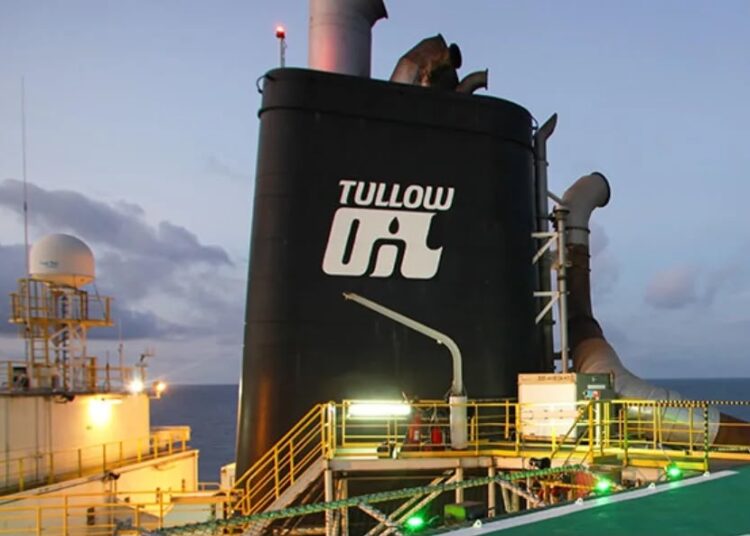
Ghana and Tullow Oil have reached an agreement to resolve two longstanding tax disputes through a combination of upfront cash, assigned receivables, deferred payments and future gas revenues, potentially bringing an end to a protracted legal disagreement while preserving investment in the Jubilee and TEN oilfields.
The agreement, announced by Tullow Oil on November 23, 2026, follows an International Chamber of Commerce (ICC) tribunal ruling in September that upheld Ghana’s tax assessment relating to proceeds received by the company under its business interruption insurance policy.
The settlement also addresses a separate arbitration over the disallowance of loan interest deductions, with the Government of Ghana approving the agreement for submission to Parliament for consideration and approval.
Under the arrangement, Tullow will make an upfront cash payment of US$112 million, while approximately US$91 million will be settled through the assignment of certain receivables to government and deductions relating to business interruption insurance premiums not historically utilised.
The company will also make cash payments of US$40 million in 2027 and US$44.5 million in 2028, subject to deferral if annual average oil prices fall below US$90 per barrel, with 2032 serving as the backstop for the payments.
Additionally, revenues associated with approximately 100 billion cubic feet (BCF) of Jubilee gas will be assigned to government beginning in 2029, although Tullow retains the option to defer the commencement of the assignment until 2032.
The settlement addresses the business interruption insurance arbitration involving US$196.5 million and the loan-interest arbitration involving US$190.5 million, both of which carried 100 per cent penalties, according to the company.
From Arbitration Victory to Revenue Recovery
The agreement marks a shift from Ghana’s legal defence of its tax position to the practical recovery of the liabilities established through the arbitration process.
In September, the ICC tribunal dismissed Tullow’s claims relating to the business interruption insurance proceeds and upheld the Ghana Revenue Authority’s assessment, strengthening the state’s position in the dispute.
The Vaultz News reported on September 30, 2026, in Ghana Secures US$393m Tullow Tax Victory, that the ruling validated Ghana’s assessment and established the legal basis for pursuing the revenue, although the award itself did not mean the money had already been collected.
The settlement now provides a defined structure for resolving the outstanding obligations, with government opting for a combination of immediate and future value rather than a single payment covering the entire amount.

Finance Minister Dr Cassiel Ato Forson said the agreement gives effect to the arbitration award and secures revenues due to Ghana while maintaining investment in the country’s offshore petroleum developments.
“The tribunal upheld Ghana’s right to tax the business interruption insurance income in full. This agreement gives effect to that award and resolves the remaining dispute in a way that secures the revenues due to the people of Ghana while sustaining the investment needed to maintain production from the Jubilee and TEN fields, which contribute to energy security, domestic gas supply and supporting thousands of Ghanaian livelihoods.”
Dr Forson also clarified that the agreement is limited to the two tax assessments and does not amend Ghana’s Petroleum Agreements or existing tax laws.
That distinction is important because the settlement does not represent a renegotiation of the country’s petroleum fiscal regime, but rather an arrangement to resolve the liabilities arising from the two assessments.
The Investment and Fiscal Balance
The settlement’s structure reflects the competing considerations involved in recovering tax liabilities from a major petroleum producer whose operations remain economically significant to Ghana.
Tullow has described the arrangement as one that will allow it to continue its refinancing plans and support investment in the Jubilee and TEN developments.

Its Chief Executive Officer, Ian Perks, said the agreement would help resolve the outstanding liabilities while allowing the company to maintain its investment commitments.
“We are pleased to have come to an arrangement with the Government of Ghana to resolve the outstanding liabilities related to the two tax arbitrations. This agreement, subject to approval by Parliament, will enable Tullow to continue with its refinancing plans which are progressing and will support ongoing investment in the Jubilee and TEN developments which are nationally important assets.”
For Ghana, the arrangement raises a broader fiscal consideration: how to secure tax revenues while maintaining the investment needed to sustain production from mature offshore fields.
Jubilee and TEN remain important to the country’s oil production and domestic gas supply, making the continuity of operations relevant to both petroleum revenue and energy security.
However, the settlement’s financial value should not be measured solely by the upfront payment. The assigned receivables, deferred cash payments and future gas revenues form part of the agreement, but their timing, execution and conditions will determine when government realises the full benefits.
The deferral provisions tied to oil prices also introduce uncertainty into the timing of the 2027 and 2028 payments. If annual average prices fall below the stipulated threshold, the payments may be deferred, extending the period over which the government receives the settlement value.
The assignment of Jubilee gas revenues presents another dimension, linking the resolution of tax disputes to Ghana’s domestic energy supply and future revenue streams.
Parliament’s Approval Remains Necessary
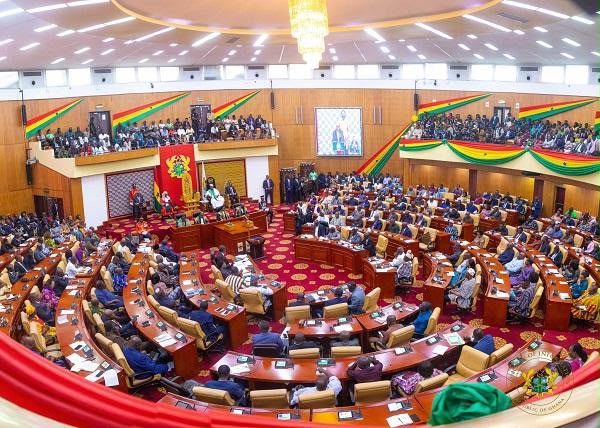
Although government has approved the agreement, parliamentary consideration remains a key step before the arrangement can take effect.
Parliament will need to examine the terms, including the payment structure, the conditions attached to deferred payments and the assignment of future gas revenues.
The settlement also raises questions about how the assigned receivables and gas revenues will be accounted for, and how government will monitor compliance with the agreed obligations.
The arrangement could provide a practical resolution to the disputes while allowing both parties to focus on the operational and financial challenges facing Ghana’s offshore petroleum developments.
But the final outcome will depend on parliamentary approval and the subsequent implementation of the agreement.
For Ghana, the objective is to convert the arbitration victory into actual fiscal receipts without undermining the investment needed to sustain production.
For Tullow, the agreement offers a pathway to resolving the outstanding liabilities while maintaining its focus on refinancing and operations.
The settlement therefore represents more than the conclusion of two tax disputes. It places Ghana’s fiscal enforcement objectives and the future investment requirements of its petroleum sector within the same negotiated framework, with the effectiveness of that balance yet to be demonstrated through implementation.
READ ALSO: Poget Herbal Warns Chemical Spraying Threatens Medicinal Plants