

Security Consultant and former Intelligence Officer with the Bureau of National Intelligence (BNI), Richard Kumadoe, has defended Ghana’s acquisition of a new Dassault Falcon 6X executive jet, describing it as an important investment in the country’s national security architecture.
Speaking in an interview with The Vaultz News, Mr Kumadoe maintained that a dedicated executive aircraft provides strategic security advantages beyond presidential transportation, particularly in protecting the President, supporting military operations and ensuring continuity of government during emergencies.
He argued that Ghana’s acquisition should be assessed against the potential security risks of relying on ageing aircraft, stressing that the country must prioritise the availability of modern aviation assets to strengthen its national security capabilities.
“If you have the best at your disposal, you are just adding up to your national security architecture, which is the best thing to do.”
Richard Kumadoe, a Security Consultant and former Intelligence Officer with the BNI
Aviation Modernisation Linked to National Security
Mr Kumadoe situated the acquisition of the new executive jet within the broader programme to modernise the Ghana Armed Forces’ aviation fleet, which includes the procurement of additional helicopters.
He recalled that following the August 6, 2025 helicopter crash incident, the President, as Chairman of the National Security Council, and other relevant authorities took decisions to strengthen the country’s aviation capabilities.

According to him, the government subsequently made budgetary allocations for the acquisition of an executive jet and helicopters to improve the operational capacity of the military.
He disclosed that two of the helicopters had already been delivered, with the new executive aircraft also arriving in Ghana, while the remaining two helicopters were expected to complete the procurement programme.
Mr Kumadoe expressed satisfaction with the progress, noting that the newly delivered helicopters were more advanced than the previous ones. He maintained that the acquisitions should be considered strategic investments in the country’s security infrastructure rather than isolated purchases for executive convenience.
Helicopters Provide Critical National Security Capabilities
Beyond their conventional military applications, Mr Kumadoe highlighted the extensive operational roles helicopters perform in national security and emergency management.
He explained that helicopters serve multiple purposes, including medical evacuation, transportation of important government officials, search-and-rescue operations, maritime surveillance, intelligence gathering, and disaster response.
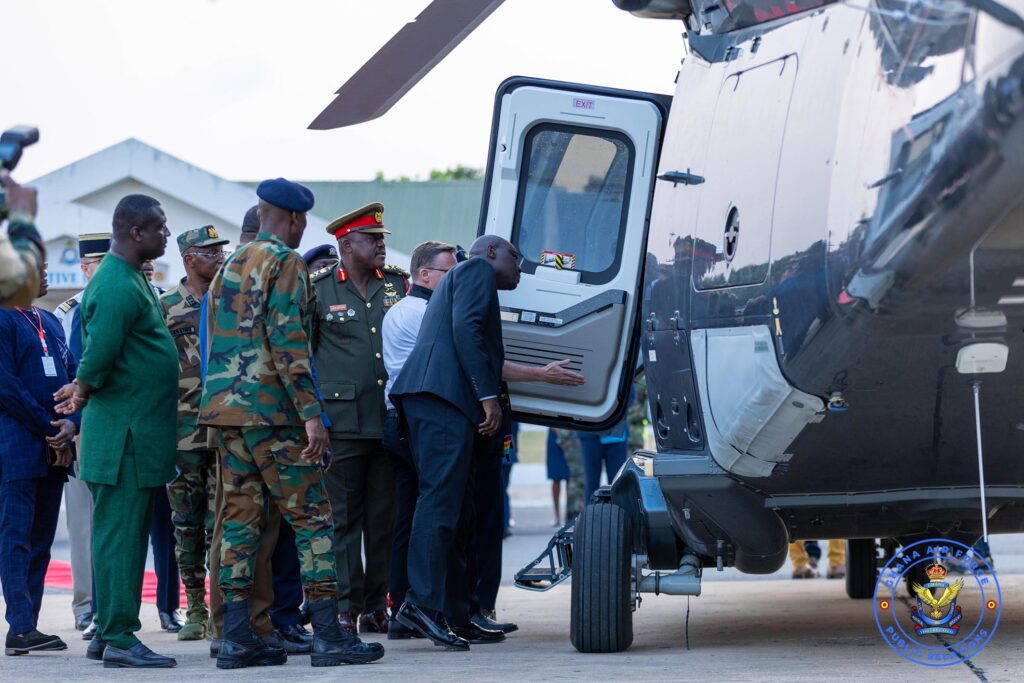
He further identified their usefulness in monitoring activities across geographical locations and supporting geological and other technical services. According to him, these capabilities make helicopters indispensable assets for countries seeking to strengthen their capacity to respond to emergencies and emerging security threats.
“The use of a helicopter is very huge.” Mr Kumadoe argued that maintaining a modern and adequately equipped helicopter fleet would allow Ghana to respond more effectively to emergencies while improving surveillance and intelligence-gathering capabilities.
He particularly emphasised the importance of aviation assets in maritime operations, where helicopters can support rescue missions involving individuals who go missing at sea.
He also maintained that their deployment during disasters could improve the speed and effectiveness of emergency response operations, especially where conventional ground transportation proves inadequate.
Presidential Aircraft Critical to Leadership Protection
Turning specifically to the new Falcon 6X, the former intelligence officer argued that protecting the President must remain a central consideration in decisions concerning executive air transportation.
He maintained that the potential consequences of exposing the country’s highest political officeholder to aviation risks should inform the assessment of the aircraft’s acquisition.
Drawing on the August 6, 2025 helicopter crash incident he referenced, Mr Kumadoe argued that the consequences could have been catastrophic had the President been aboard the aircraft involved. “If the president had been in that particular helicopter crash, the president would have died,” he stated.

He consequently questioned the wisdom of measuring the acquisition exclusively against its financial cost without considering the potential national security implications of failing to provide reliable transportation for the President.
Mr Kumadoe suggested that the acquisition should instead be assessed through a security risk analysis that compares the financial investment with the potential consequences of losing the President in an aviation accident.
He maintained that the President’s protection carries national significance because of the office’s constitutional and strategic responsibilities, particularly during emergencies requiring decisive leadership.
Calls for Multiple Executive Aircraft
Mr Kumadoe also challenged the perception that Ghana’s executive aircraft should be viewed primarily as a personal presidential asset, arguing that the aircraft belongs within the country’s broader military aviation infrastructure.
He explained that in several countries, dedicated executive aircraft are maintained and operated through military structures to support official government transportation.
Using the United Kingdom and the United States as examples, he argued that Ghana should similarly recognise the strategic importance of maintaining specialised aircraft for executive transportation. “The plane is for the military. Is that not it?…it is for the Ghana Air Force.”

He further disclosed that he had not personally been granted access to the newly acquired Falcon 6X but had received information from individuals who had entered the aircraft, suggesting that its passenger capacity was relatively modest compared with some other executive aircraft.
He explained that executive aircraft come in different categories and specifications, depending on the operational requirements and intended uses.
Against this background, Mr Kumadoe expressed support for Ghana acquiring another executive aircraft, arguing that the country should not limit its aviation capacity because of political disagreements surrounding the current acquisition. “I’m wishing that they should buy another executive jet,” he stated.
Security Considerations Should Override Political Disagreements
The security consultant criticised the politicisation of the presidential jet debate, arguing that disagreements between the governing National Democratic Congress (NDC) and the opposition New Patriotic Party (NPP) should not overshadow the country’s long-term security requirements.
He recalled that Ghana had maintained executive aircraft since the era of its first President, Dr Kwame Nkrumah, and questioned why the acquisition of such assets had become a recurring source of political controversy.
For Mr Kumadoe, the central consideration should be whether Ghana possesses the necessary aviation resources to protect its leadership, support military operations and respond effectively to national emergencies.
His position comes amid continuing political disagreements over the cost, procurement arrangements and justification for the new aircraft. Opposition figures have questioned the expenditure, while government representatives have defended the acquisition as part of a broader military modernisation programme.

However, Mr Kumadoe maintained that national security considerations must take precedence over partisan arguments, particularly where the safety of the President and the operational readiness of the Ghana Armed Forces are concerned.
He urged greater public understanding of the strategic responsibilities associated with military aviation assets, arguing that their value extends beyond the immediate transportation needs of government officials.
For Ghana, he maintained, modernising its executive and military aviation capabilities represents an important step towards strengthening national security and protecting the country’s strategic interests.
READ ALSO: BoG Eyes Cheaper Remittances Through African Payment Reforms