• About
  • Advertise
  • Privacy Policy
  • Contact
Friday, July 17, 2026
  • Login
The Vaultz News
  • Top Stories
  • News
    • General News
    • Education
    • Health
    • Opinions
  • Economics
    • Economy
    • Finance
      • Banking
      • Insurance
      • Pension
    • Securities/Markets
  • Business
    • Agribusiness
    • Vaultz Business
    • Extractives/Energy
    • Real Estate
  • World
    • Africa
    • America
    • Europe
    • UK
    • USA
    • Asia
    • Around the Globe
  • Innovation
    • Technology
    • Wheels
  • Entertainment
  • 20MOBPL2DNew
  • Jobs & Scholarships
    • Job Vacancies
    • Scholarships
No Result
View All Result
The Vaultz News
  • Top Stories
  • News
    • General News
    • Education
    • Health
    • Opinions
  • Economics
    • Economy
    • Finance
      • Banking
      • Insurance
      • Pension
    • Securities/Markets
  • Business
    • Agribusiness
    • Vaultz Business
    • Extractives/Energy
    • Real Estate
  • World
    • Africa
    • America
    • Europe
    • UK
    • USA
    • Asia
    • Around the Globe
  • Innovation
    • Technology
    • Wheels
  • Entertainment
  • 20MOBPL2DNew
  • Jobs & Scholarships
    • Job Vacancies
    • Scholarships
No Result
View All Result
The Vaultz News
No Result
View All Result
in Europe

The European economy to contract by 7 percent in 2020 – IMF

Maynard Championby Maynard Champion
October 27, 2020
Reading Time: 3 mins read
Add as Preferred on Google
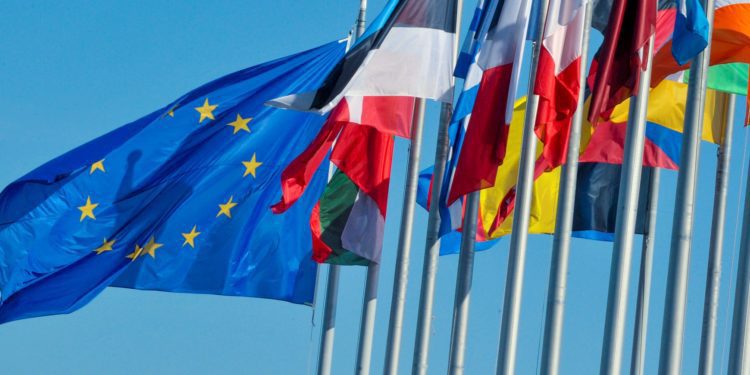
cropped euro flags

The International Monetary Fund (IMF) is expecting the European economy to contract by 7 percent in 2020 and rebound by 4.7 percent in 2021.  In its October edition of the outlook for Europe, the IMF also projects headline inflation to soften to 2 percent in 2020, a 1 percentage point below its 2019 level. Generally, inflation in Europe is expected to be low edging up to 2.4 percent in 2021.

The IMF stated that the coronavirus disease (COVID-19) pandemic is exacting a severe social and economic toll on Europe. According to the Fund, by mid-October 2020, more than 240,000 people have lost their lives in Europe, while nearly 7 million people are estimated to have been infected with the virus. Early spring lockdowns, voluntary social distancing, and associated disruptions in supply chains and lower demand led to a record collapse in economic activity.

Real GDP fell by about 40 percent in the second quarter of 2020 (annualized quarter-over-quarter), with deeper contraction in advanced Europe, where the virus spread first, relative to emerging Europe. The pandemic’s toll on Europe could have been much larger without the unprecedentedly strong and multifaceted response to the crisis. Across Europe, governments deployed large fiscal packages to support households and firms, with job retention programs preserving at least 54 million jobs.

In the wake of the pandemic, central banks embarked on substantial monetary easing through both conventional and unconventional means, to support the flow of credit and prevent financial market disruptions. Macro prudential measures were also eased to cushion the impact of the crisis on both banks and borrowers.

ADVERTISEMENT

“The European Union relaxed existing rules to accommodate increasing fiscal deficits and support to households and firms. In a strong display of solidarity, it is also mobilizing supranational resources to finance new anti-pandemic facilities and complement national fiscal policies. Nevertheless, the outlook for 2020 remains bleak and the recovery will be protracted and uneven”.

5
Kristalina Georgieva – Managing Director of the IMF

The IMF also expressed worry about the ongoing resurgence of infections across Europe, which the Fund sees as perhaps the greatest downside risk at this stage.

“A no-deal Brexit would also imply an additional and potentially sizable shock to activity amid the pandemic”.

 A key challenge facing policymakers in the near term, according to the IMF, is how to calibrate containment measures to minimize the immediate social and economic damage.

The Fund, therefore, admonished European governments to maintain policy support until the recovery is fully entrenched. A premature scaling back of supportive policies could drag countries back into recession, undoing much of what has been achieved so far.

The IMF also advised that support to viable jobs and businesses should be maintained, including through job retention programs. Continuation of accommodative monetary policies is warranted by the muted inflation outlook and considerable economic slack. Banking supervision authorities should continue to exercise prudential flexibility in order not to jeopardize the flow of credit.

“The combination of job-retention programs, debt moratoria, grants, and loan guarantees can be effective in addressing corporate liquidity needs, especially in advanced European economies. At the same time, the ability of the announced policy measures to curb the increase in insolvency risks appears more limited”.


ADVERTISEMENT

Sign Up to Our Newsletter

Fresh updates, Straight to your inbox

ShareTweetShareSendSend
Please login to join discussion
Previous Post

We Should Cut Our Expenditure According to The Revenue That We Generate- Economist

Next Post

IMF’s Projections of Public Debt of 76.7%, Not Realistic – Prof. Quartey

Related Posts

France Defends Israel After Attack on Iranian Military, Nuclear Sites
Europe

Germany Agrees To Nuclear Cooperation With France

July 17, 2026
4000
Europe

EU Issues Two New Rules For Google

July 16, 2026
Ukrainian Parliament Approves Law To Allow Multiple Citizenship
Europe

Demonstrations Held Across Ukraine Over Defence Minister’s Dismissal

July 16, 2026
EU Seeks To Lower Price Cap On Russian Oil In Latest Sanctions Proposal
Europe

Von der Leyen Awarded Ukraine’s First Order Of Europe

July 15, 2026
ADVERTISEMENT

Sign Up to Our Newsletter

Fresh updates, Straight to your inbox

ADVERTISEMENT

Recent News

President John Dramani Mahama

Mahama Unveils Volta Region’s Development Gains During Resetting Ghana Tour

July 17, 2026
Lithium products

France Directs Sovereign Mineral Strategies Targeting Domestic Lithium Extraction Projects

July 17, 2026
France Defends Israel After Attack on Iranian Military, Nuclear Sites

Germany Agrees To Nuclear Cooperation With France

July 17, 2026
Government Extends Bank of Ghana Recapitalisation Into 2027

Government Extends Bank of Ghana Recapitalisation Into 2027

July 17, 2026
Dominik Szoboszlai signs new deal at Liverpool

Szoboszlai Eyes Liverpool Revival After Committing Long Term Future

July 17, 2026
ADVERTISEMENT
Next Post
Executive Director of ISSER - Professor Peter Quartey

IMF’s Projections of Public Debt of 76.7%, Not Realistic – Prof. Quartey

The Vaultz News

Copyright © 2025 The Vaultz News. All rights reserved.

Navigate Site

  • About
  • Advertise
  • Privacy Policy
  • Contact

Follow Us

Welcome Back!

Login to your account below

Forgotten Password?

Retrieve your password

Please enter your username or email address to reset your password.

Log In
No Result
View All Result
  • Top Stories
  • News
    • General News
    • Education
    • Health
    • Opinions
  • Economics
    • Economy
    • Finance
      • Banking
      • Insurance
      • Pension
    • Securities/Markets
  • Business
    • Agribusiness
    • Vaultz Business
    • Extractives/Energy
    • Real Estate
  • World
    • Africa
    • America
    • Europe
    • UK
    • USA
    • Asia
    • Around the Globe
  • Innovation
    • Technology
    • Wheels
  • Entertainment
  • 20MOBPL2D
  • Jobs & Scholarships
    • Job Vacancies
    • Scholarships

Copyright © 2025 The Vaultz News. All rights reserved.

This website uses cookies. By continuing to use this website you are giving consent to cookies being used. Visit our Privacy and Cookie Policy.