• About
  • Advertise
  • Privacy Policy
  • Contact
Friday, January 16, 2026
  • Login
The Vaultz News
  • Top Stories
  • News
    • General News
    • Education
    • Health
    • Opinions
  • Economics
    • Economy
    • Finance
      • Banking
      • Insurance
      • Pension
    • Securities/Markets
  • Business
    • Agribusiness
    • Vaultz Business
    • Extractives/Energy
    • Real Estate
  • World
    • Africa
    • America
    • Europe
    • UK
    • USA
    • Asia
    • Around the Globe
  • Innovation
    • Technology
    • Wheels
  • Entertainment
  • 20MOBPL2DNew
  • Jobs & Scholarships
    • Job Vacancies
    • Scholarships
No Result
View All Result
The Vaultz News
  • Top Stories
  • News
    • General News
    • Education
    • Health
    • Opinions
  • Economics
    • Economy
    • Finance
      • Banking
      • Insurance
      • Pension
    • Securities/Markets
  • Business
    • Agribusiness
    • Vaultz Business
    • Extractives/Energy
    • Real Estate
  • World
    • Africa
    • America
    • Europe
    • UK
    • USA
    • Asia
    • Around the Globe
  • Innovation
    • Technology
    • Wheels
  • Entertainment
  • 20MOBPL2DNew
  • Jobs & Scholarships
    • Job Vacancies
    • Scholarships
No Result
View All Result
The Vaultz News
No Result
View All Result

Ghana’s Rising Inflation Ends 2024 Above Target, December Rate Hits 23.8%

M.Cby M.C
January 8, 2025
Reading Time: 4 mins read
Ghana’s Inflation Crashes to 9.4% in September— Lowest in 4 Years

The Bank of Ghana’s revised inflation target of 20% for 2024 has fallen short as inflation for December climbed slightly to 23.8%, up from 23% in November.

This marginal increase reflects the persistent economic pressures facing Ghana, driven largely by rising food prices and structural inefficiencies.

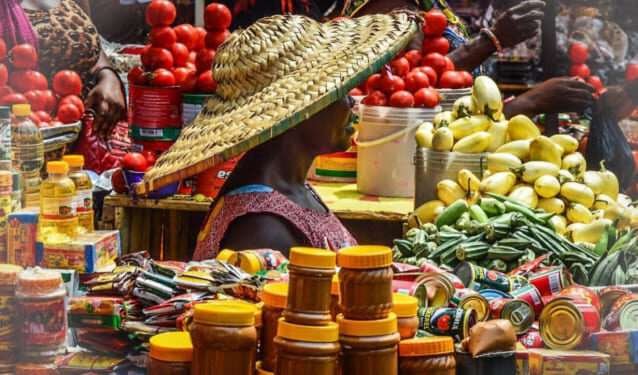
Food prices were the primary driver of the higher inflation rate in December, with food inflation rising to 27.8%, compared to 25.9% in November. This sharp increase underscores the vulnerabilities in Ghana’s agricultural supply chains, which often experience strain during the festive season due to heightened demand and limited supply.

RelatedPosts

IMF Justifies $214M DGPP Losses, Warns Against Holding Losses on BoG Balance Sheet

Equities End Session Stronger with Zero Decliners in Broad-Based Market Rally

Mahama Assembles High-Powered Economic Brain Trust to Reset Ghana’s Economy

Non-food inflation, on the other hand, experienced a modest decline, dropping from 20.7% in November to 20.3% in December. This divergence between food and non-food inflation highlights the disproportionate impact of rising food costs on the overall inflation rate, underscoring the need for targeted interventions in the agricultural sector.

The inflation rate for locally produced items climbed to 26.4% in December, up from 25.4% in November. This increase reflects ongoing challenges in domestic production, including rising input costs, supply chain inefficiencies, and limited infrastructure.

Imported goods also experienced a slight increase in inflation, rising to 17.9% in December from 17.6% the previous month. This trend indicates that global economic conditions, coupled with Ghana’s currency fluctuations, continue to influence the cost of imported items. Together, these factors reveal the dual pressures of internal and external inflationary forces impacting the Ghanaian economy.

ADVERTISEMENT

Sectors with High Inflation Rates

Certain sectors recorded inflation rates higher than the national average of 23.8%, further straining household budgets and business operations. The alcoholic beverages, tobacco, and narcotics sector recorded the highest inflation at 28.4%, closely followed by food and non-alcoholic beverages at 27.8%.

Housing, water, electricity, gas, and other fuels also posted significant inflation at 26.3%, reflecting rising utility and energy costs. These high inflation rates in essential sectors exacerbate economic challenges for Ghanaians, particularly for low-income households that allocate a larger share of their income to these necessities.

Inflation rates across Ghana’s regions showed notable disparities, emphasizing the uneven economic pressures faced by different parts of the country. The Upper East Region recorded the highest inflation rate at a staggering 40.6%, indicating severe economic pressures in that area. Meanwhile, the Eastern Region registered the lowest inflation rate of 16.8%, demonstrating relative stability compared to other regions.

These regional variations in inflation rates point to localized challenges, such as varying levels of agricultural output, market accessibility, and infrastructural development. Addressing these disparities will require region-specific policies to ensure balanced economic growth across the country.

Failing to meet the 20% inflation target set by the Bank of Ghana has far-reaching implications for the economy. Persistently high inflation erodes consumer purchasing power, diminishing the ability of households to afford basic goods and services. It also creates uncertainty for businesses, making it challenging to plan and operate effectively.

High inflation affects savings and investments, as the value of money declines over time. For investors, Ghana’s inability to curb inflation could undermine confidence in the country’s macroeconomic stability, potentially affecting foreign direct investment inflows and economic growth.

Policy Responses and the Way Forward

The Bank of Ghana has employed various monetary policies, including raising interest rates, to combat inflation. However, these measures alone appear insufficient to address the structural factors driving price increases, particularly in the food sector. A more comprehensive approach is necessary to tackle inflation effectively.

Strengthening agricultural productivity through investments in modern farming techniques and infrastructure could stabilize food prices and reduce their outsized impact on inflation. Enhancing local production capacity in key sectors could also mitigate reliance on imports, shielding the economy from external shocks.

In addition to supply-side reforms, targeted social interventions, such as subsidies for essential goods or direct financial support to vulnerable populations, could alleviate the immediate impact of high inflation.

As Ghana transitions into 2025, managing inflation will remain a top priority for policymakers. Achieving macroeconomic stability will depend on the successful implementation of policies that address both the short-term drivers of inflation and the long-term structural challenges.

The outlook for inflation in 2025 will hinge on several factors, including global economic trends, currency stability, and the effectiveness of domestic policy measures. With coordinated efforts, Ghana can work toward creating a stable economic environment that fosters growth and resilience in the face of inflationary pressures.

READ ALSO: Smuggling Risks Rise as Ghana’s Cocoa Purchases Drop by 20% in December

Tags: Bank of GhanainflationMacroeconomic StabilityNon-Food Inflationsupply-side reforms
Share2Tweet1ShareSendSend
Please login to join discussion
Previous Post

Bullgod Reveals His True Purpose On Earth

Next Post

Trump Asks Supreme Court To Halt Sentencing In Hush Money Case

Related Posts

Julie Kozack, IMF Director of Communications
Economy

IMF Justifies $214M DGPP Losses, Warns Against Holding Losses on BoG Balance Sheet

January 16, 2026
Bullish Wave Sweeps GSE as Market Sees Three Gainers and Zero Losers
Securities/Markets

Equities End Session Stronger with Zero Decliners in Broad-Based Market Rally

January 16, 2026
Mahama Assembles High-Powered Economic Brain Trust to Reset Ghana’s Economy
Economy

Mahama Assembles High-Powered Economic Brain Trust to Reset Ghana’s Economy

January 15, 2026
Investors Stay Selective on GSE as NewGold ETF Shines in Low-Volume Session
Securities/Markets

Investors Stay Selective on GSE as NewGold ETF Shines in Low-Volume Session

January 15, 2026
Economic Momentum Builds as Ghana’s Growth Rises to 3.8% in October, GSS Reports
Economy

Ghana’s Economy Shows Steady Recovery with 3.8% Expansion in October, GSS Reports

January 14, 2026
Republic Bank Ghana Emerges Fourth Best Stock on GSE Year-to-Date
Securities/Markets

Republic Bank Ghana Emerges Fourth Best Stock on GSE Year-to-Date

January 14, 2026
Minister of State in charge of Government Communications, Felix Kwakye Ofosu
General News

No Pay for Mahama’s Presidential Economic Advisory Group Members – Kwakye Ofosu

by Evans Junior OwuJanuary 16, 2026
Minister of State in charge of Government Communications, Felix Kwakye Ofosu
General News

No Economic Management Team Yet – Kwakye Ofosu Says Advisory Group Offers Independent Counsel

by Evans Junior OwuJanuary 16, 2026
Hon. Ahmed Ibrahim, Minister of Local Government, Chieftaincy and Religious Affairs
General News

Hon. Ahmed Ibrahim Secures €1m Grant to Revive Ayalolo Fleet Amid Urban Transport Crisis

by Silas Kafui AssemJanuary 16, 2026
Ing. Wisdom Edem Gomashie
Extractives/Energy

Mining Expert Urges Parliament to Establish Committee to Co-manage DGPP with GoldBod to Ensure Transparency

by Bless Banir YarayeJanuary 16, 2026
Lee Jae-Myung Projected To Win South Korea’s Presidential Election
Asia

Yoon Sentenced to Five Years Over Martial Law Declaration

by Comfort AmpomaaJanuary 16, 2026
Julie Kozack, IMF Director of Communications
Economy

IMF Justifies $214M DGPP Losses, Warns Against Holding Losses on BoG Balance Sheet

by Bless Banir YarayeJanuary 16, 2026
Minister of State in charge of Government Communications, Felix Kwakye Ofosu
Hon. Ahmed Ibrahim, Minister of Local Government, Chieftaincy and Religious Affairs
Ing. Wisdom Edem Gomashie
Lee Jae-Myung Projected To Win South Korea’s Presidential Election
Julie Kozack, IMF Director of Communications

Recent News

Minister of State in charge of Government Communications, Felix Kwakye Ofosu

No Pay for Mahama’s Presidential Economic Advisory Group Members – Kwakye Ofosu

January 16, 2026
Minister of State in charge of Government Communications, Felix Kwakye Ofosu

No Economic Management Team Yet – Kwakye Ofosu Says Advisory Group Offers Independent Counsel

January 16, 2026
Hon. Ahmed Ibrahim, Minister of Local Government, Chieftaincy and Religious Affairs

Hon. Ahmed Ibrahim Secures €1m Grant to Revive Ayalolo Fleet Amid Urban Transport Crisis

January 16, 2026
Ing. Wisdom Edem Gomashie

Mining Expert Urges Parliament to Establish Committee to Co-manage DGPP with GoldBod to Ensure Transparency

January 16, 2026
Lee Jae-Myung Projected To Win South Korea’s Presidential Election

Yoon Sentenced to Five Years Over Martial Law Declaration

January 16, 2026
The Vaultz News

Copyright © 2025 The Vaultz News. All rights reserved.

Navigate Site

  • About
  • Advertise
  • Privacy Policy
  • Contact

Follow Us

Welcome Back!

Login to your account below

Forgotten Password?

Retrieve your password

Please enter your username or email address to reset your password.

Log In
No Result
View All Result
  • Top Stories
  • News
    • General News
    • Education
    • Health
    • Opinions
  • Economics
    • Economy
    • Finance
      • Banking
      • Insurance
      • Pension
    • Securities/Markets
  • Business
    • Agribusiness
    • Vaultz Business
    • Extractives/Energy
    • Real Estate
  • World
    • Africa
    • America
    • Europe
    • UK
    • USA
    • Asia
    • Around the Globe
  • Innovation
    • Technology
    • Wheels
  • Entertainment
  • 20MOBPL2D
  • Jobs & Scholarships
    • Job Vacancies
    • Scholarships

Copyright © 2025 The Vaultz News. All rights reserved.

Discover the Details behind the story

Get an in-depth analysis of the news from our top editors

Enter your email address