• About
  • Advertise
  • Privacy Policy
  • Contact
Wednesday, April 29, 2026
  • Login
The Vaultz News
  • Top Stories
  • News
    • General News
    • Education
    • Health
    • Opinions
  • Economics
    • Economy
    • Finance
      • Banking
      • Insurance
      • Pension
    • Securities/Markets
  • Business
    • Agribusiness
    • Vaultz Business
    • Extractives/Energy
    • Real Estate
  • World
    • Africa
    • America
    • Europe
    • UK
    • USA
    • Asia
    • Around the Globe
  • Innovation
    • Technology
    • Wheels
  • Entertainment
  • 20MOBPL2DNew
  • Jobs & Scholarships
    • Job Vacancies
    • Scholarships
No Result
View All Result
The Vaultz News
  • Top Stories
  • News
    • General News
    • Education
    • Health
    • Opinions
  • Economics
    • Economy
    • Finance
      • Banking
      • Insurance
      • Pension
    • Securities/Markets
  • Business
    • Agribusiness
    • Vaultz Business
    • Extractives/Energy
    • Real Estate
  • World
    • Africa
    • America
    • Europe
    • UK
    • USA
    • Asia
    • Around the Globe
  • Innovation
    • Technology
    • Wheels
  • Entertainment
  • 20MOBPL2DNew
  • Jobs & Scholarships
    • Job Vacancies
    • Scholarships
No Result
View All Result
The Vaultz News
No Result
View All Result
in Agribusiness

Agriculture absorbs 63% of natural disaster impacts – FAO Report

thevaultzby thevaultz
March 23, 2021
Reading Time: 4 mins read
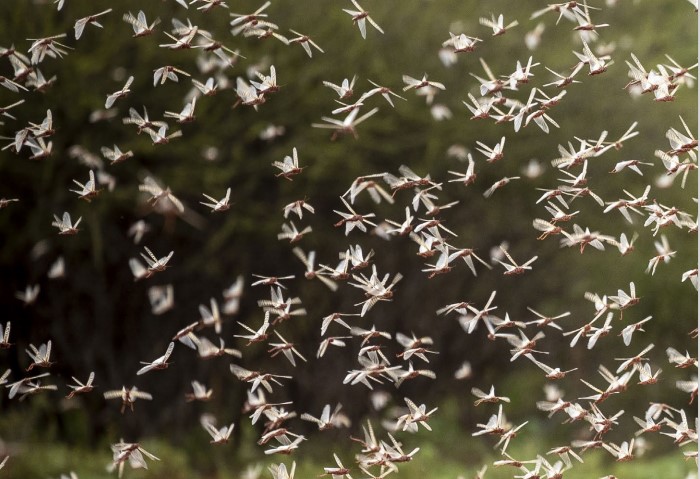
Swarms of the desert locusts invaded Kenya in 2020, menacing
food security and agricultural livelihoods.

Swarms of the desert locusts invaded Kenya in 2020, menacing food security and agricultural livelihoods.

FAO’s new report states that agriculture absorbs the bulk of financial losses and damages caused by disasters which have grown in frequency, intensity, and complexity. It reveals that agriculture absorbs a disproportionate 63% share of natural disaster impacts compared to other sectors, such as tourism, commerce and industry.

To add, the brunt of disasters is borne by the urban and rural poor, including smallholder farmers, fisherfolk and wage labourers.

According to UN’s Food and Agriculture Organization (FAO), natural disaster happens three times more often today than 50 years ago. At no other point in history have agri-food systems been confronted with an array of new and unprecedented threats. Such threats include megafires, extreme weather, unusually large desert locust swarms, and emerging biological threats like the COVID-19 pandemic.

Spreading at an alarming speed, the COVID-19 pandemic has been devastating lives, livelihoods and economies the world over. Current estimates predict that the number of undernourished people will increase by a minimum of 83 million. This number as a result of the economic recession triggered by COVID-19, the report notes.

ADVERTISEMENT

Furthermore, the reports indicates that the growing frequency and intensity of disasters, are jeopardizing global food system.

Poorest countries, most at natural disaster risk

While disaster occurrence remains at its new and consistently high level, disaster impacts on livelihoods and economies continue to expand significantly. Globally, the economic loss associated with all disasters over the past decade averaged USD 170 billion per year.

Moreover, the least developed countries (LDCs) and low to middle income countries (LMICs) have fared worst of all. From 2008 to 2018, natural disasters have cost the agricultural sectors of developing economies more than $108 billion in damaged crop and livestock production. Over the same period, Asia was the most hard-hit region, with overall economic losses of $49 billion. Africa followed with economic losses of $30 billion, then Latin America and the Caribbean at $29 billion.

Threats with the greatest impact

The report identifies drought as the single greatest culprit of agricultural production loss. Floods are the second gravest disaster followed by storms, pests and diseases, and wildfires. Over 34% of crop and livestock production loss in LDCs and LMICs is traced to drought. This loss costs the sector $37 billion overall, the report notes.

Drought impacts agriculture almost exclusively. The sector sustains 82 percent of all drought impacts, compared to 18 percent in all other sectors, the report suggests. Failed rains caused a 34% loss of crop and livestock production, compared to a output decline from biological disasters in the period.
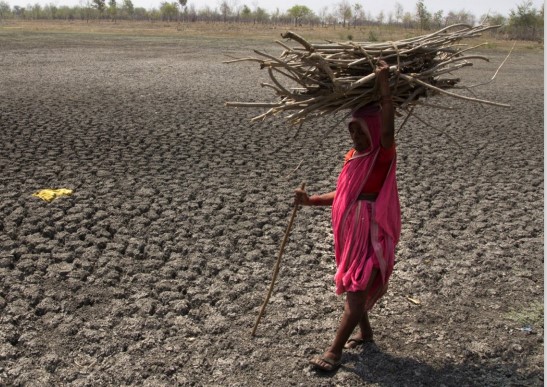
Drought
Drought-stricken pond in India

Meanwhile, the COVID-19 pandemic is placing an additional burden on agri-food systems. Thus, exacerbating existing problems with cascading effects on lives, livelihoods, and economies worldwide.

Profound food security impacts

Beyond the damage to countries’ economies, the consequences for food security and nutrition are profound. For the first time, this edition of the FAO report converts economic losses into caloric and nutrition equivalents.

It estimates that crop and livestock production loss in LDCs and LMICs between 2008 and 2018 converts to a loss of 6.9 trillion kilocalories per year. This equals the annual calorie intake of seven million adults. To clarify, this analysis is based on a recommended dietary allowance (RDA) of 2,500 calories per day.

Also, agriculture production loss in LDCs and LMICs between 2008 and 2018 converts to a loss of 994 trillion mg of iron. This amount is the annual recommended iron intake of 78 million adult men or 47 million adult women. Specifically, this analysis is based on an RDA of 9mg of iron per day for adult men and 15mg for adult women.

ADVERTISEMENT

Furthermore, the report notes losses also convert to a total of 994 trillion micrograms of lost Vitamin A. This corresponds to 21 million adult men or 27 million adult women going without their annual recommended vitamin A intake.

The report states that investing in resilience and disaster risk reduction, especially data gathering and analysis for evidence-informed action, is of paramount importance to ensure agriculture’s crucial role in achieving a sustainable future.

Read also: Ghana-China Sinohydro deal poses environmental and social risks to Ghana’s forests- Report


Sign Up to Our Newsletter

Fresh updates, Straight to your inbox

Tags: COVID-19 ImpactsDroughtsFood and Agriculture Organization of the United NationsNatural DisastersResilient Agricultural SystemsSustainable Agri-food systems
Share4Tweet3Share1SendSend
Please login to join discussion
Previous Post

I WAS VERY SUCCESSFUL DURING COVID- M.ANIFEST

Next Post

WTO launches new report on Africa’s trading capacities

Related Posts

Prof. Benjamin Betey Campion, Executive Director Fisheries Commission, at the 5th World Small-Scale Fisheries Congress
Agribusiness

Campion Rejects Ad Hoc Support For Fishing Communities at Global Congress

April 29, 2026
Dr. Peter Boamah Otokunor, Director of the Presidential Initiative on Agriculture and Agribusiness, Tours Tamne Dam in the Garu District
Agribusiness

PIAA Boss Reclaims Abandoned Mahama Legacy For Garu Farmers

April 29, 2026
Tuna Observer Refresher Training
Agribusiness

Historic MSC Certification Forces Radical Tuna Industry Transparency

April 29, 2026
Rice
Agribusiness

Bumper Rice Harvest Becomes Deadly Debt Trap In Volta Region

April 28, 2026

Sign Up to Our Newsletter

Fresh updates, Straight to your inbox

Recent News

EU flag

EU To Subsidise Extra Cost Of Fuel For Farmers, Hauliers

April 29, 2026
Dr. Awal Mohammed, Deputy Director-General of the GSA, with SLRSA Delegation

GSA Exports Regulatory Wisdom To Neighbors, Ends Era Of Unsafe Imports

April 29, 2026
Ghana’s Construction Cost Inflation Extends 11-Month Downward Trend

Ghana’s Construction Cost Inflation Extends 11-Month Downward Trend 

April 29, 2026
US Evacuates Personnel From Middle East

Hegseth Faces Questions On Economic Costs Of War With Iran

April 29, 2026
Prof. Benjamin Betey Campion, Executive Director Fisheries Commission, at the 5th World Small-Scale Fisheries Congress

Campion Rejects Ad Hoc Support For Fishing Communities at Global Congress

April 29, 2026
Next Post
WTO launches new report on Africa’s trading capacities

WTO launches new report on Africa’s trading capacities

The Vaultz News

Copyright © 2025 The Vaultz News. All rights reserved.

Navigate Site

  • About
  • Advertise
  • Privacy Policy
  • Contact

Follow Us

Welcome Back!

Login to your account below

Forgotten Password?

Retrieve your password

Please enter your username or email address to reset your password.

Log In
No Result
View All Result
  • Top Stories
  • News
    • General News
    • Education
    • Health
    • Opinions
  • Economics
    • Economy
    • Finance
      • Banking
      • Insurance
      • Pension
    • Securities/Markets
  • Business
    • Agribusiness
    • Vaultz Business
    • Extractives/Energy
    • Real Estate
  • World
    • Africa
    • America
    • Europe
    • UK
    • USA
    • Asia
    • Around the Globe
  • Innovation
    • Technology
    • Wheels
  • Entertainment
  • 20MOBPL2D
  • Jobs & Scholarships
    • Job Vacancies
    • Scholarships

Copyright © 2025 The Vaultz News. All rights reserved.

This website uses cookies. By continuing to use this website you are giving consent to cookies being used. Visit our Privacy and Cookie Policy.

Discover the Details behind the story

Get an in-depth analysis of the news from our top editors

Enter your email address