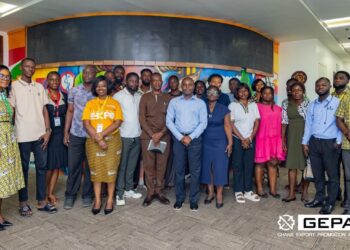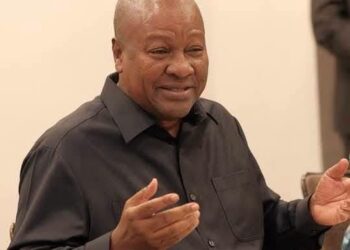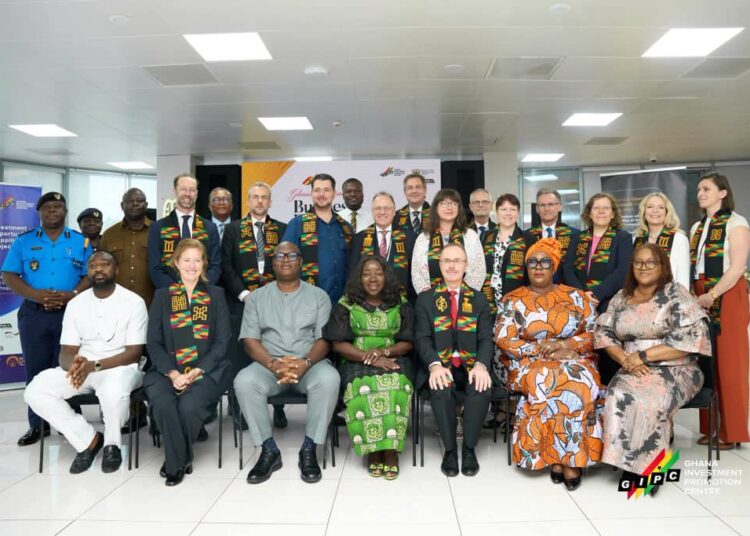
Ghana’s commitment to sustaining a transparent, investor-friendly business environment took center stage as the Chief Executive Officer of the Ghana Investment Promotion Centre (GIPC), Simon Madjie, assured German investors of the country’s unwavering dedication to predictable and open business practices.
Speaking at the Ghana–Germany Business Roundtable held in Accra during the visit of German President Frank-Walter Steinmeier, Mr. Madjie emphasized that Ghana’s current reforms are designed to strengthen investor confidence and ensure long-term business sustainability.
According to him, recent improvements in Ghana’s tax regime, supported by the creation of a Tax Appeal Board, demonstrate government’s resolve to promote transparency, accountability, and fairness in the taxation system. He added that these reforms are part of Ghana’s broader economic recovery strategy, which aims to enhance competitiveness and attract more foreign direct investment (FDI) from strategic partners such as Germany.
Tax Reforms Bolster Investor Confidence
Mr. Madjie outlined that Ghana’s proactive approach to tax reform has already begun yielding positive outcomes. The establishment of the Tax Appeal Board, he said, provides investors with a fair platform to resolve disputes and engage transparently with tax authorities, reducing bureaucracy and uncertainty in doing business.
He noted that Ghana’s continued political stability and sound governance framework have positioned the nation as one of Africa’s leading investment destinations. “Our focus remains on building a business environment that is transparent, predictable, and conducive for long-term investment growth,” the GIPC boss stated.
These assurances resonate strongly with investors seeking stability in the sub-Saharan African region, where policy unpredictability often undermines investor confidence. Ghana’s strategic reforms, coupled with prudent fiscal management, are reshaping perceptions and reaffirming its reputation as a gateway to West Africa.
Trade Ministry Champions Industrial Growth
Adding her voice to the discussion, the Minister for Trade, Agribusiness and Industry, Elizabeth Ofosu-Adjare, lauded the robust partnership between Ghana and Germany, emphasizing that both countries share a deep commitment to sustainable economic development.
She highlighted several flagship government initiatives—such as the 24-Hour Economy, Feed the Industry, and Rapid Industrialisation for Jobs—as key drivers of industrial transformation. These programmes, she explained, are designed to boost productivity, create employment, and strengthen the resilience of local industries.
“The government’s policy direction focuses on building a dynamic private sector capable of supporting long-term economic growth. Our goal is to create a business climate that not only attracts investors but also empowers local enterprises to scale up and compete globally.”
Elizabeth Ofosu-Adjare
Her remarks underscored Ghana’s ongoing efforts to sustain macroeconomic stability, following the global and domestic challenges that slowed growth in recent years. The Trade Ministry’s renewed focus on industrialization and agribusiness reflects a broader national vision to diversify Ghana’s economic base beyond traditional exports.
Germany Commends Ghana’s Stability and Growth Potential
Leading the German delegation, Dr. Thomas Steffen, Secretary of State at Germany’s Federal Ministry for Economic Affairs and Energy, praised Ghana for maintaining peace and stability in an increasingly volatile global environment.
He described Ghana as a “flagship of peace and stability” and commended its consistent progress in strengthening governance and fostering economic inclusivity. Dr. Steffen revealed that bilateral trade between Ghana and Germany has grown by 30%, signaling a renewed confidence among German businesses in Ghana’s investment prospects.
“The steady increase in trade and investment between our two countries is a reflection of Ghana’s growing attractiveness as a destination for business. We see great potential for deeper collaboration in sectors such as renewable energy, manufacturing, and technology transfer.”
Dr. Thomas Steffen
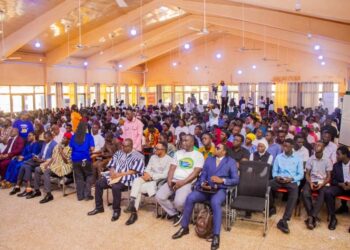
The Ghana–Germany Business Roundtable served as a strategic platform for dialogue between government officials, private sector leaders, and investors from both nations. Discussions centered on investment opportunities in key sectors, including energy, agriculture, manufacturing, and infrastructure.
Mr. Madjie and Minister Ofosu-Adjare both emphasized that Ghana’s recovery from recent economic shocks has been anchored on sound macroeconomic management and a strong commitment to reforms that improve the ease of doing business.
Germany, one of Ghana’s longstanding development partners, continues to play a pivotal role in supporting the country’s industrialization and renewable energy agenda. Through technical assistance, financial cooperation, and private sector investments, German enterprises have contributed significantly to Ghana’s growth story.
As Ghana continues to rebuild momentum following the post-pandemic recovery, both government and the private sector are intensifying efforts to create an economy driven by value addition, innovation, and sustainability.