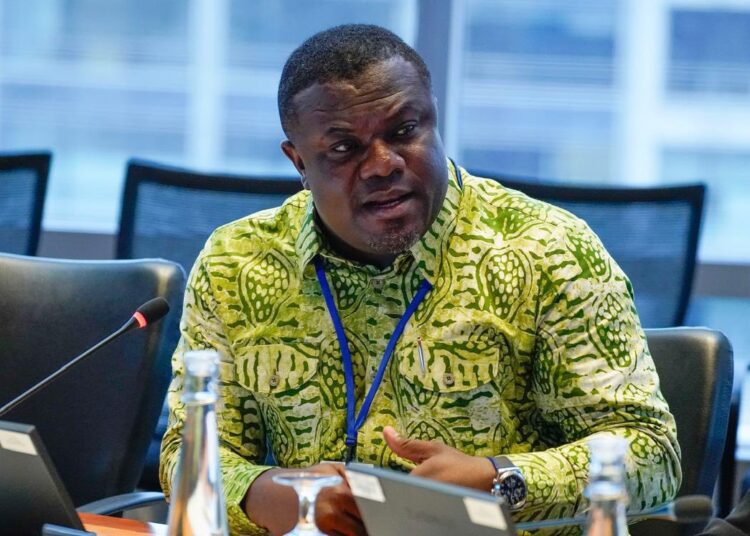
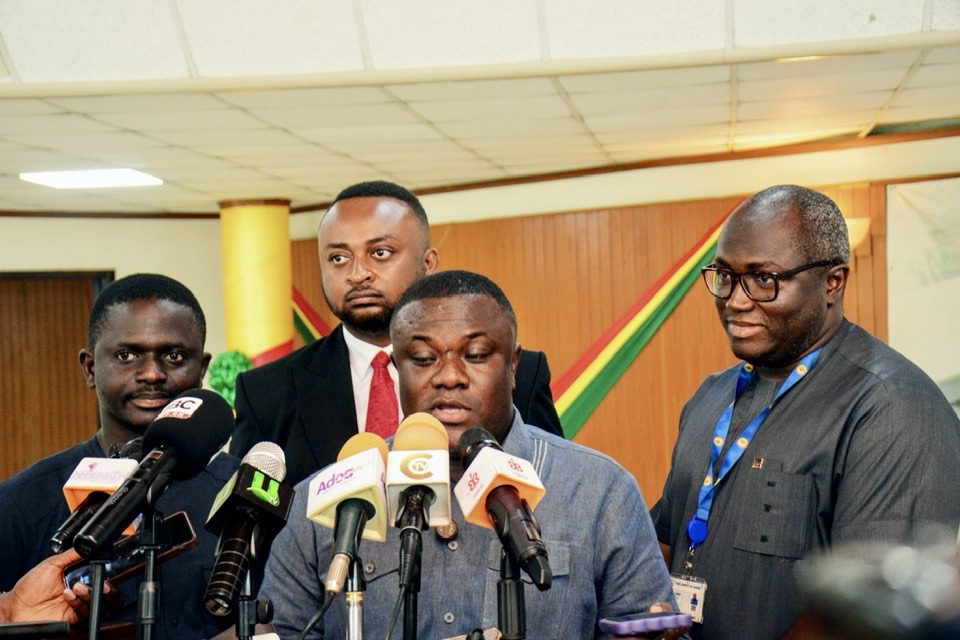
Hon. Collins Adomako Mensah, the Member of Parliament and Deputy Ranking Member of the Energy Committee, has asserted that Ghana possesses an installed generation capacity of over 5,200 megawatts, a figure that significantly dwarfs the nation’s peak demand of approximately 4,300 megawatts.
Addressing a press briefing in Accra on behalf of the Minority Caucus, the lawmaker emphasized that on paper, the country has more than sufficient power to keep the lights on and satisfy the energy needs of every household and industry.
This surplus of nearly 900 megawatts suggests that the current instability in power supply is not a result of a deficit in production potential but rather a symptom of deeper systemic issues.
“Ghana’s installed generation capacity stands at over 5,200 megawatts against a peak demand of approximately 4,300 megawatts. On paper, we have more than sufficient generation capacity to keep the lights on. The crisis has never been about how much power we can generate.”
Hon. Collins Adomako Mensah
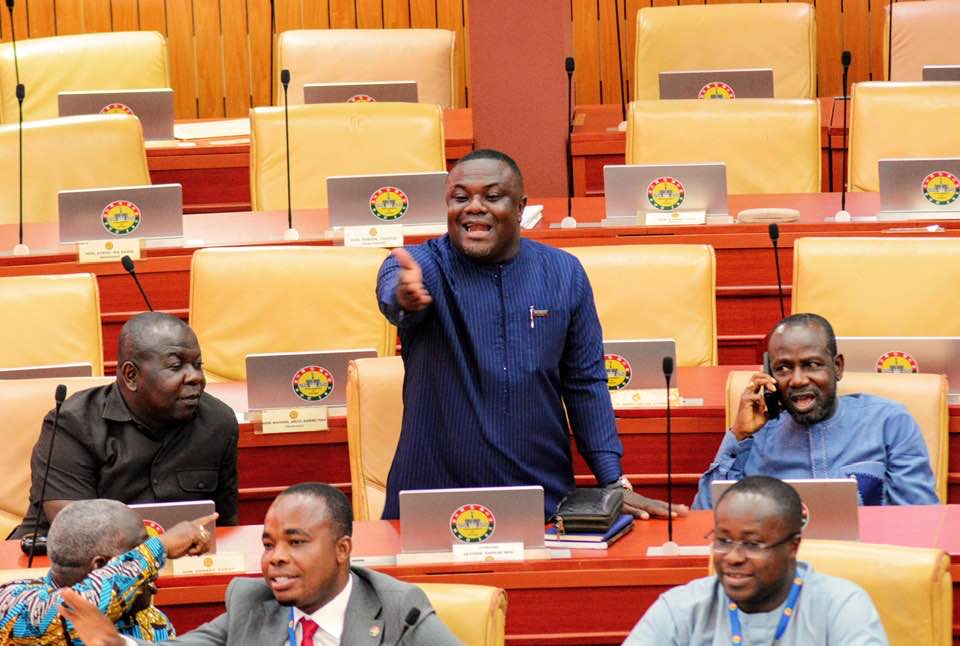
While expanding on the technical and fiscal realities of the power sector, the Minority argued that the recurring outages, often referred to as “Dumsor,” are entirely avoidable given the available infrastructure.
The Caucus noted that while the previous administration handed over a sector equipped with a “clear prescription for resolution” through the Energy Sector Recovery Programme (ESRP), the current government has overseen a period of “financial strangulation” of vital infrastructure.
Redefining the Crisis: From Generation to Governance
The Minority’s briefing highlighted a disturbing trend of “rebadging the crisis” to mask the true nature of the energy shortfall.
According to Hon. Adomako Mensah, the government has attempted to rename Dumsor and portray systemic failures as mere “maintenance programmes.”
This semantic shift, the Minority claims, does little to address the “revenue collection failures at ECG” which have been documented and flagged repeatedly.
By delaying and diluting the solutions inherited from the previous New Patriotic Party (NPP) government, the current administration is accused of presiding over the decay of the very grid upon which millions of Ghanaians depend for their livelihoods.
The ESRP was originally designed to act as a roadmap for the financial sustainability of the energy sector.
However, the Minority contends that these efforts have been abandoned.
The “financial strangulation” of the sector has led to a situation where; despite having 5,200 megawatts of installed capacity, the transmission and distribution networks lack the liquidity to function efficiently.
This mismanagement has created a paradox where the country has enough power to export, yet its citizens are left in the dark.
Leveraging Excess Capacity for Industrialization and Green Transition
In a world increasingly focused on the green transition, Ghana’s surplus generation capacity of 5,200 megawatts represents a massive, untapped economic engine.
This capacity provides the necessary “spinning reserve” required to integrate more intermittent renewable energy sources, like solar and wind, into the national grid.
A stable base of 5,200 megawatts allows the country to diversify its energy mix without risking total grid collapse when the sun sets or the wind dies down.
Transitioning to an electric vehicle (EV) ecosystem also becomes more feasible with this surplus; the government could incentivize EV charging during off-peak hours, effectively utilizing excess night-time generation to reduce the nation’s carbon footprint and dependence on imported fossil fuels.
Accountability and the Path to Energy Security
The Minority Caucus concluded calling for immediate transparency regarding the Energy Sector Recovery Programme.
They argued that the current administration’s “wilful neglect” has turned a manageable technical challenge into a full-blown economic crisis.
The fundamental question posed to the government remains: “If the lights were on when the NPP handed over power, and the lights are off now, who turned them off?” This rhetorical inquiry underscores the Minority’s position that the current outages are a man-made consequence of poor leadership rather than a lack of physical resources.