The World Health Organization has disclosed that its workforce will shrink by nearly a quarter or over 2,000 jobs by the middle of next year due to US funding cuts.
This comes as the UN agency seeks to implement reforms after its top donor, the United States, announced its departure.
US President Donald Trump’s administration withdrew from the body upon taking office in January, prompting the agency to scale back its work and cut its management team by half. Washington is by far the UN health agency’s biggest financial backer, contributing about 18% of its overall funding.
According to a presentation set to be shown to its member states today, WHO projects that its workforce will shrink by 2,371 posts by June 2026 from 9,401 in January 2025 due to job cuts as well as retirements and departures.
It does not include the many temporary staff, or consultants, which UN sources say have been made redundant. A WHO Spokesperson confirmed the total number of staff leaving the organisation and said that the workforce would shrink by up to 22%, depending on how many vacant posts are filled.
According to the report, in terms of regular staff, the biggest proportionate impacts of the cuts are falling on the highest and lowest levels in the system.
The number of Senior Directors will have been reduced by 42% as of June 2026, in comparison to January 2025.
Proportionately, entry-level P1s and P2 staff, the lowest members of the professional brackets, are the other hard hit category, reduced by 37%. Nearly one-third of mid-level P3 positions are also being slashed.
The cuts are most dramatic in WHO’s Geneva office where the workforce will be cut by 28% as of June 2026, a point at which separations of even long-term staff will have taken effect. The African and European regions will take the second-largest hit with reductions of 25% and 24% respectively.
The report however, makes it clear that by June 2026, about 1089 positions will have been shed through what WHO described as “natural attrition” – said to include retirements and early retirement, but also, seemingly, the non-renewal of short-term staff contracts.
In addition, another 1,282 posts were abolished outright – with staff in those positions failing to be mapped or matched with alternative positions. That makes for the net reduction of 2371 posts.
The combined effect of terminations of short-term staff, early retirements and separations of longer term staff, as well as limited new hiring or reassignments, should bring WHO’s global staff headcount down to about 7360 professional and administrative positions by mid-2026, the analysis projects. That is a level not seen since 2014, under the tenure of former WHO Director General Margaret Chan.
While the global health agency said in August that hundreds of staff had departed, this is the first time it has given the full scale of the expected change to its global staff.
One Of The Most Difficult Years In WHO’s History
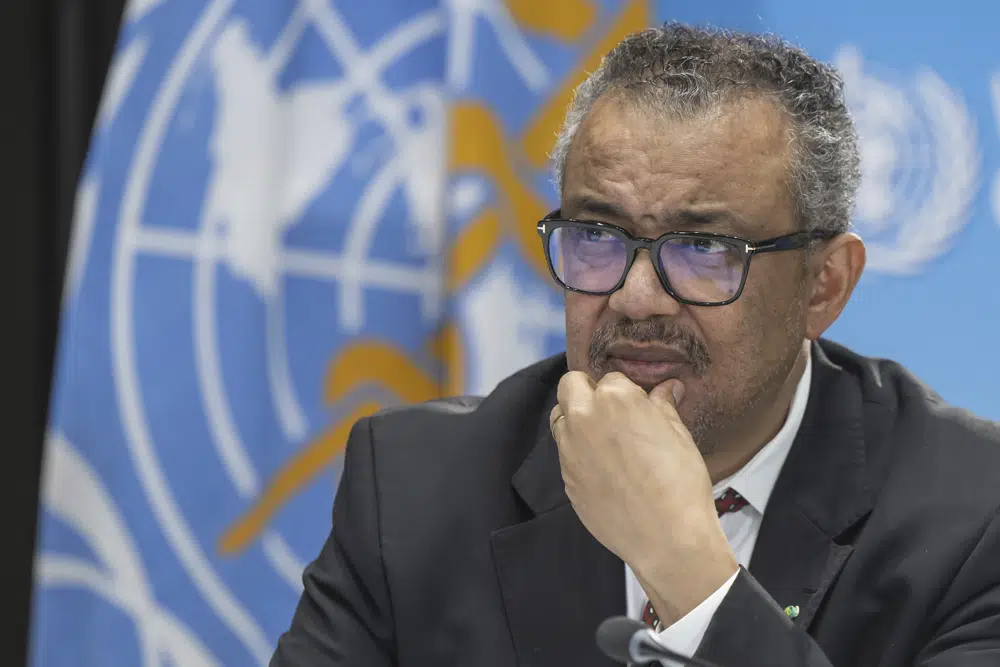
Director-General Tedros Adhanom Ghebreyesus in a message to staff, said “This year has been one of the most difficult in WHO’s history, as we have navigated a painful but necessary process of prioritisation and realignment that has resulted in a significant reduction in our global workforce.”
He added that the process was now nearing an end. “We are now preparing to move forward with our reshaped and renewed Organization,” he said.
The slides also showed that the Geneva-based body has a $1.06bn hole in its 2026-2027 budget, or nearly a quarter of the total required, down from an estimated gap of $1.7bn in May.
That excludes $1.1bn of expected funding that includes deals at various stages of negotiation, the slides showed, without giving details.
The WHO Spokesperson said that the portion of the two-year budget currently unfunded was lower than in previous years, attributing that to a smaller budget; the launch of a fundraising round; and an increase in member states’ mandatory fees.
READ ALSO: Ghana Saves $9 Million in Renegotiated GRA–Tata Deal — Ato Forson