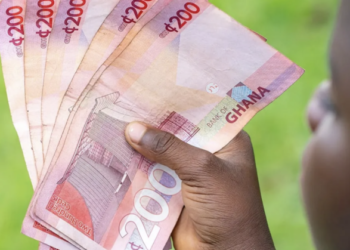
Ghana’s money market witnessed a dramatic turnaround in the latest treasury bills (T-bills) auction, with bids surging to an impressive GH¢6.03 billion—marking the first oversubscription in seven weeks.
What appears at first glance to be a strong vote of investor confidence, however, is more nuanced upon closer examination. The government’s reduced target played a significant role in propelling the auction to a 110 percent oversubscription, raising thought-provoking questions about liquidity trends, investor behaviour, and the broader macroeconomic environment.
The Treasury had set a modest target of GH¢2.86 billion, a sharp reduction compared to earlier weeks. Against this backdrop, the GH¢6.03 billion in bids presented a picture of abundance. Still, the government opted to accept GH¢5.78 billion—slightly under the total tendered amount—reflecting a cautious approach to managing its short-term debt obligations.
Breakdown of Investor Participation
A deeper look at the performance of the individual securities reveals where investor appetite was strongest. The 91-day bill continued to dominate market attention, attracting GH¢2.57 billion in bids. Government accepted GH¢2.56 billion of this amount—an almost full uptake—highlighting persistent interest in the shortest-tenure instrument. This surge reinforces the notion that investors are prioritizing liquidity and quick returns in an uncertain economic climate.
The 182-day bill also drew heavy participation, recording GH¢1.64 billion in bids. With GH¢1.62 billion accepted, the medium-term segment exhibited consistent demand, even as its yield continued to adjust downward. Meanwhile, the 364-day bill saw GH¢1.81 billion in bids, of which GH¢1.58 billion were accepted. Although the longer-term bill attracted notable interest, government’s decision to accept a smaller proportion of the bids may point to a deliberate effort to manage refinancing risk.
Altogether, the strong performance across all tenors reflects a market that remains actively engaged—albeit driven more by adjusted auction targets than a sudden resurgence in liquidity.
Mixed Movements on the Yield Curve
One of the most intriguing dynamics of the auction was the behaviour of interest rates. Even after the Bank of Ghana slashed its policy rate by a substantial 350 basis points, yields on certain T-bills moved in unexpected directions.
The 91-day yield inched upward to 11.05 percent, signaling a mild increase in short-term borrowing cost. This uptick may be attributed to persistent monetary tightness, inflation expectations, or heightened demand for quick-maturity instruments.
In contrast, the 182-day yield declined from 12.66 percent to 12.43 percent. This dip suggests growing investor comfort with medium-term risks or increased appetite within this segment of the curve. Despite varied movements elsewhere, the 364-day yield held firm at 13.08 percent, underscoring a stable yet cautious outlook on long-term short-term securities.
The mixed yield trajectory paints a picture of a market still finding its footing amid macroeconomic recalibration. With monetary authorities easing their stance while inflation remains a critical concern, the money market is likely to continue experiencing pockets of volatility.
Reduced Target, Not a Liquidity Boom
While the headline figure of 110 percent oversubscription suggests renewed strength in the T-bill market, economists caution that this development may not fully represent a broad-based liquidity boost.
The Treasury’s deliberate reduction of the weekly target was instrumental in achieving the oversubscription, creating a lower benchmark that was easier to surpass. This aligns with recent government efforts to manage borrowing costs more effectively while avoiding undue pressure on the domestic market.
The outcome also reflects the continued dominance of institutional investors, who tend to respond sharply to target reductions by reallocating short-term funds. Retail investor participation, though still meaningful, remains heavily influenced by prevailing economic uncertainty and the gradual adjustments to interest rates.
Implications for Fiscal Strategy and Market Confidence
The impressive inflows provide government with short-term breathing room as it navigates domestic financing pressures. With more than GH¢5.78 billion accepted, the Treasury is well-positioned to meet its upcoming maturities and operational needs. This could ease concerns about liquidity tightness, especially after several consecutive undersubscribed auctions that raised alarm among analysts.
However, the sustainability of this performance remains an open question. If future auction targets remain low, oversubscriptions may continue but will not necessarily indicate improved liquidity or investor optimism. Conversely, if targets rise again, demand levels will offer a more accurate reflection of market confidence.
The stability of the yield curve, particularly the unchanged 364-day rate, further suggests that investors are still cautiously assessing the direction of economic reforms, inflation movements, and monetary policy signals.
Overall, the latest auction results point to a market in transition—one responding to tactical government adjustments rather than an organic resurgence of liquidity. Still, the strong participation across all tenors demonstrates that Ghana’s domestic debt market remains resilient, even in the face of ongoing economic recalibration.
READ ALSO:World Economy in Danger as Policy Buffers Run Dry – IMF Issues Stark Warning