BMW has announced a major leadership transition as it prepares to confront some of the most challenging times in the modern automotive industry.
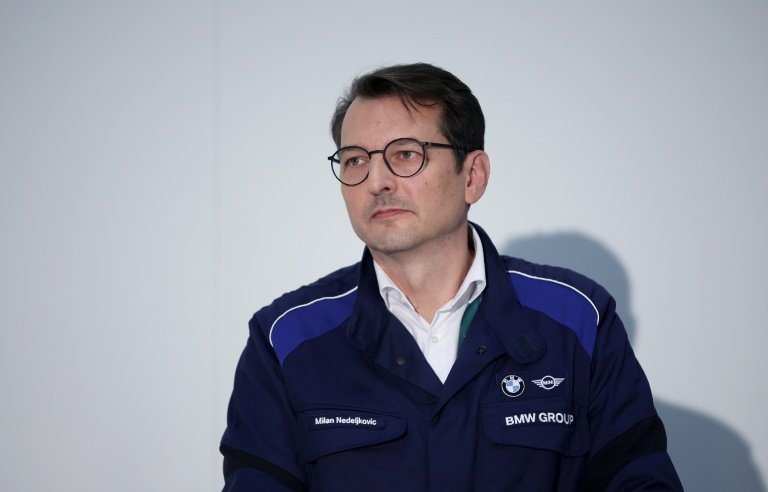
The German car giant revealed on Tuesday that Milan Nedeljkovic, its current head of production, will assume the role of chief executive in May. His appointment marks a strategic move intended to strengthen BMW’s position as the global industry undergoes rapid transformation driven by electrification, intense Chinese competition, and shifting trade dynamics.
Milan Nedeljkovic is no stranger to BMW’s operations. The 56-year-old engineer has been with the Munich-based company since 1993, steadily rising through the ranks to oversee BMW’s worldwide production network. His long-standing career within the company gives him a deep understanding of BMW’s manufacturing capabilities, technology integration, and product evolution.
Nedeljkovic will succeed Oliver Zipse, whose term ends in May. Zipse has been widely credited for strengthening BMW’s electric transition and maintaining stability despite global economic uncertainties. With this change, BMW signals confidence in Nedeljkovic’s technical background and operational expertise to further accelerate innovations that will shape the company’s future.
EV Expansion Remains Top Priority
One of the most important tasks awaiting Nedeljkovic is the advancement of BMW’s electric vehicle (EV) strategy. Under Zipse’s leadership, BMW has made significant progress in integrating electric and combustion engine models on the same production lines. This flexible approach has allowed the company to scale its EV output without abandoning conventional manufacturing.
The incoming CEO is expected to build on this foundation. BMW is already expanding its electric offerings, with new models and improved battery technologies in development. As consumer preferences shift rapidly toward low-emission vehicles, Nedeljkovic’s leadership will be vital to ensuring BMW retains its competitive edge.
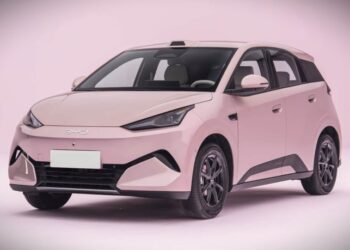
Nedeljkovic takes over at a turbulent moment for Germany’s auto industry. Once unrivalled in global prestige and performance, the sector is now experiencing headwinds from multiple directions. China, a traditionally strong market for BMW and other German brands, is becoming increasingly difficult to penetrate due to fierce competition from local electric carmakers. Companies such as BYD and Nio are offering high-quality EVs at competitive prices, capturing market share and reshaping the global landscape.
BMW’s sales in China have declined as a result, putting pressure on global revenue forecasts. The challenge for Nedeljkovic will be to rebuild BMW’s appeal in a market where innovation, affordability, and brand adaptability are becoming decisive factors.
Impact of US Tariffs and Global Trade Pressures
US trade policies have also influenced BMW’s recent performance. Although the company has been affected by tariffs like its counterparts Mercedes-Benz and Volkswagen, it has managed to cushion the blow thanks to its largest global factory located in South Carolina. This strategic manufacturing base has enabled BMW to maintain a stable supply to the US market, reducing some of the financial strain caused by international trade barriers.
This advantage may become even more important as global trade disruptions continue to shape investment decisions within the automotive industry. Nedeljkovic will need to navigate these complexities while ensuring that supply chains remain robust, efficient, and adaptable.
Despite the challenges, BMW remains resilient. The company’s third-quarter results showed rising profitability supported by strong worldwide sales. Outgoing CEO Oliver Zipse noted that BMW had proven itself “resilient” amid the turbulence affecting the broader industry. This financial strength provides Nedeljkovic with a solid starting point from which to lead BMW into its next phase of innovation and expansion.
His experience managing BMW’s global factories has equipped him with a strong operational perspective that will be essential for improving production efficiency, integrating new EV technologies, and responding swiftly to market pressures.
The next few years will test BMW’s agility and technological strength, but with a seasoned engineer at the helm, the company aims to reinforce its legacy as a leading force in the global automotive industry.
READ ALSO:Ghana’s Financial Rise Unstoppable: Fixed-Income Market Powering a New Investment Era- Pearl Nkrumah