International Rescue Committee’s (IRC) 2026 Emergency Watchlist has asserted that growing global disorder threatens to deepen humanitarian crises around the world.
The report on the world’s top 20 crises warns that diverging trends of surging catastrophe and shrinking funding signal the advent of a “new world disorder” replacing the post-World War II rules-based order.
IRC President David Miliband noted, “Disorder begets disorder,” adding that this year’s Watchlist is “a testament to misery but also a warning: without urgent action from those with power to make a difference, 2026 risks becoming the most dangerous year yet.”
The report said that the new state of global disorder was characterised by “intensifying geopolitical rivalries, shifting alliances, and transactional deal-making,” which had conspired to create “a cascade of crises and eroding support for the world’s most vulnerable.”
It pointed out that a “surge of vetoes” at the United Nations Security Council (UNSC) has stalled responses in Sudan and Palestine.
Russia has regularly stood in the way of a ceasefire in Sudan, while the United States repeatedly vetoed a Gaza truce before drafting a peace plan with the backing of regional actors earlier this year.


Also, the report noted that the 20 countries on the watchlist, which also include South Sudan, Ethiopia, Haiti, Myanmar and the Democratic Republic of the Congo, make up only 12 percent of the world’s population, but account for 89 percent of the nearly 300 million people around the globe that need humanitarian aid.
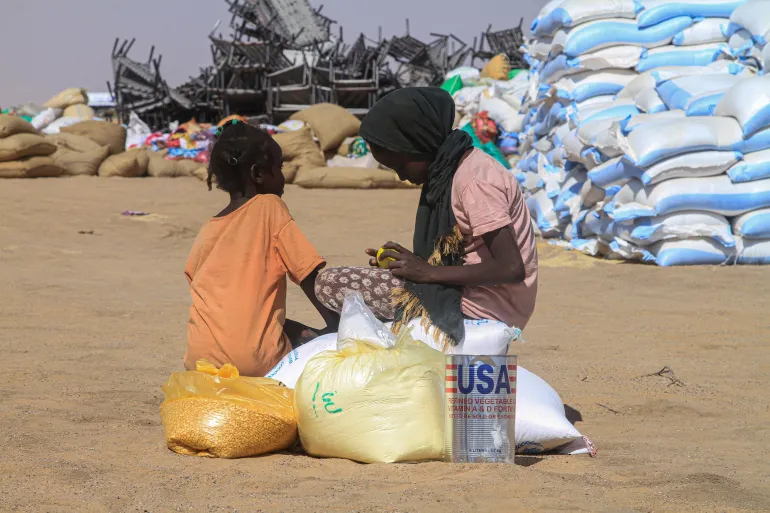
Highlighting the scale of the crisis, it noted that 117 million people are forcibly displaced and 40 million face life-threatening levels of “severe hunger”, yet funding has shrunk by 50 percent.That has created a funding gap that leaves humanitarian responders unable to keep pace with needs.
Sudan, Palestine Top IRC Emergency Watchlist
According to the new report, Sudan and Palestine face the greatest risk of all.
The pair once again topped the International Rescue Committee’s (IRC) 2026 Emergency Watchlist.
Sudan, ravaged by nearly three years of fighting between the army and the paramilitary Rapid Support Forces (RSF), headed the list for the third year in a row.
The IRC highlighted the role of “regional backers” complicit in a war that it says has killed 150,000 people and displaced more than 12 million. Some 33 million people need humanitarian aid, with 207,000 facing “catastrophic” food shortages.
The report, which did not name the “backers,” said, “Large quantities of gold flow out of the country, while weapons move in the opposite direction.”
The United Arab Emirates is widely accused of backing the RSF, a claim the Gulf country denies.
Palestine, facing the twin crises of Israel’s onslaught in Gaza, which has killed more than 70,000 people and created a humanitarian catastrophe, and escalating settler violence in the occupied West Bank, ranked second for the third year running.
The IRC report said that there was “limited hope” that “external pressure” would “reduce the intensity of conflict” in Gaza, where authorities say Israel has carried out nearly 800 attacks, killing about 400 people, since a ceasefire deal reached in October under the US-led peace plan, which was backed by the UNSC.
Even if conflict in Gaza remains at “lower levels”, the IRC said, “civilians will face intense suffering and a struggle for survival amid what remains of Gaza.”
In late 2025, the report said 641,000 people were experiencing “famine or catastrophic food insecurity” in the enclave, and the situation is likely to persist.
It said that tight restrictions and militarized delivery will leave aid access limited, referring to Israel’s choking of aid supplies entering the enclave. Overall, the report said, impunity has been “enabled on a dangerous scale.”
It added that the year has turned out to be the “deadliest” for humanitarians, referring to attacks on schools, hospitals and other essential infrastructure in Gaza.
READ ALSO: Abuakwa South MP Slams Government Over 11-Month Salary Arrears for 6,500 Health Workers