• About
  • Advertise
  • Privacy Policy
  • Contact
Friday, May 15, 2026
  • Login
The Vaultz News
  • Top Stories
  • News
    • General News
    • Education
    • Health
    • Opinions
  • Economics
    • Economy
    • Finance
      • Banking
      • Insurance
      • Pension
    • Securities/Markets
  • Business
    • Agribusiness
    • Vaultz Business
    • Extractives/Energy
    • Real Estate
  • World
    • Africa
    • America
    • Europe
    • UK
    • USA
    • Asia
    • Around the Globe
  • Innovation
    • Technology
    • Wheels
  • Entertainment
  • 20MOBPL2DNew
  • Jobs & Scholarships
    • Job Vacancies
    • Scholarships
No Result
View All Result
The Vaultz News
  • Top Stories
  • News
    • General News
    • Education
    • Health
    • Opinions
  • Economics
    • Economy
    • Finance
      • Banking
      • Insurance
      • Pension
    • Securities/Markets
  • Business
    • Agribusiness
    • Vaultz Business
    • Extractives/Energy
    • Real Estate
  • World
    • Africa
    • America
    • Europe
    • UK
    • USA
    • Asia
    • Around the Globe
  • Innovation
    • Technology
    • Wheels
  • Entertainment
  • 20MOBPL2DNew
  • Jobs & Scholarships
    • Job Vacancies
    • Scholarships
No Result
View All Result
The Vaultz News
No Result
View All Result
in Banking

Governor Meets CEOs of Banks Post-MPC to Conclude the Financial Year

Michael Teye-Bio Naduteyby Michael Teye-Bio Nadutey
December 17, 2025
Reading Time: 5 mins read
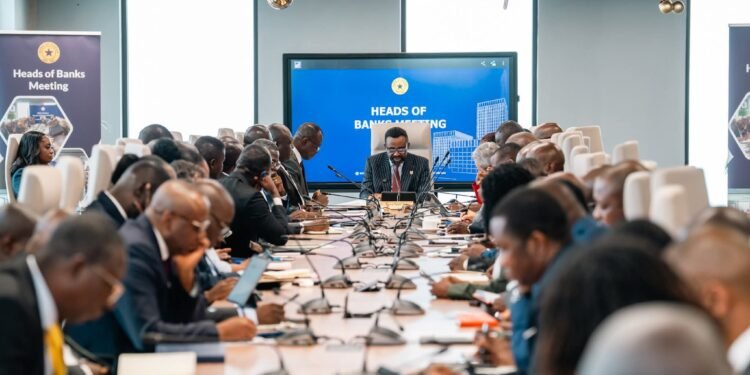
BOG Governor meets CEOs of commercial banks

BOG Governor meets CEOs of commercial banks

The Governor of the Bank of Ghana (BOG), Dr Johnson Pandit Asiama, has engaged with CEOs of commercial banks post-Monetary Policy Committee (MPC) meeting to close the financial year.

Following the conclusion of the 127th MPC meeting, the Governor remarked on Ghana’s macroeconomic developments and the central bank’s policy decisions. Dr Asiama highlighted key prudential and regulatory directives aimed at strengthening financial stability and aligning with international best practices.

“It is always a privilege to meet with you following our Monetary Policy Committee deliberations. These moments of engagement remind us that beyond macroeconomic indicators and policy instruments lies a shared mission – the service to the Ghanaian people and a collective responsibility to build a resilient, inclusive, and prosperous economy.”

Dr Johnson Asiama, Governor of BOG

He recalled his first post-MPC engagement and how confidence was tested, uncertainty lingered at the start, and the relationship between the central bank and financial institutions needed careful rebuilding. Also, his pledge that his leadership would restore trust, balance, and collaboration.
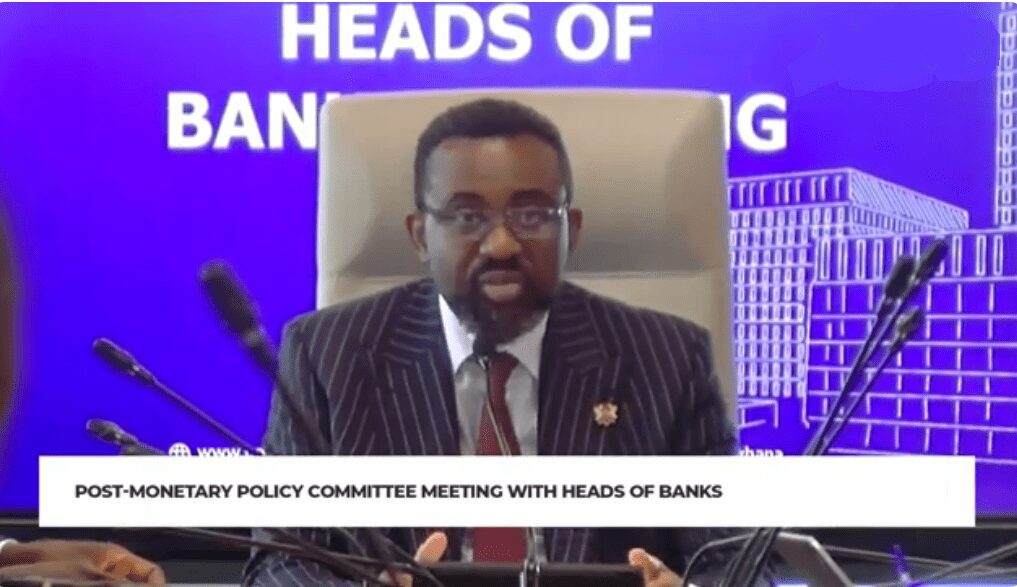
Screenshot 2025 12 17 050710
Dr Johnson Asiama, BOG Governor

He revealed that his “pledge is evident in the tone of our dialogues, the clarity of expectations, and the shared sense that we [Bank of Ghana] are custodians of Ghana’s financial future.”

ADVERTISEMENT

Ghana’s Growth Progress in 2025

Ghana’s economy has thrived through cautious optimism in the global economy. While growth prospects have edged upward, the international environment remains fragile, and this is shaped by lingering trade tensions and policy uncertainty. Dr Asiama said that “notably, global inflation is easing, and financial conditions are becoming more supportive.”

“Against this uneven global backdrop, our economy, Ghana’s economy, is charting a confident, a very confident path forward into the future.”

Dr Johnson Asiama, Governor of BOG

He referenced the real GDP growth data from the Ghana Statistical Service (GSS) for the third quarter of 2025, which expanded at 5.5 percent, as “although slightly lower than the same quarter of the previous year, the performance shows resilience and adaptability of our productive sectors, while business and consumer confidence indicators for September remain buoyant.”
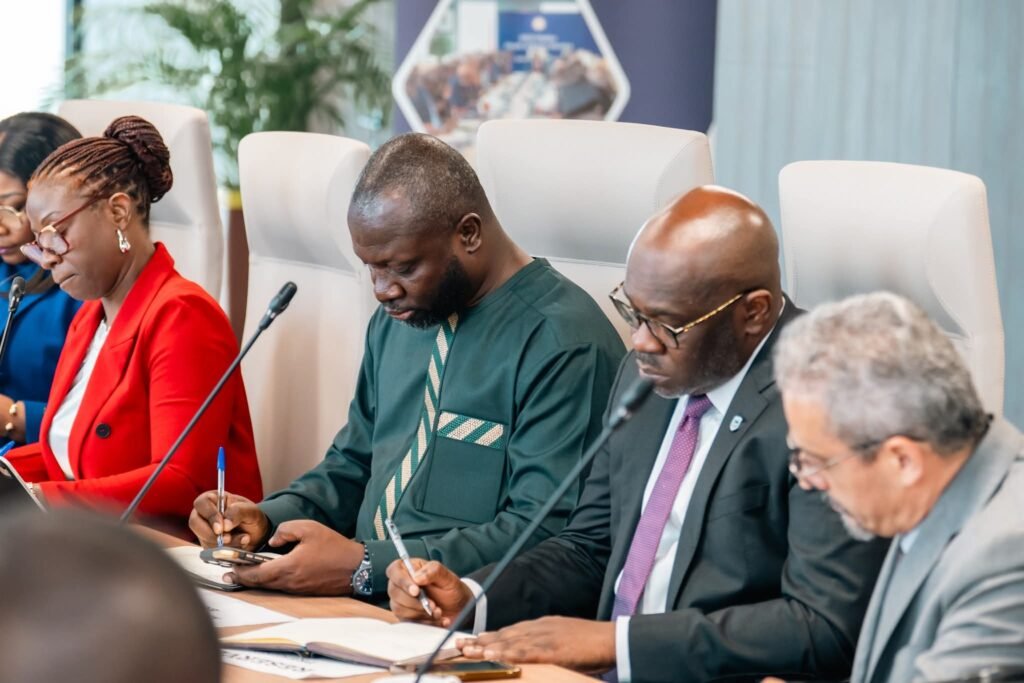
WhatsApp Image 2025 12 17 at 04.28.54
Heads of banks at the meeting

He commented on the persistent decline in inflation, describing it as “the most significant milestone of the year.” The steady revision of inflation to the medium target band declined to 6.3% in November 2025. He added that these unseen levels after a long time “reflect the combined impact of prudent monetary policy, disciplined fiscal management, and improved food supply conditions.”

“More importantly, underlying inflation expectations have been firmly re-anchored, providing a vital foundation for sustained growth, long-term investment, and renewed confidence among households and businesses.”

Dr Johnson Asiama, Governor of BOG

Dr Asiama mentioned that the last MPC meeting in November reduced the policy rate by 350 basis points, to 18 percent. The sector’s collective commitment is evident across all major indicators, he said.

WhatsApp Image 2025 12 17 at 04.28.55 1
Dr Johnson Asiama, BOG Governor, meeting with CEOs of Banks

According to the Governor, “Ghana’s external sector has emerged as a pillar of resilience,” adding that the economy is experiencing “strong export performance, led by gold and supported by cocoa, delivering substantial trade surpluses and strengthening the current account position.” Consequently, he again mentioned, the “external buffers have rebuilt considerably, enhancing our [Ghana’s] ability to withstand future shocks.”

Fiscal consolidation remains firmly on course and aligned with the broader reforms under the IMF-ECF program. Dr Asiama is confident that the policy direction ahead is clear, which is to protect hard-won stability and convert it into lasting economic progress.

He noted that commercial banks have demonstrated resilience, sound liquidity, improved capital strength, and renewed profitability after a period of significant strain.

“These gains reflect stronger confidence, improved risk management, and a regulatory framework that continues to evolve toward a more forward-looking approach.

“But while challenges remain, particularly in asset quality, the commitment of banks to responsible risk management is evident. The Bank of Ghana will continue to work closely with industry to safeguard stability and support sustainable credit growth.”

Dr Johnson Asiama, Governor of BOG

Bank of Ghana’s Plan for 2026

Looking into the coming year, the Governor emphasized that the Bank will consolidate regulatory gains through strict enforcement while expanding training and deeper engagement with the industry.

The Bank also revealed its next phase of reforms, including “new directives spanning stress testing, recovery planning, and risk management to further enhance the sector’s resilience and alignment with global best practices.” A revised risk-based supervisory framework will be introduced to strengthen forward-looking oversight by focusing on business risk, financial resilience, risk governance, and operational resilience.

ADVERTISEMENT
WhatsApp Image 2025 12 17 at 04.28.54 1
Heads of banks at the meeting

The Governor also hinted that the Bank will strengthen collaboration with financial regulators and key industry bodies to safeguard systemic stability and promote a resilient, trusted, and future-ready financial sector.

His leadership aims to use these reforms to institute its vision in creating a banking sector that is modern, competitive, resilient, and capable of supporting Ghana’s long-term growth agenda.

“Our [Bank of Ghana’s] task is to consolidate these gains by deepening financial intermediation, improving credit allocation, and strengthening governance.”

Dr Johnson Asiama, Governor of BOG

Dr Asiama, therefore, urged the commercial banks to support the real sector, to expand credit to productive enterprises, especially the SMEs, and drive innovation that enhances access and inclusion while managing risk.

This year, he remarked, “was not the end of a journey. It was just the beginning of a new one. The work ahead will demand more discipline, greater discipline. It will demand deeper collaboration among ourselves, and it will demand a willingness to embrace innovation while preserving prudence.”

READ ALSO: Ghana Balances Oil, Gas and Renewables in New Energy Transition Strategy

Sign Up to Our Newsletter

Fresh updates, Straight to your inbox

Tags: 127th MPC meetingsBank of Ghanacommercial banksDr Johnson AsiamaGDP growthGovernor of BoGGSSIMF-ECF programPolicy ratepost-MPC engagementreal sector
Share2Tweet1ShareSendSend
Please login to join discussion
Previous Post

Market optimism deepens as equities extend rally

Next Post

NDC Shuts Down Third-Term Rumors, Rejects Early Succession Talk

Related Posts

Fidelity Demands Africa Own Its Digital Future At a time when Africa’s digital economy is accelerating at an unprecedented pace, Fidelity Bank Ghana has delivered one of the strongest messages yet on the continent’s technological future. The bank made a bold and urgent case for Africa to stop depending on foreign controlled digital systems and begin building its own infrastructure capable of retaining value, strengthening currencies, and driving long term economic sovereignty. As one of the key sponsors of the 3i Africa summit, Fidelity Bank did not just show up to participate. It arrived with a message that resonated deeply across conference halls and policy discussions. Fidelity Bank emerged as one of the loudest voices championing a future where African nations control the very digital rails that power their economies. Digital Infrastructure Is The New Economic Power One of the defining moments of the summit came during a high level panel discussion on digital public infrastructure, where Adeline Aryee delivered a statement that immediately captured the attention of participants. She declared that if Africa builds its own digital rails, it naturally retains the value created by those systems. Her message was clear and uncompromising. In previous decades, national infrastructure was measured by roads, bridges, ports, and airports. Today, the true engines of economic power are payment platforms, identity systems, financial technology ecosystems, and digital marketplaces. According to Aryee, digital public infrastructure is no longer a luxury. It is now a strategic national asset. Her remarks struck at the heart of one of Africa’s most pressing economic concerns. Despite growing digital adoption, many transactions across the continent still pass through foreign payment systems, resulting in value leakage and continued pressure on local currencies. Ghana’s Success Story Becomes A Continental Blueprint Aryee highlighted Ghana’s progress in financial inclusion, mobile payments, and digital banking, describing the country as an emerging model for other African economies. Over the years, Ghana has invested heavily in domestic payment systems such as GhIPSS and its flagship platform, Gh-link. These systems have significantly expanded access to financial services while promoting digital transactions across urban and rural communities. Yet Aryee argued that inclusion alone is no longer enough. The next chapter for Africa, she insisted, must focus on ownership. She questioned why local transactions continue to depend on foreign rails when domestic infrastructure already exists. According to her, such dependence creates unnecessary external exposure and limits the continent’s ability to fully capture the economic benefits of its growing digital market. Her comments triggered intense debate among summit participants, many of whom acknowledged the urgent need for policy reforms and infrastructure investments. Market Driven Innovation Takes Center Stage Beyond infrastructure, Fidelity Bank also made a strong case for innovation that begins with real market needs. During the Ecosystem Roundtable on platforms, talent, and digital markets, Prince Osei Hyeaman-Addai shared insights from the bank’s years of digital financial innovation. He stressed that successful digital products are not built in boardrooms or based on assumptions. Instead, they are created by listening carefully to the market and understanding customer pain points. According to him, the market itself reveals the problems that need solving, the type of platform required, and the path toward scalable growth. His comments reflected a growing shift in African fintech circles, where customer centered design is becoming essential for product adoption and long term relevance. Trust And Credibility Remain The Real Currency Prince also emphasized that technology alone does not guarantee success. In his view, trust, credibility, and strong operational structures remain the real foundations of successful innovation. He noted that while investor interest in African fintech continues to rise, startups must prove they can deliver sustainable solutions, maintain transparency, and build products that respond to local realities. This perspective reflects Fidelity Bank’s own journey in digital transformation. Over the years, the bank has built strategic collaborations with leading fintech players, including IT Consortium, helping pioneer wallet to bank integrations and mobile financial solutions in Ghana. These partnerships have helped position Fidelity as one of Ghana’s most innovation driven financial institutions. A Defining Moment For Africa’s Digital Future Fidelity Bank’s participation at the 3i Africa Summit 2026 was more than a corporate appearance. It was a strategic declaration. At a time when Africa is racing to build competitive digital economies, the bank’s message was impossible to ignore. Africa cannot simply consume technology created elsewhere. It must own the infrastructure, shape the platforms, and capture the value generated by its digital future. As conversations from the summit continue to ripple across financial and policy circles, one thing is becoming increasingly clear. Africa’s next economic revolution may not be built on oil, gold, or minerals. It may be built on digital rails designed, owned, and powered by Africans. READ ALSO: IMF Ghana Review Ends in Dramatic Cliffhanger Fidelity Demands Africa Own Its Digital Future At a time when Africa’s digital economy is accelerating at an unprecedented pace, Fidelity Bank Ghana has delivered one of the strongest messages yet on the continent’s technological future. The bank made a bold and urgent case for Africa to stop depending on foreign controlled digital systems and begin building its own infrastructure capable of retaining value, strengthening currencies, and driving long term economic sovereignty. As one of the key sponsors of the 3i Africa summit, Fidelity Bank did not just show up to participate. It arrived with a message that resonated deeply across conference halls and policy discussions. Fidelity Bank emerged as one of the loudest voices championing a future where African nations control the very digital rails that power their economies. Digital Infrastructure Is The New Economic Power One of the defining moments of the summit came during a high level panel discussion on digital public infrastructure, where Adeline Aryee delivered a statement that immediately captured the attention of participants. She declared that if Africa builds its own digital rails, it naturally retains the value created by those systems. Her message was clear and uncompromising. In previous decades, national infrastructure was measured by roads, bridges, ports, and airports. Today, the true engines of economic power are payment platforms, identity systems, financial technology ecosystems, and digital marketplaces. According to Aryee, digital public infrastructure is no longer a luxury. It is now a strategic national asset. Her remarks struck at the heart of one of Africa’s most pressing economic concerns. Despite growing digital adoption, many transactions across the continent still pass through foreign payment systems, resulting in value leakage and continued pressure on local currencies. Ghana’s Success Story Becomes A Continental Blueprint Aryee highlighted Ghana’s progress in financial inclusion, mobile payments, and digital banking, describing the country as an emerging model for other African economies. Over the years, Ghana has invested heavily in domestic payment systems such as GhIPSS and its flagship platform, Gh-link. These systems have significantly expanded access to financial services while promoting digital transactions across urban and rural communities. Yet Aryee argued that inclusion alone is no longer enough. The next chapter for Africa, she insisted, must focus on ownership. She questioned why local transactions continue to depend on foreign rails when domestic infrastructure already exists. According to her, such dependence creates unnecessary external exposure and limits the continent’s ability to fully capture the economic benefits of its growing digital market. Her comments triggered intense debate among summit participants, many of whom acknowledged the urgent need for policy reforms and infrastructure investments. Market Driven Innovation Takes Center Stage Beyond infrastructure, Fidelity Bank also made a strong case for innovation that begins with real market needs. During the Ecosystem Roundtable on platforms, talent, and digital markets, Prince Osei Hyeaman-Addai shared insights from the bank’s years of digital financial innovation. He stressed that successful digital products are not built in boardrooms or based on assumptions. Instead, they are created by listening carefully to the market and understanding customer pain points. According to him, the market itself reveals the problems that need solving, the type of platform required, and the path toward scalable growth. His comments reflected a growing shift in African fintech circles, where customer centered design is becoming essential for product adoption and long term relevance. Trust And Credibility Remain The Real Currency Prince also emphasized that technology alone does not guarantee success. In his view, trust, credibility, and strong operational structures remain the real foundations of successful innovation. He noted that while investor interest in African fintech continues to rise, startups must prove they can deliver sustainable solutions, maintain transparency, and build products that respond to local realities. This perspective reflects Fidelity Bank’s own journey in digital transformation. Over the years, the bank has built strategic collaborations with leading fintech players, including IT Consortium, helping pioneer wallet to bank integrations and mobile financial solutions in Ghana. These partnerships have helped position Fidelity as one of Ghana’s most innovation driven financial institutions. A Defining Moment For Africa’s Digital Future Fidelity Bank’s participation at the 3i Africa Summit 2026 was more than a corporate appearance. It was a strategic declaration. At a time when Africa is racing to build competitive digital economies, the bank’s message was impossible to ignore. Africa cannot simply consume technology created elsewhere. It must own the infrastructure, shape the platforms, and capture the value generated by its digital future. As conversations from the summit continue to ripple across financial and policy circles, one thing is becoming increasingly clear. Africa’s next economic revolution may not be built on oil, gold, or minerals. It may be built on digital rails designed, owned, and powered by Africans. READ ALSO: IMF Ghana Review Ends in Dramatic Cliffhanger Fidelity Demands Africa Own Its Digital Future
Banking

Fidelity Demands Africa Own Its Digital Future

May 15, 2026
Absa Bank Ghana Empowers Academic City University College With Money Skills
Banking

Absa Bank Ghana Empowers Academic City University With Money Skills

May 14, 2026
Access Bank Strengthens Ashanti With Strategic Investment
Banking

Access Bank Strengthens Ashanti With Strategic Investment

May 14, 2026
United Bank for Africa Posts Industry’s Lowest Bad Loan Ratio United Bank for Africa Ghana has delivered one of the most remarkable performances in Ghana’s banking industry, emerging with the lowest non-performing loan ratio in the sector and setting a new benchmark for prudent lending, asset quality, and corporate discipline. At a time when banks across emerging markets continue to battle rising credit risks, economic uncertainty, and pressure on asset quality, UBA Ghana’s latest financial performance has become a standout success story. The bank’s Non-Performing Loan ratio, which stood at 29.40 percent in 2021, has dropped sharply to an impressive 2.11 percent in 2025. This exceptional improvement places the bank well ahead of regulatory expectations and significantly below the target set by the Bank of Ghana, which requires banks to maintain bad loan ratios below 10 percent by June 2026. The numbers tell a powerful story of strategic execution, disciplined lending, and a leadership team committed to sustainable growth. Bad Loans Fall Dramatically The bank’s total non-performing loans have also seen a dramatic reduction over the four-year period. From GH¢334 million recorded in 2021, the figure has now dropped to just GH¢28 million in 2025. Industry analysts say this sharp decline reflects a deliberate and aggressive approach to loan portfolio management, one that prioritizes risk identification, credit discipline, and rapid intervention. For many financial observers, this is not merely a statistical improvement. It is evidence of a bank that has transformed its internal credit systems and strengthened its ability to manage lending risk in a highly competitive market. UBA Ghana’s performance is being viewed as a model for other financial institutions seeking to improve balance sheet quality while still expanding lending activities. Strong Risk Culture Drives Results According to Kenneth Amponsah, the achievement did not happen overnight. He explained that the bank adopted a consistent and structured approach to managing credit risk across every stage of the lending cycle. He noted that the improvement in the bank’s loan quality was the result of stronger lending standards, improved loan screening procedures, tighter monitoring systems, and faster recovery mechanisms. The bank’s risk management strategy focuses on ensuring quality at the point of loan origination while maintaining strict oversight throughout the life of each facility. This includes strategic portfolio planning, efficient approval processes, proper documentation, collateral verification, real-time account monitoring, and proactive loan recovery. Banking experts say such a full-cycle approach is critical in today’s economic environment, where loan defaults can quickly erode capital and investor confidence. Recovery Efforts Yield Strong Returns One of the strongest drivers behind the bank’s improved asset quality has been its recovery operations. UBA Ghana has significantly strengthened its debt recovery framework, resulting in consistent gains over the years. In 2025 alone, loan recoveries reached an impressive GH¢168 million, highlighting the effectiveness of the bank’s recovery teams and internal enforcement systems. This strong recovery performance has helped the bank clean up its balance sheet while improving liquidity and strengthening capital resilience. Analysts believe the recovery figures also demonstrate the bank’s ability to engage customers proactively while maintaining professional relationships and ensuring compliance. Leadership Applauds Team Performance Commenting on the achievement, Bernard Gyebi praised the collective effort of the bank’s staff, management, and board. He said the milestone reflects the dedication and discipline of Relationship Managers, Risk teams, Executive Management, and Board members who have all contributed to building a resilient institution. According to him, UBA Ghana remains focused on balancing business growth with sound risk management practices. He emphasized that the bank is intentional about creating long-term value for shareholders, customers, and regulators while maintaining high standards of governance and accountability. His remarks underline the bank’s broader strategy of building a strong institution capable of supporting businesses and contributing to national economic growth. Setting the Pace for Ghana’s Banking Sector Industry observers believe UBA Ghana’s latest achievement reflects broader improvements within Ghana’s banking sector, which has undergone major reforms in recent years. However, they note that UBA Ghana’s performance stands out because of the speed, consistency, and scale of its transformation. By bringing its bad loan ratio down to just 2.11 percent, the bank has positioned itself as one of the safest and most disciplined lenders in the market. As competition intensifies and regulatory standards become stricter, UBA Ghana’s performance could serve as a benchmark for banks seeking to combine profitability with responsible lending. With strong governance, effective execution, and a clear commitment to excellence, UBA Ghana appears firmly positioned to sustain its leadership in Ghana’s evolving financial sector. READ ALSO: Tema Manhean Facility To Halt Fisheries Value Leakage United Bank for Africa Posts Industry’s Lowest Bad Loan Ratio
Banking

United Bank for Africa Posts Industry’s Lowest Bad Loan Ratio

May 13, 2026

Sign Up to Our Newsletter

Fresh updates, Straight to your inbox

Recent News

President John Dramani Mahama

Government to Finish 35 Agenda 111 Hospitals, President Mahama Confirms

May 15, 2026
President John Dramani Mahama

President Mahama Allocates 1% GDP to Commercial Agriculture Post-ECF

May 15, 2026
President John Dramani Mahama with Northern Regional House of Chief

Mahama Seeks Stronger Partnership With Traditional Authorities

May 15, 2026
Dr. Andy Osei Okrah, TCDA CEO, with Dr. Isaac Danso, CSIR-OPRI Director, and Team at the Institute

CSIR-OPRI Readies Five Million Seedlings For National Oil Palm Policy

May 15, 2026
download 52

Steve Cohen Announces End Of Reelection Bid

May 15, 2026
Next Post
Fiifi Fiavi Kwetey

NDC Shuts Down Third-Term Rumors, Rejects Early Succession Talk

The Vaultz News

Copyright © 2025 The Vaultz News. All rights reserved.

Navigate Site

  • About
  • Advertise
  • Privacy Policy
  • Contact

Follow Us

Welcome Back!

Login to your account below

Forgotten Password?

Retrieve your password

Please enter your username or email address to reset your password.

Log In
No Result
View All Result
  • Top Stories
  • News
    • General News
    • Education
    • Health
    • Opinions
  • Economics
    • Economy
    • Finance
      • Banking
      • Insurance
      • Pension
    • Securities/Markets
  • Business
    • Agribusiness
    • Vaultz Business
    • Extractives/Energy
    • Real Estate
  • World
    • Africa
    • America
    • Europe
    • UK
    • USA
    • Asia
    • Around the Globe
  • Innovation
    • Technology
    • Wheels
  • Entertainment
  • 20MOBPL2D
  • Jobs & Scholarships
    • Job Vacancies
    • Scholarships

Copyright © 2025 The Vaultz News. All rights reserved.

This website uses cookies. By continuing to use this website you are giving consent to cookies being used. Visit our Privacy and Cookie Policy.

Discover the Details behind the story

Get an in-depth analysis of the news from our top editors

Enter your email address