TotalEnergies and Google have entered into a landmark 21-year Power Purchase Agreement (PPA) that will see the French energy major supply Google with 1 terawatt-hour (TWh) of certified renewable electricity from a new solar project in Malaysia.
The agreement underscores the growing role of long-term clean energy contracts in supporting the rapid expansion of data centers across Asia while strengthening national electricity systems with new renewable capacity.
For Google, the agreement aligns with its broader strategy of adding new clean energy to the grids that power its operations worldwide. Rather than relying solely on existing renewable capacity, the company has emphasized the importance of enabling additional projects that contribute to long-term system growth.
“We’re thrilled to build on our collaboration with TotalEnergies in Malaysia,” said Giorgio Fortunato, Head of Clean Energy & Power, Asia Pacific, Google.
He described the agreement as “a key part of our strategy to make meaningful investments that benefit the economies where we operate,” adding that by enabling new clean capacity, Google is supporting the local electricity system that hosts its infrastructure.


The Malaysian PPA builds on an earlier agreement announced in November, under which TotalEnergies committed to supplying renewable power to Google’s data centers in the United States. Together, the deals highlight the expanding global partnership between the two companies.
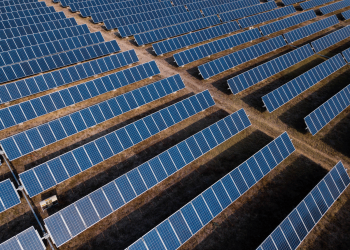
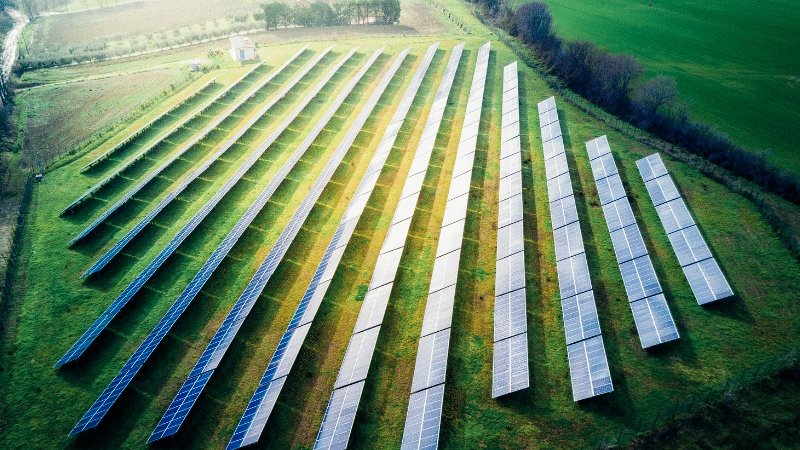
Under the deal, the power will be generated by the Citra Energies solar plant located in the northern Malaysian state of Kedah. With an equivalent capacity of 20 megawatts (MW), the project is designed to support Google’s data center operations in Malaysia, helping the technology company meet rising energy demand while advancing its climate and sustainability commitments.
TotalEnergies Expands Tech-Focused Power Solutions
For TotalEnergies, the agreement reinforces its position as a leading provider of tailored power solutions to large technology and industrial clients.
The company has increasingly focused on long-term PPAs as a way to monetize its growing renewable portfolio while supporting customer decarbonization strategies.
“We are delighted to strengthen our collaboration with Google through this agreement to supply renewable electricity to their new data center in Malaysia.”
Sophie Chevalier, Senior Vice President Flexible Power & Integration at TotalEnergies
She noted that the deal demonstrates the company’s ability to deliver competitive and customized solutions “both in mature markets, such as the United States and Europe, and in emerging countries like Malaysia.”
Chevalier added that the PPA also contributes to TotalEnergies’ financial ambitions in the electricity business, including its target of achieving 12 percent profitability in the power segment.
The Google agreement follows a series of similar contracts signed by TotalEnergies with global companies across sectors. These include data center operators and industrial groups such as Data4, STMicroelectronics, Saint-Gobain, Air Liquide, Amazon, LyondellBasell, Merck, Microsoft, Orange and Sasol.
By leveraging a diverse asset base that spans solar, onshore and offshore wind, combined-cycle gas turbines (CCGT) and energy storage,
TotalEnergies has positioned itself to offer flexible, firm and low-carbon electricity solutions. This integrated approach allows the company to meet the specific operational needs of energy-intensive customers while supporting their emissions reduction goals.
Strengthening TotalEnergies’ Renewable Portfolio
The Malaysia project also fits into TotalEnergies’ broader ambition to build a competitive global electricity portfolio.
As of the end of October 2025, the company had more than 32 gigawatts (GW) of installed gross renewable electricity generation capacity worldwide. It is targeting 35 GW by the end of 2025 and aims to exceed 100 TWh of net electricity production by 2030.
As construction of the Citra Energies solar plant approaches, the long-term PPA with Google provides revenue certainty while contributing to Malaysia’s clean energy transition.
For both companies, the agreement reflects a shared commitment to scaling renewable power in fast-growing markets, ensuring that digital growth and sustainability advance hand in hand.
READ ALSO: Economist Attributes Ghana’s Persistent Debt to Deep-Seated Structural Deficiencies