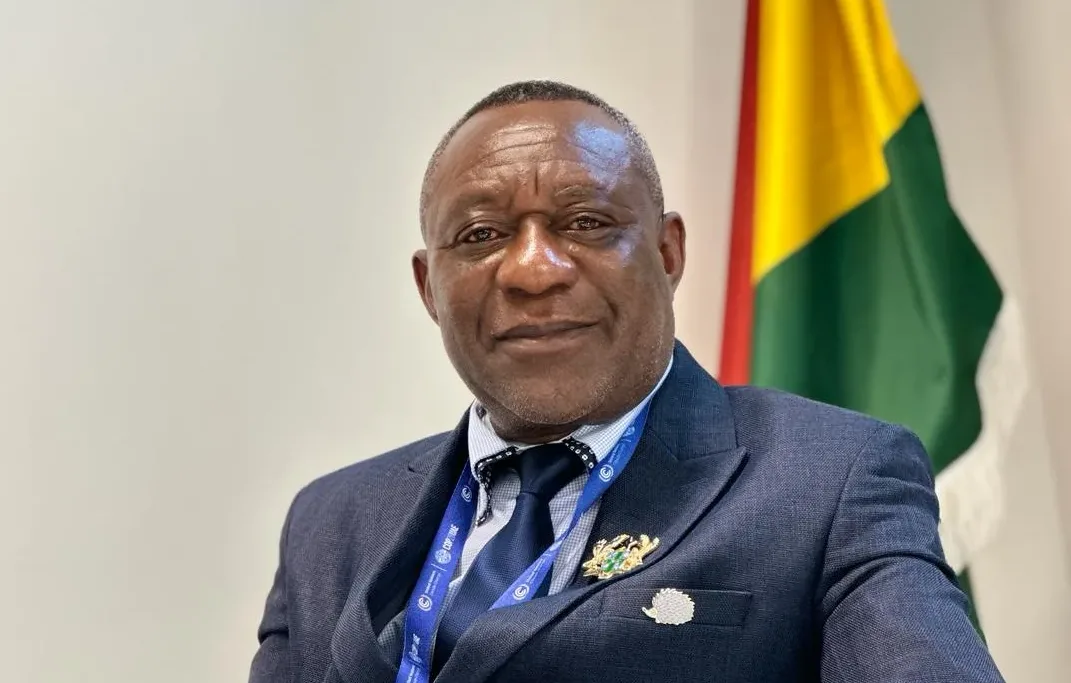
Dr. Henry Kwabena Kokofu, the former Executive Director of the Environmental Protection Agency (EPA), has issued a stark warning to the government, asserting that the fight against illegal small-scale mining, or “galamsey,” is destined for continued failure unless state institutions are empowered to lead without political interference.
Speaking on the heels of an escalating environmental crisis, Kokofu argued that the historical reliance on political leadership and inter-ministerial committees has proven to be an ineffective strategy that has only served to weaken the regulatory fabric of the nation.
“It takes the use of state institutions that can help. The current situation and the past situation where politicians are put in the forefront in the fight against galamsey has proven not to be worth it. It is not working. Why are we continuously doing that?”
Dr. Henry Kwabena Kokofu, EPA Former Executive Director
Kokofu’s critique struck at the heart of Ghana’s current security and environmental architecture. He maintained that both the National Democratic Congress (NDC) and the New Patriotic Party (NPP) have fallen into the same trap: prioritizing “political showmanship,” over institutional autonomy.
By placing politicians at the forefront of the battle, Kokofu suggested the state has effectively neutralized the professional expertise required to dismantle the complex networks of illegal mining that now threaten the country’s primary water bodies and forest reserves.
The former EPA chief pointed to a recurring cycle of administrative shortcomings, beginning with President John Dramani Mahama’s first term between 2012 and 2014. During this period, the establishment of a high-profile inter-ministerial task force was heralded as a definitive solution, yet it failed to produce sustainable results.

Kokofu argues that this was the “first major attempt,” to fail specifically because the strategy was centered on political actors rather than technocrats. He observed a similar trajectory during the Akufo-Addo administration, where early gains were swiftly eroded by political interference during the second term, contributing to the eventual surge in illegal activity.


According to Kokofu, “political frontlining,” has created a vacuum of accountability. When politicians lead, the enforcement of mining laws often becomes subject to electoral considerations, leading to the “Galamsey Fraud,” scandals and the eventual dissolution of previous committees.
Kokofu asserts that the “spirit of reset,” promised by the current administration, must begin by removing the political shield that often protects offenders with partisan connections.
Lethal Escalation
The urgency of Kokofu’s intervention is underscored by the increasingly violent and lethal nature of the galamsey trade. In 2025, the crisis has transitioned from an environmental hazard to a national security nightmare, claiming the lives of high-ranking state actors.
Most notably, the August 2025 helicopter crash that resulted in the deaths of prominent ministers, including the Minister for Defense and the Minister for Environment and Science, was cited as a tragic consequence of the heightened stakes and the “militarized,” yet ineffective approach to the mining heartlands.
The “escalation,” mentioned by Kokofu refers not only to the loss of life but to the encroachment on critical infrastructure.
In regions like Bono, illegal miners have recently threatened the Bui hydroelectric dam and decimated cashew production hubs, despite the deployment of “Blue Water Guards,” and the National Anti-Illegal Mining Operations Secretariat (NAIMOS).
Kokofu argued that these task forces are often under-resourced or hampered by the very political mandates they are supposed to uphold.
Institutional Autonomy
To break this cycle, Kokofu proposed a total shift in command.
He identified four critical state bodies – the Environmental Protection Agency (EPA), the Water Resources Commission, the Forestry Commission, and the Ghana Geological Survey Authority – as the rightful vanguard of the anti-galamsey campaign.
He argued that these institutions possess the technical data, legal mandates, and professional continuity necessary to manage the crisis, provided they are shielded from ministerial caprice and fully resourced with the necessary logistics.
“These are four major state institutions have a whole lot. When you bring them together, resource them fully and ensure there is a coordinated effort, they will be able to lead the fight. Don’t put politicians there. They will never be able to do it. We have Mahama 1 to show, we have Akufo-Addo to show, and today we have it”
Dr. Henry Kwabena Kokofu, EPA Former Executive Director
While the Ministry of Lands and Natural Resources recently commissioned 24 Land Cruisers and 250 motorbikes to bolster surveillance, Kokofu suggested that equipment alone is insufficient without a change in leadership structure.

The “Big Four” regulators must be allowed to operate as a coordinated, independent unit that prioritizes environmental reclamation over political optics.
Only by de-politicizing the frontline can Ghana hope to move beyond the “militarized nightmares,” of the last decade and toward a genuinely sanitized mining sector.
READ ALSO: Energy Minister Sets 2026 Agenda Focused on Sector Stability