Policy think tank IMANI Centre for Policy and Education has called for greater transparency, consultation and data-driven decision-making as Parliament considers Ghana’s amended lithium agreement.
The call follows concerns about the timing, royalty structure and data assumptions underpinning the revised deal laid by the Minister for Lands and Natural Resources.
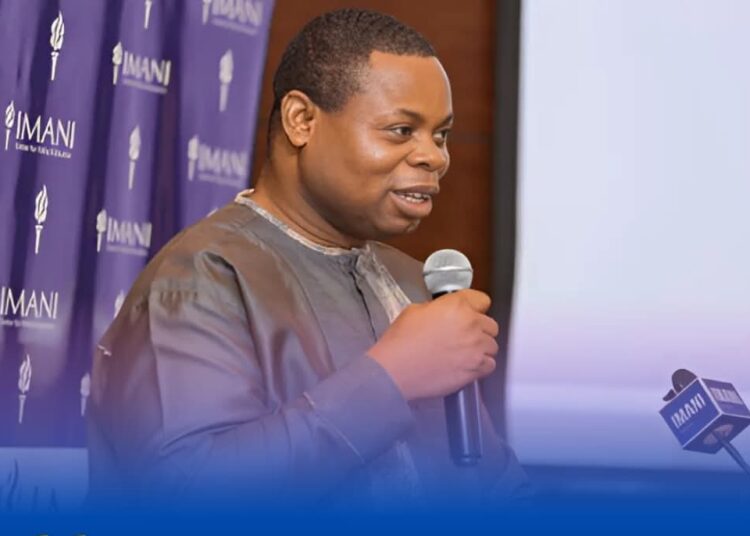
Franklin Cudjoe, Founding President and Chief Executive Officer of IMANI, in a statement, said the policy direction signalled by President John Dramani Mahama must guide all decisions surrounding the lithium agreement.
“Given President John Dramani Mahama’s serious regard for the lithium conversation by publicly engaging on the subject, we would urge the Minister to ensure that all decisions related to this matter be transparent, consultative, and data driven as the President has clearly directed.”
Franklin Cudjoe, Founding President and Chief Executive Officer of IMANI
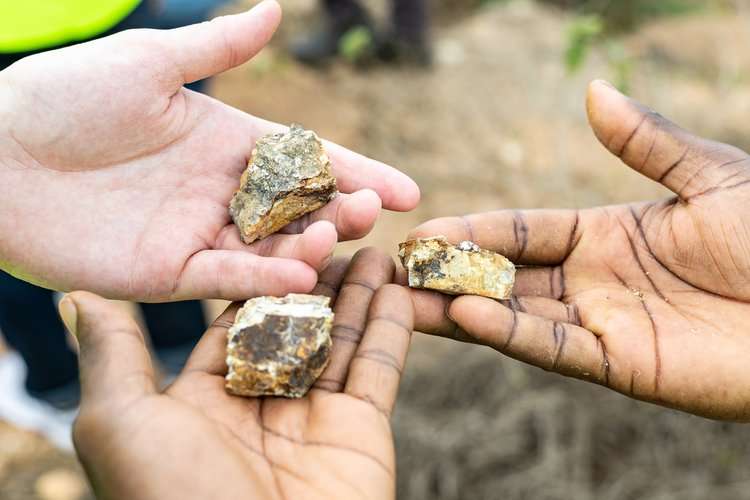
IMANI expressed concern over the manner in which the amended lithium agreement was introduced in Parliament, noting that it was laid on the final day before the House rose for the holidays.
According to the policy institute, this timing could limit thorough scrutiny and public engagement on an agreement with long-term implications for Ghana’s mineral economy.
The group, however, voiced confidence in Parliament’s oversight role, particularly through the relevant committee.
“We hope the Parliamentary Committee’s conversation on the matter under the leadership of Hon. Collins Dauda would guide the final decision on the matter.”
Franklin Cudjoe, Founding President and Chief Executive Officer of IMANI
Sliding Scale Royalty Welcomed, But Questions Remain

While critical of aspects of the revised agreement, IMANI acknowledged what it described as a major policy win resulting from sustained civil society advocacy.
“We acknowledge the Minister’s decision now to adopt the sliding scale for royalty with the 12% maximal bound as a starting victory for CSOs activism. We thank the Minister.”
Franklin Cudjoe, Founding President and Chief Executive Officer of IMANI
However, IMANI expressed disappointment with the proposed starting royalty rate of seven per cent, arguing that it does not reflect prevailing market conditions or investor profitability.
According to IMANI’s analysis, lithium prices and production costs suggest that Ghana could secure a higher starting royalty without undermining investor viability.
The group noted that lithium is currently trading at about $1,200 per tonne, while the investor’s production cost is estimated at $610 per tonne, yielding a profit margin of nearly 45 per cent.
Mr Cudjoe said, “Sadly though he went for a 7% royalty starting rate when the price of lithium is higher today,” adding that the same investor had previously been willing to accept a 10 per cent royalty under less favorable market conditions.
IMANI recalled that in 2024, when lithium prices were around $800 per tonne and production costs remained unchanged, the investor’s profit margin was below 20 per cent, yet a higher royalty rate was still acceptable.
This, the group argued, raises questions about the rationale for lowering the starting royalty despite improved market fundamentals.
Call for Independent Feasibility Studies

Beyond royalties, IMANI emphasised the need for Ghana to undertake its own independent feasibility studies rather than relying primarily on investor-provided data.
“The Minister’s figures he presented in an interview he granted for the basis of a start off royalty of 7% at $3,000 per tonne as of 2024 are inaccurate. Other figures he provided in comparison to gold are also questionable.”
Franklin Cudjoe, Founding President and Chief Executive Officer of IMANI
He stressed that lithium’s true value lies not only in raw ore exports but in downstream processing and chemical refinement, where significantly higher margins are realised.
According to IMANI, without independent studies, Ghana risks underestimating the long-term economic benefits it could secure from local processing and value addition.
“There are other important matters of value addition, processing of the ore and benefits to the immediate environs where the lithium is found that must only be determined by conducting Ghana’s own feasibility studies independent of the investor’s data.”
Franklin Cudjoe, Founding President and Chief Executive Officer of IMANI
IMANI concluded by reiterating its support for responsible investment in Ghana’s emerging lithium sector, while cautioning that strategic minerals require especially careful governance.
The group maintained that transparency, accurate data and broad consultation are critical to ensuring that lithium development delivers lasting value for the country.
As Parliament prepares to resume consideration of the amended agreement, the debate over royalties, data credibility and value addition is expected to intensify, shaping the future of Ghana’s lithium industry and its role in the global energy transition.
READ ALSO: Ghana Cocoa Board Missed the Cocoa Bonanza as Global Prices Hit Record Highs – Randy Abbey Laments