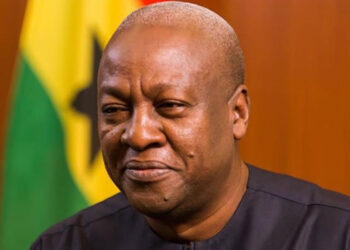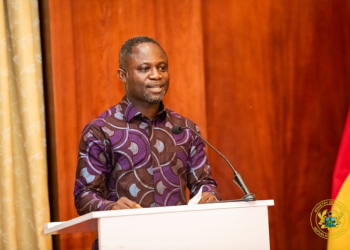
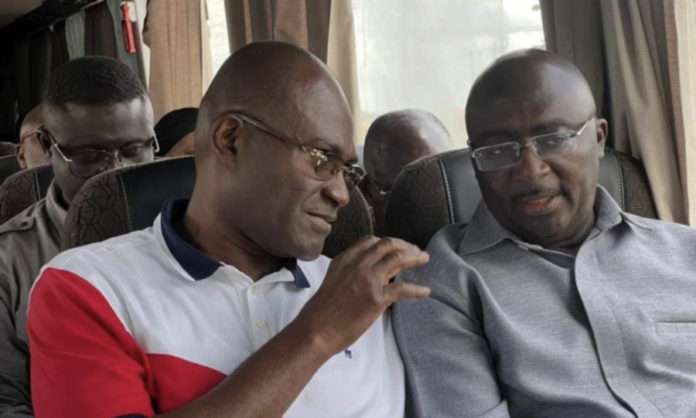
A new delegates’ poll by Global InfoAnalytics suggests that former Vice President Dr Mahamudu Bawumia remains the frontrunner in the New Patriotic Party’s presidential race, but faces an intensifying challenge from former Assin Central Member of Parliament, Kennedy Ohene Agyapong.
According to the survey, Dr Bawumia currently commands 45 per cent support among delegates, while Mr Agyapong has surged to 31 per cent, narrowing what was once a much wider gap.
The findings, released by Global InfoAnalytics Executive Director Mussa Dankwah, point to a contest that is becoming increasingly competitive as the party moves closer to its internal primaries.
While Dr Bawumia appears to have the finish line in sight, the poll indicates that Mr Agyapong’s campaign has gained significant traction, transforming the race into what analysts describe as a “hot chase.”
Other declared contenders trail far behind in the current standings. Dr Yaw Osei Adutwum and former NPP General Secretary Kwabena Agyei Agyapong both recorded negligible support, while 11 per cent of respondents declined to disclose their preferences and nine per cent said they were undecided.
This combined 20 per cent bloc of delegates who are either undecided or unwilling to state their choice continues to inject uncertainty into the race.

Uncertainty of Uniting after Primaries
Beyond headline numbers, the poll also highlights growing concerns within the party about unity after the primaries. While a majority of delegates still believe the NPP will emerge united, the proportion of those who fear post-primary disunity has doubled within a month, rising from three per cent to six per cent.
According to Mr Dankwah, this shift reflects the impact of increasingly aggressive campaign tactics, which some delegates interpret as personal attacks rather than issue-based competition.
Analysts say such fears, though still held by a minority, are significant in a tightly contested race. They argue that internal cohesion is likely to influence how delegates ultimately vote, particularly among those who remain undecided or reluctant to openly express their preferences.
The perception of a “dirty campaign,” as some have described it, may be creating discomfort among delegates who value party unity ahead of the 2028 general elections.
Neighbours’ Effect model
One of the most striking aspects of the survey is the application of what Global InfoAnalytics describes as the “Neighbours’ Effect” model. This analytical tool seeks to understand not only whom delegates intend to vote for, but whom they believe their fellow delegates are likely to support.
According to Mr Dankwah, the model provides insight into unspoken assumptions and private calculations within the party’s electoral college. The results of this exercise were unexpected. Under the Neighbours’ Effect model, all leading candidates underperformed compared to their earlier direct support figures.
Forty-four per cent of delegates believed their colleagues would vote for Dr Bawumia, slightly below his own 45 per cent showing, representing what analysts describe as a 2.2 per cent underperformance.
For Mr Agyapong, the gap was more pronounced, with only 28 per cent believing fellow delegates would support him, nearly 10 percentage points lower than his direct score of 31 per cent.
Dr Bryan Acheampong, who appears marginal in the latest poll, also recorded a drop under the Neighbours’ Effect model, falling from three per cent to two per cent. Perhaps most telling, however, is the finding that 26 per cent of delegates said they did not know or were unsure whom their peers would vote for.
This uncertainty underscores what Mr Dankwah referred to as the “my matter dey my head inside” phenomenon, a local expression capturing the tendency of delegates to keep their preferences secret.
According to analysts, this reluctance to openly discuss voting intentions, even among party colleagues, is unusual for a party not currently in government and suggests heightened sensitivity around the race.
It also points to the possibility that all candidates could ultimately perform below expectations on voting day, as hidden preferences and late shifts may significantly affect outcomes.
Past Trend
The latest findings build on trends observed in Global InfoAnalytics’ October survey, which showed Dr Bawumia leading with 44 per cent, down from 47 per cent in September.
At the time, Mr Agyapong trailed with 19 per cent, though his support had increased slightly month-on-month. Dr Acheampong placed third with five per cent, while Dr Adutwum and Kwabena Agyei Agyapong each polled one per cent.
That earlier poll also revealed high levels of indecision and non-disclosure. Fifteen per cent of delegates said they had decided but would not reveal their choice, while another 15 per cent were undecided.
Although the proportion of undecided delegates dropped sharply from 27 per cent in September to 15 per cent in October, the share of undisclosed voters rose dramatically, a pattern Global InfoAnalytics notes is consistent with previous NPP primaries as voting day approaches.
Taken together, the latest results suggest a race defined not only by shifting loyalties but also by strategic silence. While Dr Bawumia remains in the lead, the narrowing gap and rising secrecy among delegates indicate that the contest is far from settled.
As campaigns intensify, the challenge for all contenders will be not only to mobilise visible support, but also to secure the quiet backing of delegates who, for now, are keeping their choices firmly to themselves.
READ ALSO: GoldBod Exceeds 2025 Export Target, Raises Over $10bn