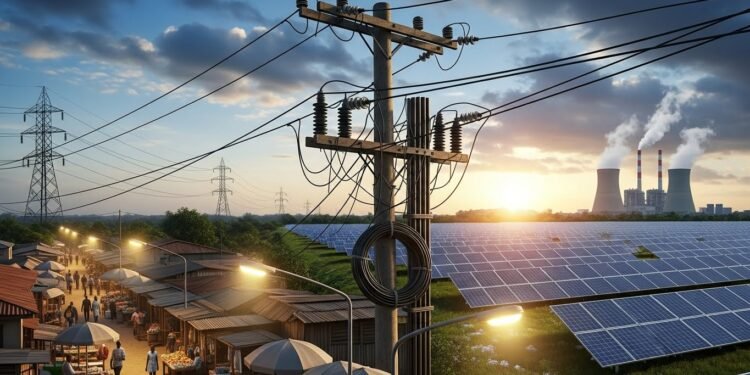
Ghana’s energy sector is showing signs of improvement, but deep structural challenges continue to weigh on its financial sustainability, according to the International Monetary Fund (IMF).
In its Fifth Review Under the Extended Credit Facility (ECF) Arrangement and Financing Assurances Review, the Fund acknowledged progress in payment discipline while cautioning that the sector’s persistent shortfall remains a significant fiscal risk.
A key positive highlighted in the IMF review is the sharp increase in payments by the Electricity Company of Ghana (ECG) to IPPs through the Cash Waterfall Mechanism (CWM).
“Despite marked improvements, the energy sector shortfall persists.
“In 2025 through September, ECG payments to IPPs via the CWM represented 48 percent of bills, significantly higher than 11 percent in 2024.”
International Monetary Fund (IMF)
The IMF’s latest assessment paints a picture of cautious optimism. While reforms have led to better cash management and higher payments to independent power producers (IPPs), the overall financing gap has not been eliminated, requiring continued government intervention to keep the power sector afloat.
This improvement reflects stronger enforcement of revenue prioritisation and better alignment between collections and obligations, following years in which ECG struggled to meet even a fraction of its payment commitments.
Energy analysts say the increase from 11 percent to nearly half of billed amounts within a year represents a meaningful shift in operational discipline, reducing uncertainty for power producers and lowering the immediate risk of supply disruptions.
Government Continues to Absorb Sector Shortfall
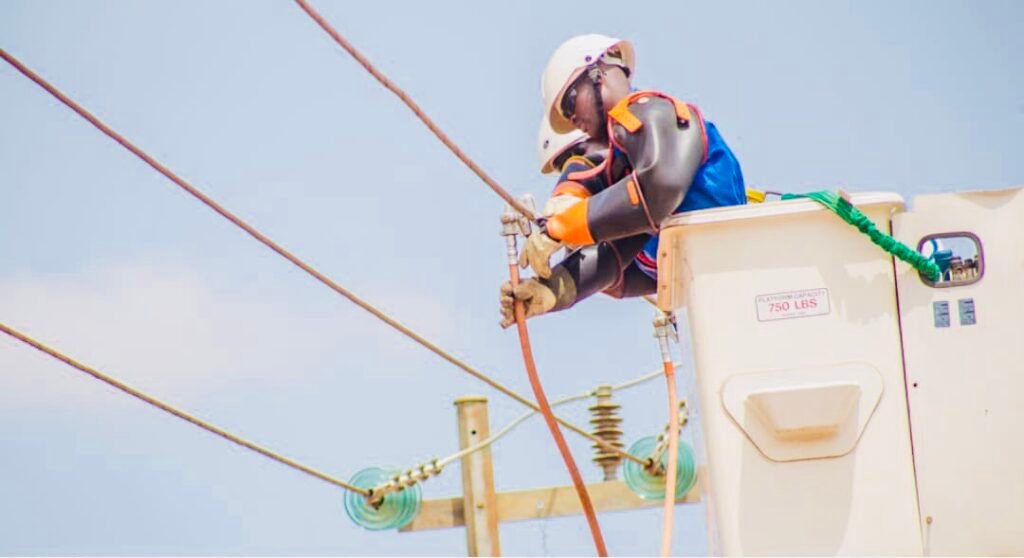
Despite the progress, the IMF noted that ECG’s improved payments have not been sufficient to fully close the sector’s financing gap.
“The shortfall, over US$500 million, was assumed by the government, either through legacy debt payments or fuel purchases.”
International Monetary Fund (IMF)
This intervention helped prevent a build-up of arrears that could have destabilised the sector, but it also underscores the ongoing burden the energy sector places on public finances.
While the current shortfall is substantial, the IMF pointed out that it is significantly lower than earlier projections. The figure is “significantly below the budgeted annual shortfall for 2025 (US$1.7 billion),” suggesting that reforms are beginning to deliver tangible fiscal savings.
Notwithstanding the improved outturn, the IMF cautioned that more decisive action is needed to restore ECG to long-term financial sustainability. The Fund warned that without deeper structural reforms, fiscal risks will continue to emanate from the energy sector.
“More remains to be done to restore ECG to financial sustainability and reduce fiscal risks in the sector,” the review noted. Persistent challenges such as high technical and commercial losses, inadequate revenue collection, and exposure to foreign exchange volatility continue to undermine the utility’s balance sheet.
Industry observers note that while government support has helped stabilise the system, it is not a substitute for fixing underlying inefficiencies in power distribution and billing.
2026 Budget Targets Reduced Shortfall
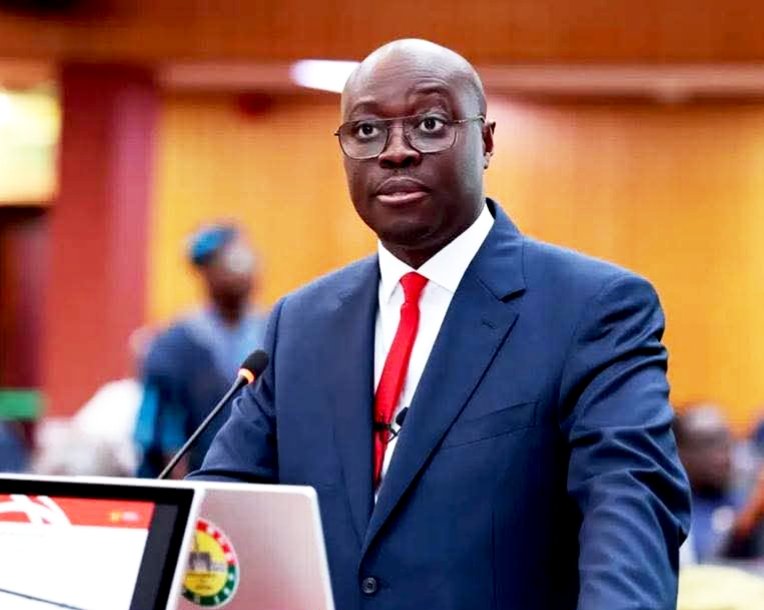
In response to the ongoing challenges, the government has made substantial budgetary provisions for the energy sector in 2026.
“To this effect, the 2026 budget includes GHS 15 billion (US$1.1 billion) to cover the projected energy sector shortfall, in addition to the agreed payments on legacy debt.”
International Monetary Fund (IMF)
The allocation reflects a deliberate effort to contain fiscal risks while maintaining power sector stability. The IMF said the smaller budgeted shortfall for 2026 is justified by recent performance and expected cost reductions across the value chain.
This includes gains from policy reforms implemented in 2025, which have already reduced the scale of government intervention compared to earlier years.
“The smaller budgeted shortfall is justified by the 2025 outturn, as well as the expected reduction in power generation costs from renegotiated PPAs and projected decreased reliance on costly liquid fuels.”
International Monetary Fund (IMF)
If fully realised, these measures could significantly improve the sector’s cost structure, making tariffs more reflective of actual costs and reducing the need for recurrent government bailouts.
The IMF’s review highlights the delicate balancing act facing policymakers. On one hand, maintaining reliable electricity supply is essential for economic growth, industrial activity and social stability.
On the other, continued government absorption of sector losses poses risks to fiscal consolidation efforts under the IMF-supported programme.
READ ALSO: Extradition War: Ofori-Atta’s Counsel Slams Political Red Notice