Ghana’s tree crop sector is poised for a major transformation in 2026 as the Tree Crop Development Authority intensifies regulation and compliance across key value chains.
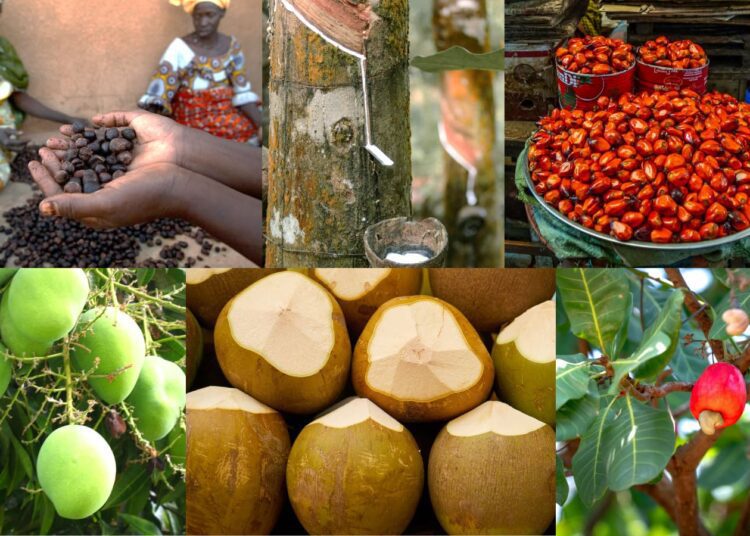
The Authority says the renewed enforcement drive is aimed at improving productivity, ensuring industry discipline, and positioning tree crops as a stronger pillar of the country’s agro industrial growth agenda. Priority crops under the reform include cashew, coconut, oil palm, rubber, mango, and shea, all of which play a growing role in exports, rural employment, and value addition.
According to the Authority, stricter oversight will address long standing inefficiencies, reduce illegal trading practices, and ensure that stakeholders operate within the legal framework established by the state. The move is expected to improve transparency and create a more predictable operating environment for farmers, processors, and exporters.
Value Addition Takes Centre Stage
Beyond regulation, the Tree Crop Development Authority is placing strong emphasis on value addition across the entire production chain. The Chief Executive Officer, Dr. Andy Okrah, has explained that boosting local processing capacity remains central to the Authority’s strategy for enhancing export earnings and improving farmer incomes.
He noted that Ghana has for years exported large volumes of raw tree crop produce with limited local processing, a situation that constrains revenue potential and job creation. By expanding domestic processing, the Authority aims to retain more value within the economy while building competitive agro industrial enterprises.
Dr. Okrah said new factories will be established in strategic production zones, while existing processors will receive targeted grants to expand output and improve efficiency. These interventions are expected to stimulate demand for raw materials, create stable markets for farmers, and strengthen linkages between agriculture and industry.
Millions of Seedlings to Boost Production
To support the expected surge in production, government plans to distribute more than three million free seedlings to over 10,000 farmers across the country. The initiative is designed to scale up cultivation of priority tree crops while improving yields through the use of high quality planting materials.
The Authority believes access to improved seedlings will significantly enhance farm productivity, reduce gestation periods, and improve resilience to climate related shocks. Smallholder farmers, who dominate Ghana’s tree crop sector, are expected to be the primary beneficiaries of the distribution exercise.
Officials say the intervention will also help expand acreage under cultivation, particularly for oil palm, cashew, and coconut, which have strong domestic and export demand.
Oil Palm Policy Signals Long Term Ambition
A major highlight of the reform agenda is Ghana’s renewed push toward self sufficiency in palm oil production by 2032. Under a new National Policy on Integrated Oil Palm Development, government plans to develop more than 100,000 hectares of new oil palm plantations between 2026 and 2032.
The policy, unveiled in the 2026 Budget, aims to significantly expand the palm oil value chain while reducing reliance on imports. It is also expected to generate about 250,000 direct and indirect jobs, creating opportunities across farming, processing, logistics, and marketing.
Presenting the budget to Parliament, Finance Minister Dr. Cassiel Ato Forson said the initiative will be implemented by the Tree Crop Development Authority in collaboration with the Oil Palm Research Institute and private sector partners. He described the policy as a strategic investment in food security, industrial growth, and job creation.
Support for Smallholder Farmers
Central to the oil palm policy and broader tree crop reforms is targeted support for smallholder farmers. Government plans to improve access to high yielding seedlings, affordable financing, and modern processing technology to ensure inclusive and sustainable growth.
By integrating farmers into structured value chains, authorities believe the reforms will improve incomes and reduce vulnerability to price volatility. Enhanced extension services and regulatory oversight are also expected to improve farming practices and product quality.
Dr. Okrah has assured stakeholders that enforcement measures will be balanced with support systems that help farmers and processors comply with regulations while remaining competitive.
With stricter regulation, expanded processing capacity, and long term investment in oil palm development, Ghana is positioning itself as a leading tree crop and palm oil hub in West Africa. The reforms are aligned with broader national efforts to industrialise agriculture, expand exports, and create sustainable jobs.
READ ALSO: President Mahama Orders Security Reorientation To Protect Media Freedom