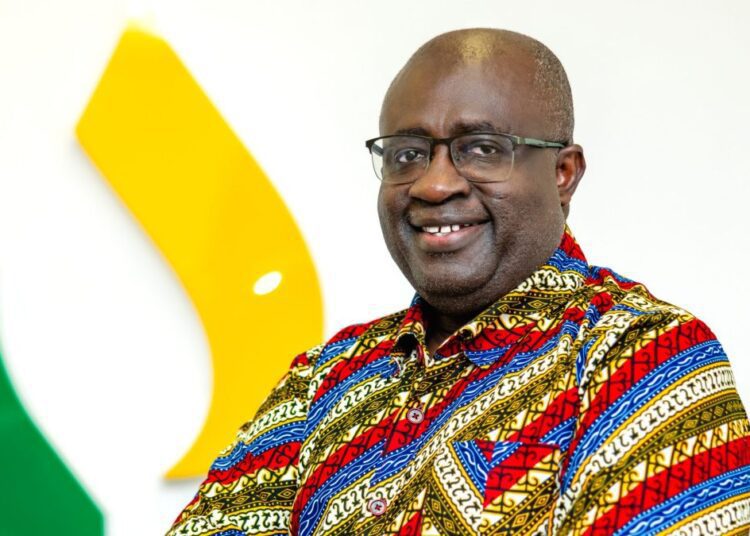
Ghana’s proposed Petroleum Hub project has been described as the country’s most dependable pathway to building a resilient and shock-resistant economy, as global uncertainties continue to expose weaknesses in import-dependent nations.
The Chief Executive Officer of the Petroleum Hub Development Corporation (PHDC), Dr Toni Aubynn, said the project stands out as a transformative national investment capable of fundamentally reshaping Ghana’s economic structure and strengthening its ability to withstand external disruptions.
Speaking on the theme “Promoting Industrialisation, Revitalisation, Support, and Transformation,” Dr Aubynn said the Petroleum Hub, planned for development in the Jomoro Municipality of the Western Region, represents one of the most ambitious infrastructure undertakings in Ghana’s history.
“The Petroleum Hub is not just another infrastructure project. It is a strategic national investment with the potential to redefine Ghana’s economic future.
“Research shows that when fully operational, the hub could expand Ghana’s GDP by as much as 70 percent.”
Dr Toni Aubynn, Acting Chief Executive Officer of PHDC
According to him, the project is designed to host refineries, petrochemical plants, and large-scale tank farms, creating an integrated downstream petroleum and petrochemical ecosystem that would drive long-term industrial growth.
Beyond growth figures, Dr Aubynn emphasised the project’s employment impact, noting that it is expected to generate more than 700,000 direct and indirect jobs across construction, operations, logistics, manufacturing, and support services.
He described this as a critical intervention at a time when job creation remains one of Ghana’s most pressing socio-economic challenges.
Shifting Ghana from Consumption to Production
Dr Aubynn used the platform to make a strong case for a structural shift in Ghana’s economic model, arguing that long-term stability cannot be achieved through consumption and imports alone.
“Any economy that imports more than it competitively produces remains vulnerable to global shocks.
“For Ghana to build resilience, we must intentionally invest in productive sectors that add value to our natural resources, create sustainable jobs, and improve our external balances.”
Dr Toni Aubynn, Acting Chief Executive Officer of PHDC
He identified the Petroleum Hub Project as a practical response to this challenge, positioning it as a vehicle for value addition, export expansion, and industrial deepening.
By expanding domestic refining and petrochemical capacity, the project is expected to significantly reduce Ghana’s reliance on imported fuel and industrial inputs.
According to Dr Aubynn, this shift would help stabilise prices, conserve foreign exchange, and provide affordable raw materials to local manufacturers, strengthening Ghana’s competitiveness both regionally and globally.
“The hub will stimulate industrial activity far beyond oil and gas.
“It will support manufacturing, logistics, shipping, and services, creating strong linkages across the economy.”
Dr Toni Aubynn, Acting Chief Executive Officer of PHDC
Reducing Import Dependence, Boosting Exports
A central pillar of the Petroleum Hub’s economic promise is its potential to reverse Ghana’s long-standing dependence on imports.
Dr Aubynn said the country currently spends billions of dollars annually importing refined petroleum products and petrochemicals that could be produced locally.
“With domestic refining and petrochemical production, Ghana can reduce fuel imports, expand exports, and improve its trade balance.
“This is how we build a resilient economy that can withstand currency pressures and external supply shocks.”
Dr Toni Aubynn, Acting Chief Executive Officer of PHDC
He added that the hub would also position Ghana as a regional energy and petrochemical centre, serving markets across West and Central Africa, where demand for refined products continues to grow.
Commending Macroeconomic Gains
Dr Aubynn also acknowledged recent macroeconomic improvements under the current administration, commending the President and the Minister for Finance, Dr Cassiel Ato Forson, for progress made within the government’s first year in office.
He cited positive trends in GDP growth, easing inflation, improved employment indicators, and relative stability of the cedi, describing them as encouraging signs of recovery.
“These gains show that the economy is responding to sound policy direction. “However, recovery alone is not enough.”
Dr Toni Aubynn, Acting Chief Executive Officer of PHDC
Dr Aubynn cautioned that without deep structural reforms and strategic investments, Ghana risks sliding back into vulnerability.
He stressed that flagship projects like the Petroleum Hub must be prioritised to consolidate the gains and deliver sustainable development.
“Sustaining macroeconomic stability requires transformation, not short-term fixes. “Strategic industrial projects are essential if we are serious about long-term resilience and inclusive growth.”
Dr Toni Aubynn, Acting Chief Executive Officer of PHDC
As discussions around industrialisation and economic diversification intensify, the Petroleum Hub Project is increasingly being framed as a long-term national bet on production, value addition, and export-led growth.
READ ALSO: MIIF CEO Vows to Consolidate 2025 Economic Gains as Fund Targets World-Class Status in 2026