
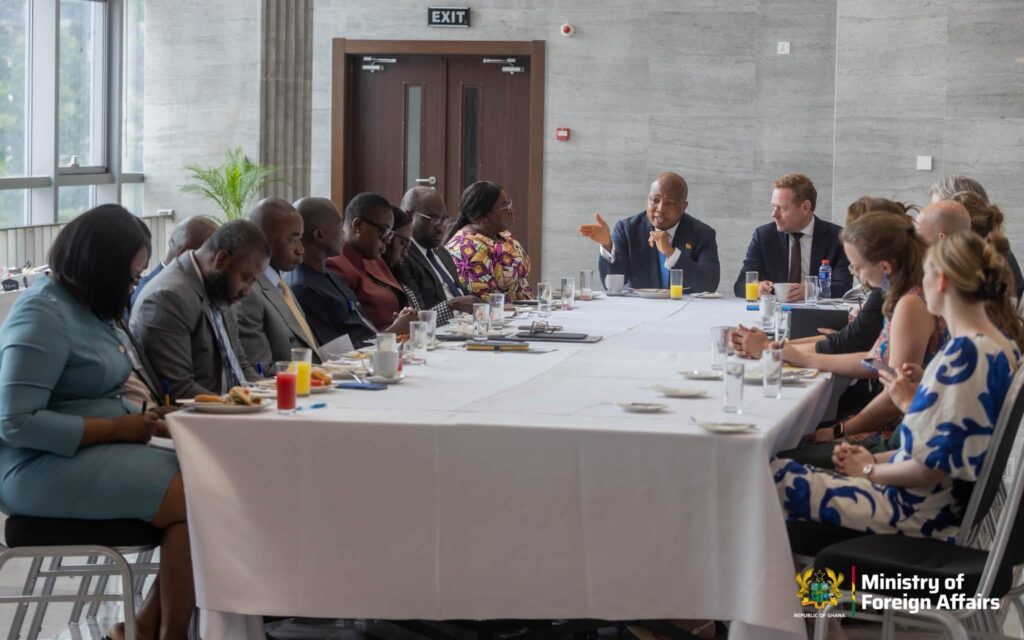
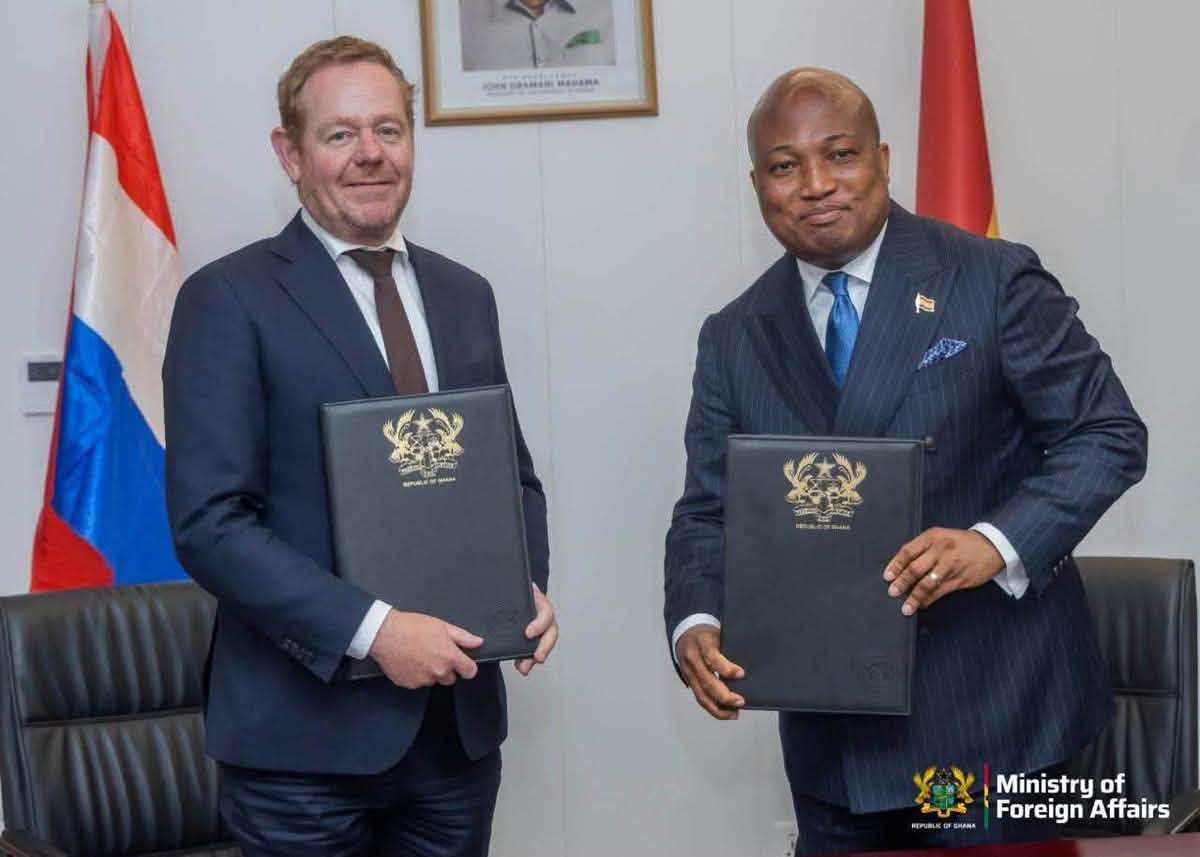
Ghana and the Kingdom of the Netherlands have signed a Letter of Intent to jointly combat illicit drugs and drug markets, Minister for Foreign Affairs Samuel Okudzeto Ablakwa has announced, describing the agreement as an attempt by the two countries to offer global leadership on a trade he says is destroying young lives.
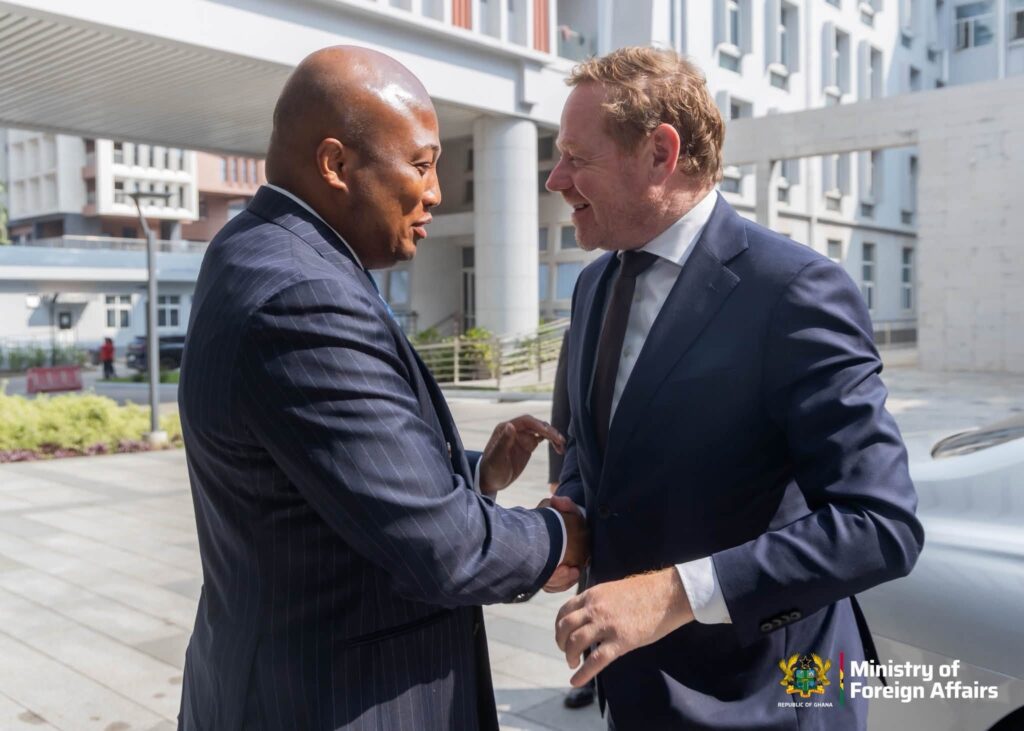
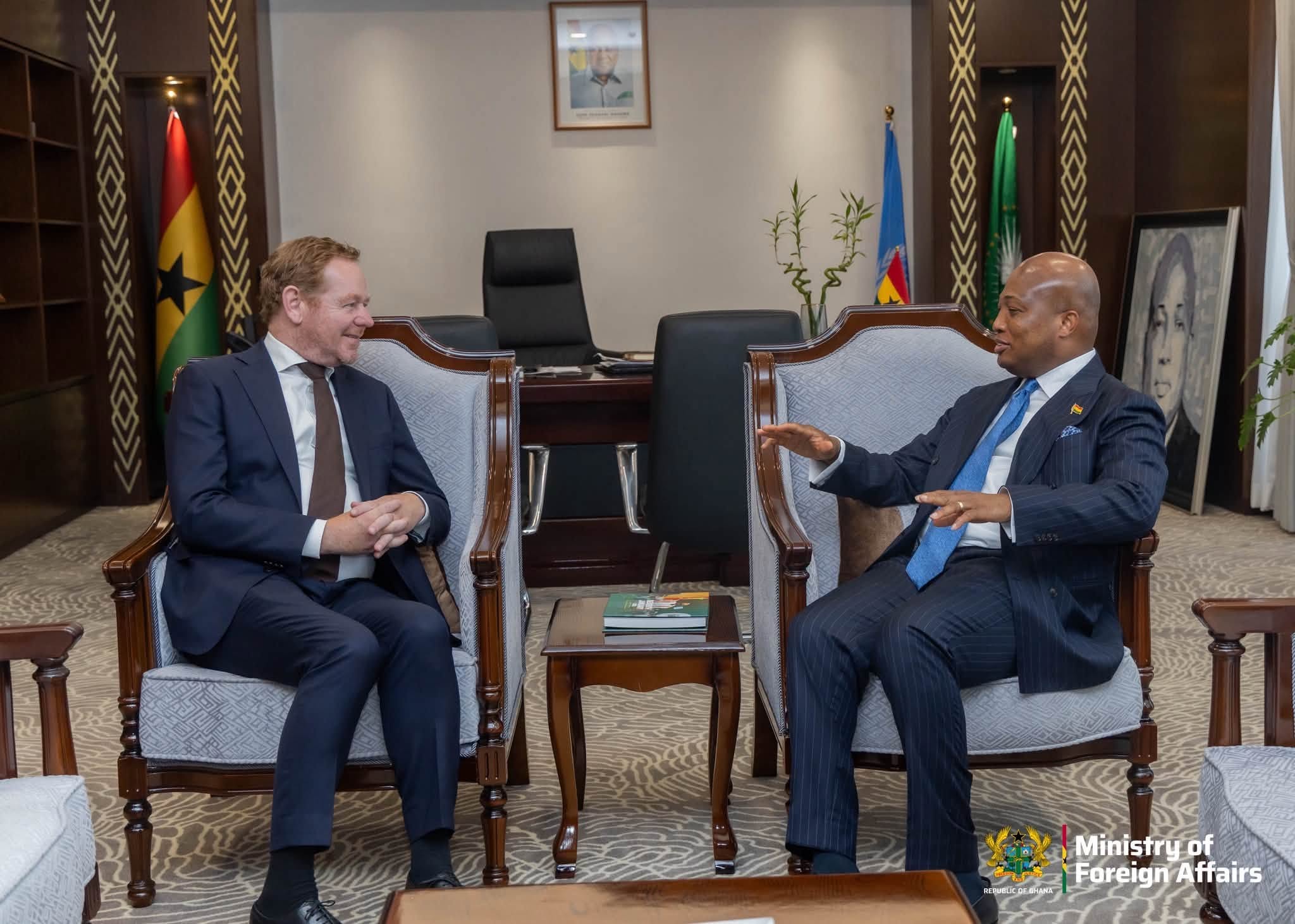
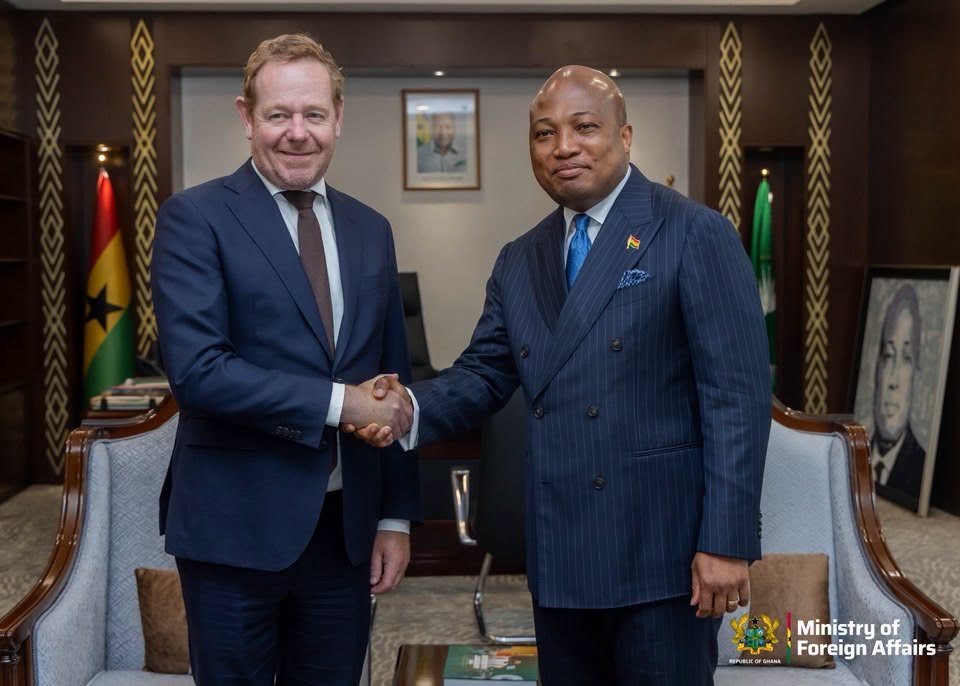
Hon. Ablakwa signed the document alongside D.M. Van Weel, Minister of Justice and Security of the Kingdom of the Netherlands, during the Dutch minister’s official visit to Ghana.
The agreement builds on the Accra Call to Action, the framework adopted at a high-level dialogue in the Ghanaian capital, and reaches beyond enforcement into public health, the rule of law and human rights.
What the Two Ministers Signed
The Letter of Intent commits Ghana and the Netherlands to work together against organised crime, terrorism, violent extremism, drug trafficking and related transnational threats, establishing a framework that links the two countries’ security agencies, justice institutions and foreign ministries.
Hon. Ablakwa set out the stakes in stark terms. The trade, he said, is destroying young lives, undermining public health, damaging the rule of law and terribly affecting human rights.
He named the specific targets the partnership intends to disrupt, expressing confidence that genuine and reliable international collaboration will eliminate the drug markets flooding both countries with cocaine, synthetics and criminal money.
The reference to synthetics reflects a concern the Foreign Minister has raised repeatedly. He has described synthetic drug abuse among Ghanaian youth as a major national security priority, placing it alongside money laundering and illicit financial flows in his assessment of the threats facing the country and the wider West African region.
Building on the Accra Call to Action
The agreement traces directly to a meeting the two governments convened together. In November 2025, Ghana and the Netherlands jointly hosted a high-level dialogue in Accra with the Global Initiative Against Transnational Organized Crime, examining the future of drug markets in West Africa with particular attention to cocaine, synthetics and criminal money.
That session produced the Accra Call to Action on Drug Markets in West Africa, which committed participants to responses placing health, human rights and the rule of law at the centre rather than at the margins.
The framework undertakes to reduce drug-related harms and protect communities, particularly young people and marginalised groups, to promote evidence-based prevention, treatment and reintegration approaches, to improve information-sharing and early warning systems, to disrupt transnational markets through responses anchored in law, and to support regional and international mechanisms addressing the problem.
Ghana has since carried the framework into multilateral settings. The country’s mission in Vienna convened a side event at the Commission on Narcotic Drugs asking how the Call to Action should be taken forward.
The event drew in the Dutch permanent representative, the Narcotics Control Commission, the United Nations Office on Drugs and Crime and the African Union. Ghana also signed a separate cooperation pact with Nigeria in May 2026 that cited the Accra framework as its foundation.
Cooperation Already on the Ground
The signing formalises collaboration that has been producing results at Ghana’s borders. The Narcotics Control Commission announced in June that mobile drug detection scanners jointly provided by the two governments would be deployed at Accra International Airport from August 2026.
Director-General of NACOC Brigadier General Maxwell Obuba Mantey disclosed at the 2026 World Drug Day durbar that Ghana is undertaking a full replacement of body and baggage inspection scanners at the airport in collaboration with the Netherlands, machines that had reportedly been out of service for more than three years.
The rollout responds to concerns that Ghana has moved from serving as a transit route to functioning as a distribution hub for illicit narcotics.
The Dutch Position and the Wider Frame
Van Weel used his Accra engagements to press for a more durable structure.
The Dutch minister said the two countries share common concerns over transnational organised crime, terrorism, violent extremism and illicit financial flows, and proposed institutionalising the existing bilateral dialogue through a permanent cooperation framework that could eventually expand to include other European partners.
He also commended the collaboration between Ghana’s Ministry of Foreign Affairs and the Dutch Ministry of Justice and Security, and referenced the High-Level Consultative Conference on next steps to the United Nations resolution on the trafficking of enslaved Africans as evidence of a widening relationship.
The timing gives the agreement additional reach. Ghana takes over the African Union chairmanship in February 2027, with President John Dramani Mahama assuming the role after West African states endorsed his candidacy, offering Accra a platform to push the framework across the continent.
Hon. Ablakwa closed his announcement by thanking the Dutch minister for what he called a memorable visit.
READ ALSO: NAPAO Urges NPP to Rally Behind Bawumia After Regional Elections