Five Chinese nationals have been apprehended within the Birim Central Municipality following an intensive anti-galamsey crackdown led by the Blue Water Guard.
The operation, which effectively disrupted a sophisticated illegal mining network, targeted specific sites where illicit activities were actively endangering the “vital lifeblood of the municipality’s ecosystem.”
This strategic sweep underscores a significant shift in enforcement, moving beyond mere surveillance to the direct neutralization of foreign-led syndicates that have long operated within the shadows of the Eastern Region’s dense mining belts.
To bolster the effectiveness of these arrests, a secondary joint mission comprising the Blue Water Guard and the Akim Oda Police Command was executed today to sanitize remaining flashpoints.
During this follow-up exercise, security operatives successfully traced and decommissioned three “Changfang” machines mobile processing units notorious for causing rapid siltation in riverbeds. Furthermore, two additional individuals were caught in flagrante delicto, engaging in unauthorized extraction.
These suspects have since been handed over to the Ghana Police Service, signaling a “zero–tolerance approach” toward those who violate the Minerals and Mining Act, 2006 (Act 703).
“This intervention forms part of the Municipal Assembly’s continued commitment to protecting natural resources, maintaining law and order, and ensuring compliance with environmental and mining regulations. The operation was carried out successfully without any incidents, with strong cooperation among all participating security agencies.”
Hon. Solomon Brako Kusi
Ecological Devastation and the Birim Basin Crisis

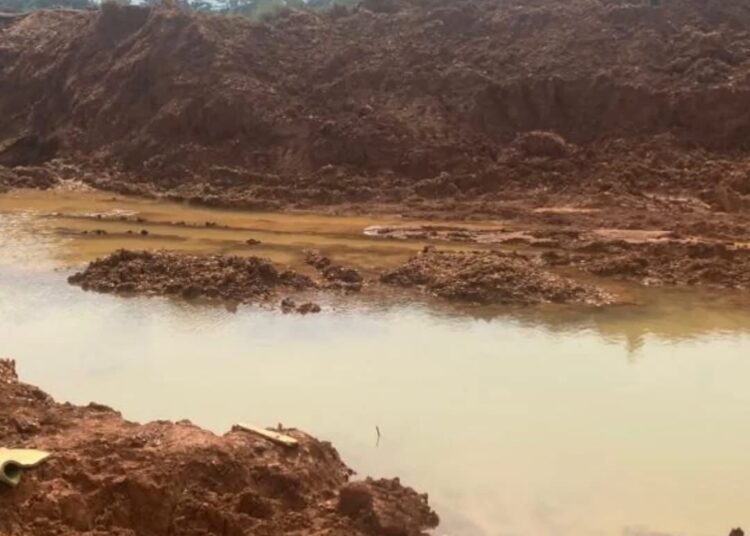
The scale of destruction uncovered at these sites reflects a dire environmental emergency that has seen the Birim River’s turbidity levels soar well beyond treatable limits.
In the Birim Central Municipality, illegal miners have transformed thousands of hectares of once-fertile cocoa and food-crop farmlands into barren, crater-filled wastelands.
The use of heavy machinery like Changfang units involves the indiscriminate discharge of mercury and cyanide, which does not merely pollute the water but “permanently poisons the soil structure,” rendering it unfits for future agricultural use.
Research indicates that such activities have led to a 30% decline in local crop yields, directly threatening the food security of the Eastern Region’s rural populations.
Collaborative Defense: A Strategic Turning Point

This joint operation represents a pivotal “step in the right direction” for Ghana’s extractive sector, which has often struggled with fragmented enforcement.
By integrating the specialized riverine surveillance of the Blue Water Guard with the prosecutorial authority of the Akim Oda Police Command, the Municipal Assembly has created a robust “pincer movement” against illegal operators.
The destruction of equipment on-site serves as a critical economic deterrent, stripping miners of the capital-intensive tools required for their illicit trade.
Expert analysis suggests that these coordinated interventions are essential for “reclaiming the sovereignty of our natural landscapes” from unregulated actors who prioritize short-term gain over the nation’s long-term ecological health.
Sustaining the Fight for Extractive Integrity

Moving forward, the success of the Birim Central operations provides a scalable blueprint for other mining-impacted districts across Ghana.
The MCE, Hon. Solomon Brako Kusi emphasized that the municipality’s commitment goes beyond sporadic raids; it is a “sustained battle for the survival of the Birim basin.”
For the extractive industry to remain a viable pillar of the Ghanaian economy, the “era of unchecked galamsey must be replaced” by a regime of strict adherence to environmental safeguards.
This latest victory against illegal mining syndicates confirms that with sufficient political will and inter-agency synergy, the tide can finally be turned against the environmental predators currently haunting the Eastern Region’s golden terrains.
READ ALSO: SSNIT Delivers 10% Pension Increase for 2026, Low-Income Retirees Get Biggest Boost