
Oil prices extended gains on Tuesday, buoyed by rising geopolitical tensions that overshadowed prospects of increased crude supply from Venezuela and broader market fundamentals.
At the time of writing, West Texas Intermediate (WTI) Crude was trading around $59.74 per barrel, reflecting a 0.4% uptick, while Brent Crude hovered near $64.09, up 0.34%, with both benchmarks posting nearly 6% weekly gains as investor focus stays firmly on global supply risks.
“The price increase comes amid intensifying protests in Iran, raising the possibility of some form of intervention by the U.S.”
ING commodities strategists
Heightened concerns about potential disruptions tied to political upheaval in Iran continued to dominate market sentiment. Analysts suggest that the ongoing unrest has injected a significant geopolitical risk premium into oil pricing, dampening the impact of possible new supplies entering the market.
Iranian Unrest and Supply Fears

The backdrop to the latest price movements stems largely from intensifying demonstrations in Iran, one of the key producers in the Organization of the Petroleum Exporting Countries (OPEC).
According to market observers, the protests, which have drawn international attention, have stoked fears over the integrity of Iran’s oil exports and the stability of production in the region.
U.S. President Donald Trump has publicly weighed potential responses to the unrest, including the possibility of military action against elements of the Iranian regime in the event of escalating violence, a development that could have serious implications for oil markets.
Trump also announced that any country engaging in trade with Iran could face a 25% tariff on business with the United States, a policy stance aimed at exerting economic pressure.
“With the U.S. and China having reached a trade truce, we question whether the U.S. would want to rock the boat again with additional tariffs on China,” the ING strategists said.
Global commodities strategists have pointed out that the unrest has contributed to an estimated $3–4 per barrel in geopolitical risk premiums, a figure that reflects concerns about supply disruption rather than actual output losses.
Venezuela’s Supply Return and Market Balancing
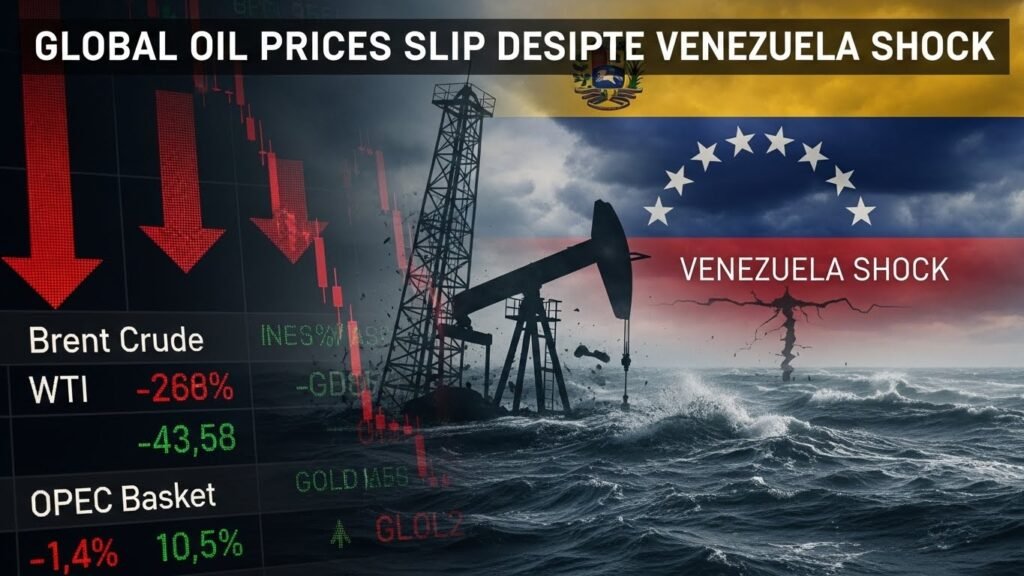
Meanwhile, the market has been weighing the potential return of Venezuelan crude to the global supply pool. Following the ousting of President Nicolás Maduro, the interim authorities in Caracas are reportedly preparing to transfer up to 50 million barrels of oil to the United States, although these volumes remain subject to Western sanctions and logistical constraints.
Global oil trading firms have been actively positioning themselves ahead of anticipated Venezuelan exports, with major players such as Vitol and Trafigura already marketing crude to refiners in India and China for delivery contracts in the coming months.
These developments suggest that additional supply could help offset some of the upward pressure on prices caused by geopolitical factors.
Yet, even as Venezuelan supplies loom on the horizon, markets are cautious in fully embracing this potential upside, given uncertainties around sanction enforcement, infrastructure readiness, and the pace of export resumption.
Market Reaction and Outlook
Investors now find themselves navigating a complex interplay of risk factors. While geopolitical tensions in Iran and other regions are pushing oil prices upward, the spectre of increased supply from Venezuela and broader OPEC+ dynamics are holding some gains in check.
Recent trading patterns reflect this delicate balance, with price swings tied closely to developments on the geopolitical front.
Experts note that should tensions in Iran ebb or Venezuela begin exporting significant volumes, current price levels could face downward pressure.
Conversely, escalation in any of the geopolitical hotspots could reinforce the current risk premium and push prices even higher, with implications for inflation and energy costs globally.
In the short term, crude markets are likely to remain sensitive to headlines and policy signals, with traders closely monitoring official statements, diplomatic moves, and supply chain developments.
As markets digest these factors, WTI and Brent benchmarks may continue to reflect the tug-of-war between geopolitical fear and supply optimism, an outlook that underscores the complex nature of the global oil landscape in early 2026.
READ ALSO: Muted Gains, Massive Value: GSE Records Capitalisation Leap Despite Single Gainer