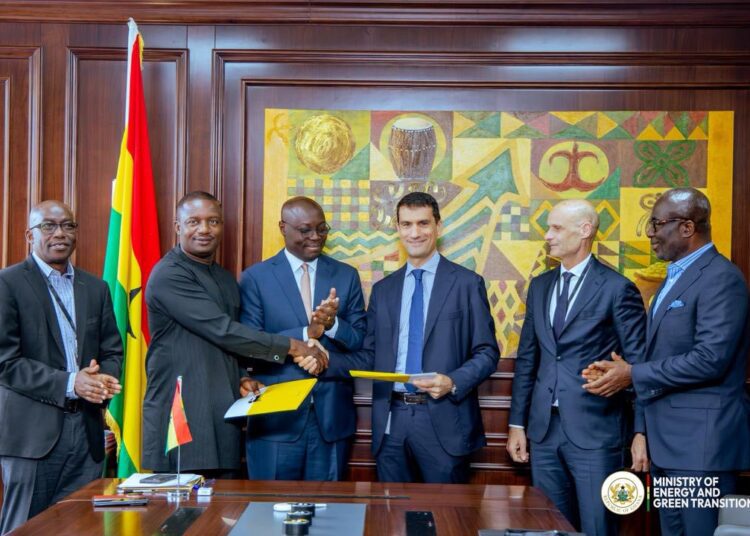
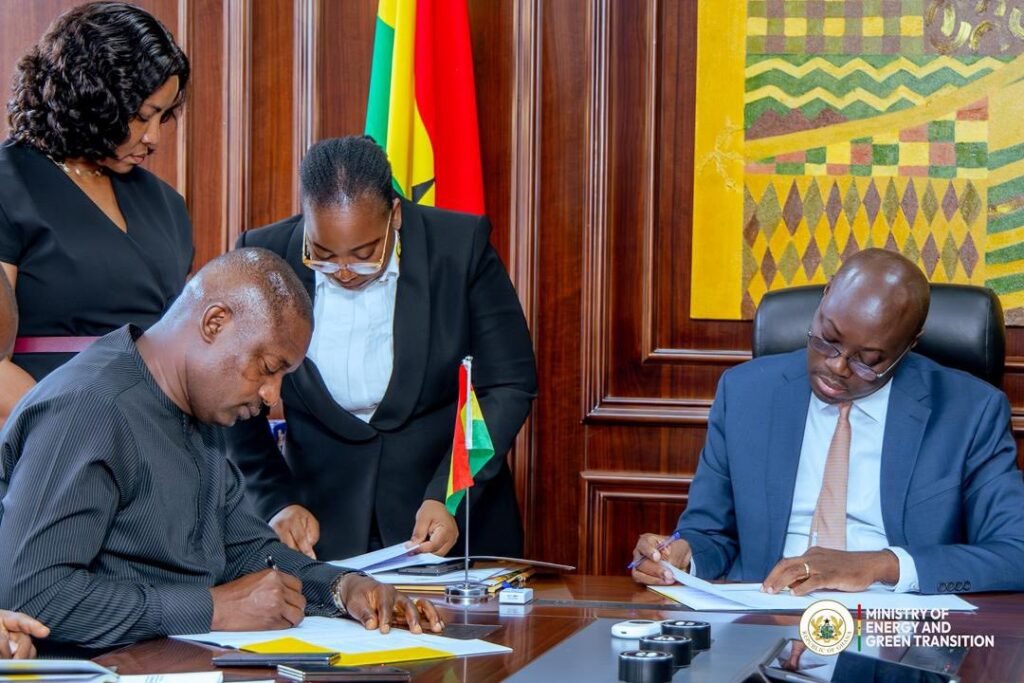
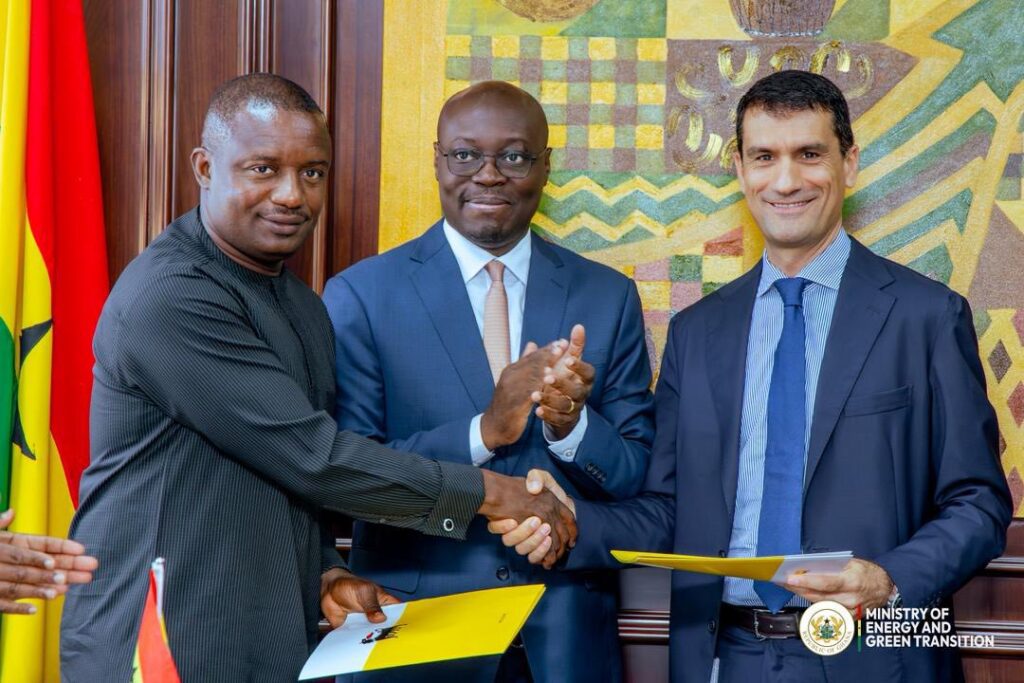
Hon. John Jinapor, the Minister of Energy and Green Transition, led a government delegation to formalize a transformative term sheet with Eni Ghana E&P, Vitol Upstream Ghana Limited, and the Ghana National Petroleum Corporation (GNPC), marking a $60 billion milestone aimed at skyrocketing domestic gas output.
This landmark agreement establishes a definitive framework of commercial principles designed to catalyze the Offshore Cape Three Points (OCTP) Non-Associated Gas (NAG) Upgrade Project.
By aligning the interests of state institutions and global energy giants, the deal secures the necessary architectural and financial blueprints to expand Ghana’s upstream footprint, ensuring that the nation’s hydrocarbon potential is fully harnessed to meet the burgeoning energy demands of a modernizing economy.
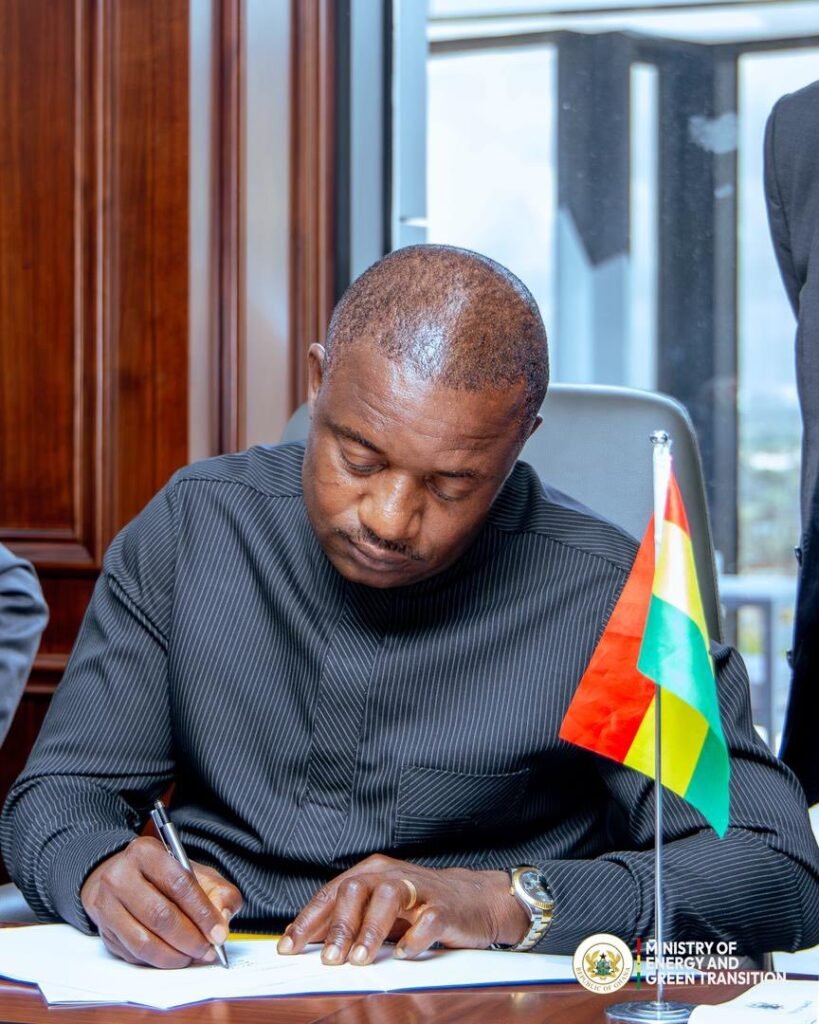
“Earlier today, I had the privilege of representing the Government of Ghana, alongside the Minister for Finance, Dr. Cassiel Ato Forson, in signing a key term sheet with Eni Ghana E&P, Vitol Upstream Ghana Limited, and the Ghana National Petroleum Corporation (GNPC) to advance plans for a significant expansion of domestic gas production from the Offshore Cape Three Points (OCTP) project.”
Hon. John Jinapor
This strategic expansion is set to redefine the productivity of the OCTP block, with projections indicating a surge in gas production by up to 350 million standard cubic feet per day (MMscfd) by the year 2028.
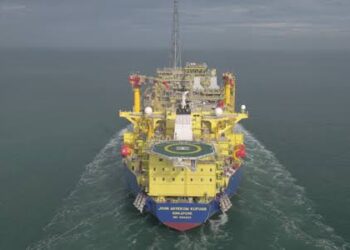
The technical scope of the project involves the aggressive development of the Gye Nyame field, a move complemented by the installation of high-capacity booster compressors and a sophisticated non-associated gas system on the project’s Floating Production Storage and Offloading (FPSO) vessel.
This initiative builds directly upon a Memorandum of Intent signed in September 2025, transitioning from a shared vision of collaboration to an actionable investment pathway that reinforces the OCTP project as the bedrock of Ghana’s thermal power generation and industrial feedstock.
Strengthening National Energy Sovereignty
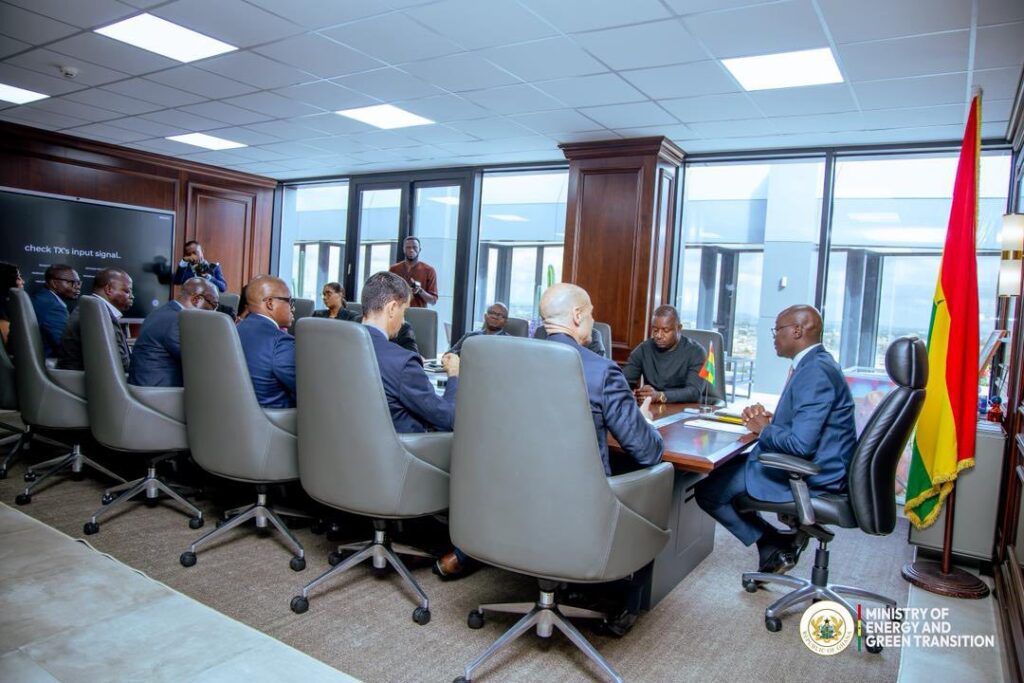
The implementation of the NAG Upgrade Project is a decisive step toward achieving total energy independence. By increasing the domestic supply of gas, Ghana significantly mitigates its vulnerability to the price volatility of the international “imported fuels” market.
This deal ensures that the West African Gas Pipeline and other distribution networks have a steady, indigenous flow of gas, which is essential for stabilizing the national grid. Experts suggest that by integrating the Gye Nyame field’s resources into the existing infrastructure, the government is effectively “enhancing our energy security” and providing a shield against external supply chain disruptions that have historically plagued the sub-region.
Furthermore, the “strategic investments” outlined in the term sheet allow for the optimization of the FPSO John Agyekum Kufuor.
The addition of a booster compressor is not merely a mechanical upgrade; it represents a physiological shift in how Ghana manages reservoir pressure and extraction efficiency.
This ensures that the lifespan of the OCTP fields is extended, providing a long-term “cornerstone of Ghana’s energy mix” that can sustain both existing power plants and the planned industrial enclaves in the Western and Greater Accra regions.
Catalyzing Industrial Growth and Green Transition
Beyond the immediate metrics of cubic feet and dollar values, this $60 billion framework serves as a catalyst for the broader “Green Transition” agenda.
Natural gas is recognized as a critical transition fuel; by boosting its production, the Ministry of Energy is facilitating a shift away from more carbon-intensive liquid fuels like Heavy Fuel Oil (HFO).
This alignment supports “growing demand from industry and households” while simultaneously adhering to international environmental standards.
The domestic availability of gas at a “competitive” price point is expected to lure manufacturing giants to Ghana, fostering an environment where value-addition becomes the norm rather than the exception.
The collaboration with Eni and Vitol also brings world-class technical expertise to the GNPC, fostering a “predictable and competitive environment” for local content development.
As these upgrades move toward the 2028 completion target, the ripple effects will be felt in the job market, with hundreds of highly skilled roles being created in the maintenance and operation of the new NAG systems.
This ensures that the wealth generated from the seabed translates into tangible economic opportunities for the Ghanaian workforce, fulfilling the mandate of “responsible development.”
A Future-Proof Upstream Petroleum Sector
The significance of this deal lies in its ability to prove that Ghana remains a “stable” destination for global capital despite global economic shifts.
By transitioning from the 2025 Memorandum of Intent to a concrete term sheet, the Ministry of Energy and Green Transition has demonstrated a bureaucratic efficiency that appeals to Tier-1 investors.
The “framework of commercial principles” established here provides a template for future discoveries, suggesting that Ghana is moving toward a more structured and less ad-hoc approach to its upstream negotiations.
As the OCTP project moves into this high-growth phase, the integration of “new gas infrastructure” will act as a magnet for ancillary services in the petroleum value chain.
This deal is not just about extraction; it is about building an ecosystem.
With the Finance Ministry’s involvement, the fiscal terms are designed to ensure that the $60 billion valuation translates into steady revenue streams for the Sovereign Wealth Fund, providing the capital necessary for infrastructure projects outside the energy sector.
READ ALSO: Met Gala 2026: Fashion’s Biggest Night Delivers Art and Family Moments