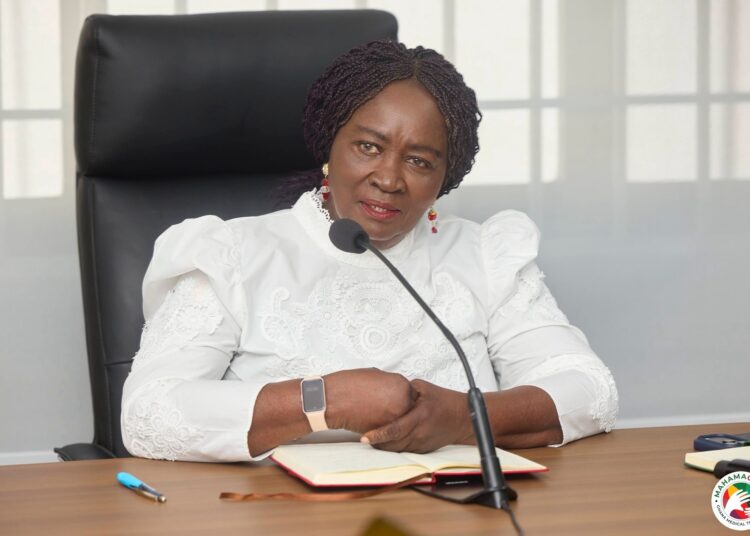
Vice President Professor Jane Naana Opoku-Agyemang has expressed strong support for new funding strategies being introduced at the District Assemblies Common Fund to enhance local development across Ghana.
Her remarks came during a courtesy visit to the institution, where discussions focused on addressing long standing financing challenges facing Metropolitan, Municipal and District Assemblies and exploring sustainable alternatives to traditional funding sources.
The Vice President used the opportunity to engage with officials on practical solutions that could strengthen local governance and improve development outcomes at the grassroots level.
Concerns Over Funding Capacity Across Districts
While acknowledging proposals for districts to generate a portion of their own development funding, the Vice President raised critical questions about the practicality of such measures in under resourced areas.
“I hear you on the fifteen percent,” she said, referring to internal contribution targets, but quickly pointed to the realities facing many districts. She questioned how assemblies with limited economic activity would be able to meet such expectations.
“When we have districts that are highly underfunded and regions that are not doing well, how are they going to raise the fifteen percent?” she asked, highlighting the risk of widening inequality between well resourced and struggling districts.
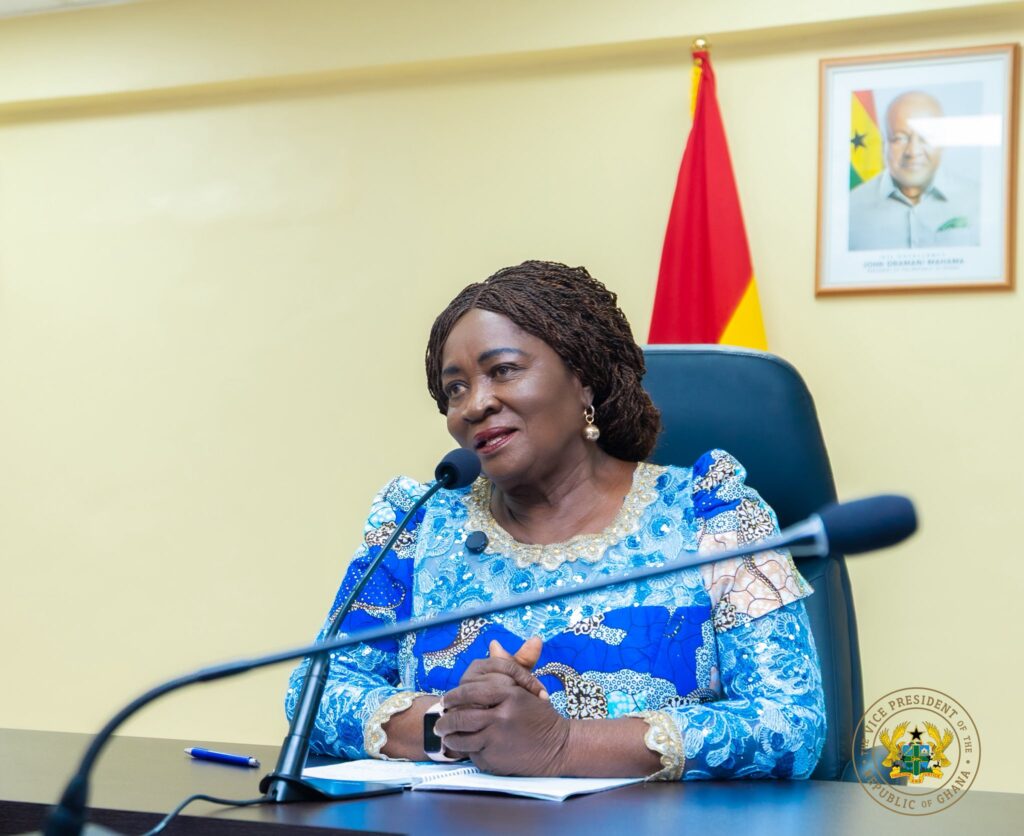
She further sought clarity on support mechanisms available for districts unable to meet these targets, describing assurances of intervention as encouraging.
Support for Alternative Revenue Streams
Despite these concerns, the Vice President welcomed efforts to diversify funding sources beyond the traditional common fund allocation.
She described proposals to attract corporate contributions, private investment and diaspora funding as promising avenues that could significantly expand the resource base for local development.
“I also hear you on other ways to raise funds through corporate contributions, private funds and even the diaspora,” she noted, adding that such approaches would require strong structures to ensure transparency and effectiveness.
Her endorsement signals growing government interest in leveraging non traditional financing models to complement public funding.
Emphasis on Structured Community Participation
A key aspect of the Vice President’s remarks centred on the importance of creating clear frameworks that allow communities to actively participate in funding development projects.

Using Komenda as an example, she explained how residents and diaspora members could be mobilised to contribute toward specific initiatives in their hometowns.
“If the people want us to do something, it is good,” she said, but stressed that structured systems are necessary to guide contributions and ensure accountability.
She emphasised that such frameworks would shift the focus from individuals to clearly defined development objectives, thereby reducing the influence of personal interests in project execution.
“That way you remove it away from the personnel and it just becomes the objective that they are running to,” she explained, describing the approach as essential for building trust and delivering results.
Leadership Driving Reform at DACF
The Vice President was hosted by the Administrator of the District Assemblies Common Fund, Michael Harry Yamson, who has been leading efforts to reform the institution since his appointment in 2025.
Mr Yamson brings extensive experience from both the private and corporate sectors, having previously served in leadership roles at multinational companies and as a managing partner in consulting.
His mandate at the DACF focuses on strengthening financial discipline, enhancing transparency and ensuring that resources are allocated efficiently to support development projects across the country.
One of the key initiatives introduced under his leadership is the deployment of a digital expenditure management platform known as Intellex. The system is designed to track budgets and monitor project implementation across all assemblies, providing real time data that enhances oversight and accountability.
Officials say the platform will help reduce inefficiencies, improve transparency and ensure that funds are utilised in line with approved development plans.
New Funding Models to Attract Investment
In line with the Vice President’s call for diversified funding, the DACF has already launched the Community Action and Development Fund, aimed at attracting private and international investment into local projects.
The initiative seeks to create structured pathways for individuals, corporations and diaspora communities to contribute to development efforts, thereby reducing reliance on government allocations.

This approach aligns with broader efforts to modernise public financing and expand the scope of resources available to local authorities. The District Assemblies Common Fund remains a cornerstone of Ghana’s decentralisation policy, distributing a portion of national revenue to local governments to support infrastructure and social services.
The Administrator is responsible for managing the fund, developing allocation formulas and monitoring the impact of thousands of projects nationwide.
Recent reforms have targeted increased direct transfers to assemblies, with a focus on ensuring that resources reach communities efficiently and deliver measurable outcomes.
Outlook for Local Development
The Vice President’s visit underscores a growing commitment to rethinking how local development is financed in Ghana. Her support for new funding strategies, combined with caution about equity and implementation challenges, reflects a balanced approach to reform.
As Ghana continues to pursue inclusive development, the success of these initiatives will depend on effective structures, strong oversight and active participation from all stakeholders.
The engagement signals a renewed push to strengthen local governance and ensure that development reaches communities across the country.
READ ALSO: Japan, Philippines Reaffirm Opposition To China’s Actions In Disputed Waters