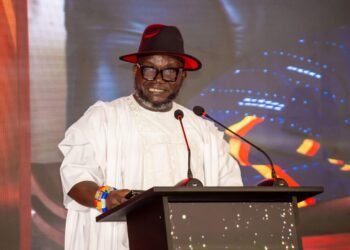
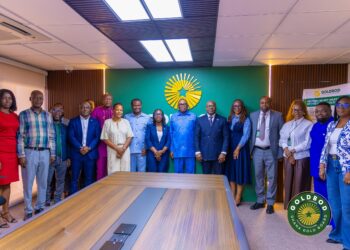
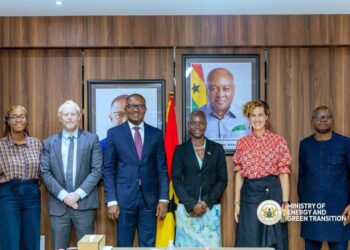
Mike Fraser, the Chief Executive Officer of Goldfields, has voiced his dissatisfaction regarding the company’s departure from the Damang mine, a move necessitated by shifting regulatory frameworks in Ghana.
The executive noted that while the company takes immense pride in its legacy as Africa’s premier gold producer, the transition away from Damang an asset that has been central to the group’s regional identity for over three decades was a regrettable outcome of recent governmental mandates regarding mine ownership.
“In some respects, we were very disappointed to see that Damang is no longer part of our group because over 30 years of being part of Damang and seeing the success of Damang, it was a time part of the regulatory changes that moved on to different ownership. What we are proud of, though, is we have set Damang up for a sustainable future. When we started the conversation with the government about what the future of Damang was, we were very clear that the most important thing for us is that all of those jobs and livelihoods that were dependent on Damang mine continued.”
Mike Fraser, the Chief Executive Officer of Goldfields

The exit follows a strategic pivot by the Ghanaian government to prioritize indigenous control over specific mineral assets, leading to a change in the regulatory landscape that effectively ended Goldfields’ long-standing tenure.
Mike Fraser emphasized that Ghana remains a cornerstone of the company’s global operations, contributing approximately 25% of its total worldwide production.
Despite the disappointment of losing the Damang asset, the mining giant focused its final 12 months of operatorship on creating a “sustainable future” for the site.
This involved significant capital investment and the development of a comprehensive handover plan designed to protect the livelihoods of thousands of workers whose economic stability is tied directly to the mine’s operations.
Regional Impact and the Shift Toward Resource Nationalism
The departure of Goldfields from Damang marks a significant milestone in Ghana’s mining history, signaling a broader trend toward resource nationalism within the West African sub-region.

For the company, the loss of Damang represents a contraction of its local footprint, yet it reinforces its commitment to its remaining flagship asset, the Tarkwa mine.
By opting for a “seamless transition” rather than an abrupt cessation, Goldfields has mitigated the immediate risk of economic shocks in the Western Region.
This proactive approach included conducting a thorough feasibility study that suggests the mine could sustain operations for nearly another decade under the right technical model.
For the Ghanaian mining sector, the exit serves as a litmus test for the government’s ability to manage large-scale assets through local operators.
While the move aligns with the state’s “local content” agenda, it places the burden of multi-million-dollar reinvestment on the incoming Ghanaian entities.
Industry analysts suggest that while the transition fulfills political objectives of domestic empowerment, the sector must now prove it can maintain the high ESG (Environmental, Social, and Governance) standards established by Goldfields over the past 30 years.
A Legacy of Sustainability and Community Resilience
Goldfields’ exit strategy was explicitly tailored to ensure that “the asset was sustainable” and that the mine continued to run “without interruption.”
This focus on continuity was paramount during the high-level dialogues between the company and the state.
By handing over a fully operational mine with a clear roadmap for the future, the company sought to insulate the Apinto Divisional Stool and the broader Awudua community from the volatility often associated with ownership transfers in the extractive industries.

The successful handover ensures that the social infrastructure supported by the mine remains intact.
Over its 30-year history, Damang has been a catalyst for regional development, and the current management’s willingness to invest in a transition plan reflects a “corporate responsibility” that extends beyond their period of ownership.
As the new owners take the helm, the priority remains the preservation of the 1,500 to 2,000 direct and indirect jobs that underpin the local economy.
Ultimately, Goldfields views this exit not just as a loss of production, but as the successful conclusion of a chapter that has significantly shaped the landscape of Ghanaian mining.
READ ALSO: UN Raises Alarm Over Treatment of Indigenous Children in Australia