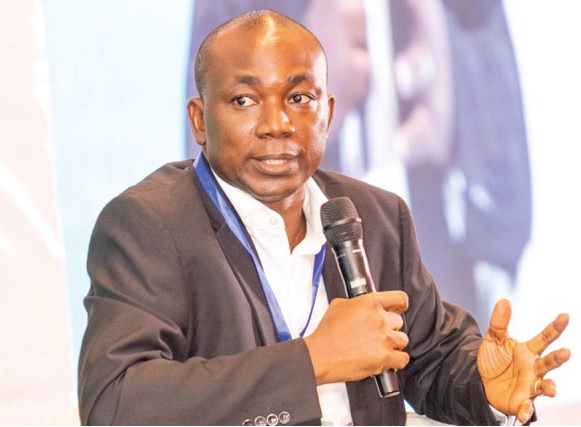
Professor Godfred A. Bokpin, an Economist and Professor of Finance at the University of Ghana Business School, has expressed strong support for the government’s $10 billion Big Push infrastructure drive as the foundation for Ghana’s economic transformation.
He argued that without decisive investment in transport and connectivity, economic progress will continue to bypass many citizens despite positive macroeconomic indicators.
“I will be happy to support the government if they will say that, look, we want to close the infrastructure gap, and even if that will mean our debt to GDP ratio is going to go up, I will support the government to the extent that we can achieve higher value for money for every cedi we borrow and we invest appropriately.”
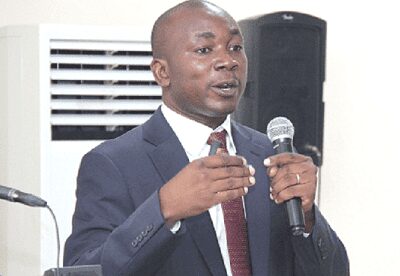
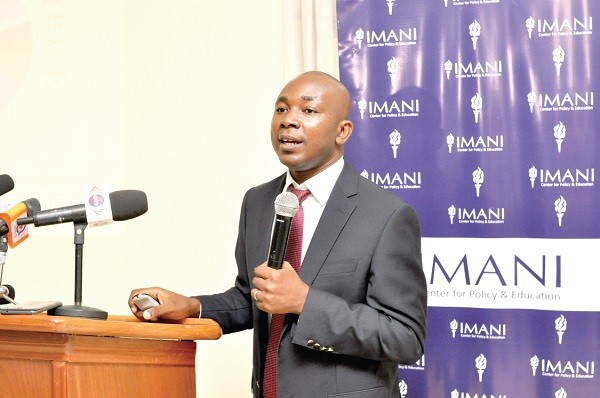
Professor Godfred A. Bokpin, an economist and Professor of Finance at the University of Ghana Business School
According to him, infrastructure forms the basic building block of transformation, particularly in transportation. He explained that economic activity depends largely on movement, and systems that restrict movement inevitably create inefficiencies.
These inefficiencies, he noted, help explain why growth recorded at the national level often fails to translate into improved living standards. He illustrated Ghana’s infrastructure challenge by comparing travel conditions locally with those in more developed economies.
He observed that while the distance between Shanghai and Beijing exceeds 1,200 kilometres, modern rail systems enable journeys of less than five hours. By contrast, the approximately 250-kilometre journey between Accra and Kumasi can take more than six hours, often with uncertainty and discomfort.
Professor Bokpin recalled that in the 1990s, some road transport services could complete the Accra-Kumasi trip in about two and a half hours. Over the years, however, deteriorating road conditions and limited alternatives have reversed these gains.
Today, even high-performance vehicles struggle to make the journey in under five hours, reflecting what he described as a worrying decline in transport efficiency. He expressed concern that after nearly 69 years of independence, Ghana has yet to connect its major regions with a modern expressway network.
Development Gap Undermining Economic Integration
In his assessment, this failure represents a significant development gap that undermines national cohesion and economic integration. He argued that citizens deserve better outcomes, given the sacrifices made in pursuit of economic stability.
The economist stressed that poor transport infrastructure raises the cost of doing business, inflates prices of goods, and restricts access to markets and social services.
These factors, he said, contribute to the disconnect between macroeconomic improvements and the everyday experiences of households and businesses. Professor Bokpin warned that without bold action, development may arrive too late for many communities.
He argued that incremental reforms are insufficient and that Ghana must act at scale to address its infrastructure deficit. For him, the urgency is not only economic but also social, as delayed development carries human costs.
He welcomed the infrastructure focused aspects of the National Democratic Congress manifesto, particularly the Big Push initiative. He said the policy demonstrates a clear diagnosis of Ghana’s challenges and places connectivity at the centre of production, trade, and inclusion.
While he noted some reservations about the 24-hour economy proposal, he acknowledged that the broader policy framework contains several promising ideas. According to Professor Bokpin, Ghana’s challenges demand coordinated and efficient action.
He cautioned that large investments must be matched with strong oversight, transparent procurement, and effective monitoring to avoid waste and fiscal strain. He also highlighted the role of foreign policy in supporting development.
He argued that Ghana’s international engagements should be used strategically to attract investment, technology, and partnerships that support infrastructure expansion and economic transformation.
Professor Bokpin concluded that infrastructure is not merely about physical assets but about enabling opportunity and dignity for citizens. Without efficient roads, railways, and transport systems, he said, other development policies will continue to yield limited results.
READ ALSO: “2025 Was a Year of Painful Adjustments but Stability Is Back,” BoG Governor Declares