
International Monetary Fund’s Resident Representative in Ghana, Dr. Adrian Alter, has debunked allegations that the Fund’s most recent evaluation labeled the Domestic Gold Purchase Programme (DGPP) as a loss-making venture or indicted participating agencies for financial mismanagement.
Contrary to widespread claims, Dr. Alter clarified that the IMF does not attribute a recently cited US$214 million operational cost to the Ghana Gold Board (Goldbod), the Ministry of Finance, or the Bank of Ghana (BoG), but rather views the figure as a “quasi-fiscal cost” inherent to public policy operations.
Speaking on the matter, he emphasized that the programme is assessed through a holistic lens of “outcomes, benefits, and risks,” primarily focusing on how the initiative has successfully bolstered national reserves and mitigated foreign exchange volatility during turbulent global economic periods.
“Ultimately, we did not want to assign any blame on Bank of Ghana, Goldbod or the Ministry of Finance. What we wanted to achieve with this disclosure is more transparency and risk management so that we minimise costs while preserving benefits.”
Dr. Adrian Alter
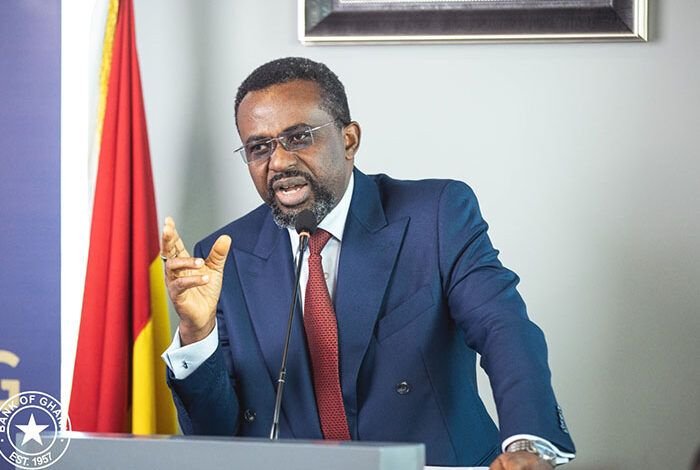
Expanding on these findings, Dr. Alter highlighted that the DGPP has been instrumental in diversifying the central bank’s reserve accumulation and enhancing export performance at a time when traditional global financing conditions were increasingly constrained.
He was quick to address the US$214 million figure, noting that it represents an estimate of market exposure based on “unaudited accounts” for 2025 rather than a finalized, definitive loss, a nuance often omitted by political critics.
This distinction is vital for the extractive sector, as it reframes the discussion from one of institutional “blame” to one of “transparency and risk management.”
By recommending that such costs be transitioned from the central bank’s balance sheet to the national budget, the IMF aims to preserve the Bank of Ghana’s primary mandate of price stability while ensuring the DGPP continues to deliver its recognized macroeconomic advantages.
Navigating Market Volatility and Governance Reforms

A critical component of the IMF’s clarification involves the inherent nature of the global gold market, which Dr. Alter reminded stakeholders is defined by significant “price volatility and market risk.”
In the extractive industry, trading margins, exchange rate fluctuations, and financing conditions naturally create cost variations in any reserve accumulation strategy.
The IMF’s stance is therefore not a call to dismantle the DGPP, but a “two-pronged” recommendation to retain the programme due to its proven benefits while simultaneously reinforcing governance and transparency, particularly surrounding the Goldbod-linked procurement channels.
This perspective aligns with the central bank’s own data, which suggests that the ability of aggregators like Goldbod to scale up mobilization sourcing over 100 tonnes in 2025 has been a “pivotal” factor in hedging against currency depreciation and stabilizing the cedi.
Addressing the Consistency of Institutional Controversy

The timing of this IMF clarification is particularly significant given the “consistent controversies” that have dogged the BoG-Goldbod relationship since its inception.
For months, the programme has been a lightning rod for political debate, with opposition voices frequently citing “GHS 3 billion” or “US$214 million” figures as evidence of operational failure or “rent-seeking.”
Critics had previously raised concerns over the selection of intermediaries and the lack of audited financial statements, leading to a climate of skepticism regarding the true net impact of the Gold-for-Reserves (G4R) scheme.
These tensions reached a fever pitch in late 2025 when the IMF’s Fifth Review report was first interpreted by some as a condemnation of Goldbod’s efficiency.
Strengthening the Future of Ghana’s Extractive Strategys

However, the recent intervention by Dr. Alter provides a necessary “turning point” by confirming that the reported figures reflect central bank accounting treatments rather than an “operational deficit” on the part of Goldbod.
This expert validation supports Goldbod’s earlier assertions that it has actually generated significant “income surplus” through its local purchasing and assaying mandates.
As the institution prepares to fully take over the artisanal and small-scale mining (ASM) gold trading programme in early 2026, the IMF’s endorsement of its “strong potential” serves as a stabilizing force.
By moving toward a structure where exposures are recorded with greater clarity, the government aims to transform these “quasi-fiscal” challenges into a sustainable national gain, ensuring that Ghana’s gold resources continue to anchor its broader macroeconomic recovery.
READ ALSO: 2026 Declared ‘Year of Action’ for Ghana’s $60bn Petroleum Hub Project