

Hon. Elizabeth Ofosu-Adjare, the Minister for Trade, Agribusiness and Industry (MOTAI), has moved to stabilize the construction sector, flatly denying rumors of an impending spike in cement costs after a high-stakes engagement with industrial leaders.
The Minister confirmed that following a collaborative meeting with the Chamber of Cement Manufacturers Ghana (COCMAG), prices will remain at their current reduced levels. She attributed this win for consumers to improved macroeconomic stability and a resilient exchange rate that has successfully trickled down to the retail level.
“The government has been working closely with manufacturers under the framework of existing regulations to promote fairness for both producers and consumers. While cement prices were relatively higher towards the end of 2024, with the 42.5 grade selling at approximately GHS 118 and the 32.5 grade at about GHS 113, prices have since declined.
“Currently, the 42.5 grade is selling at around GHS 107, while the 32.5 grade is retailing between GHS 80 and GHS 85”
Hon. Elizabeth Ofosu-Adjare, Minister for Trade, Agribusiness and Industry
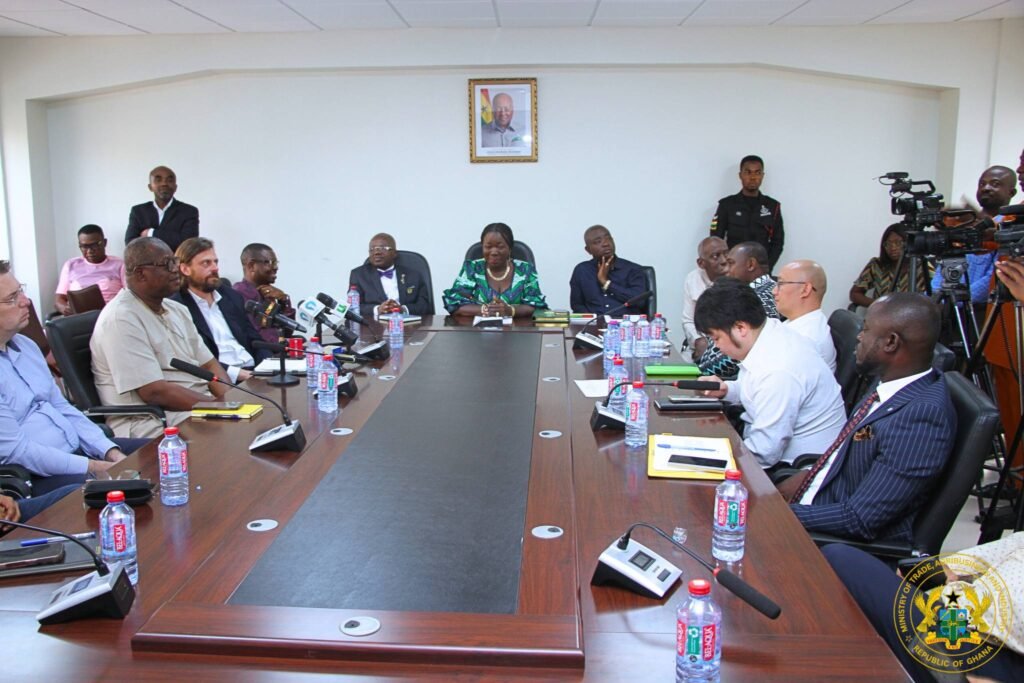
The intervention follows a weekend of social media volatility where speculative notices claimed a significant price hike would take effect across the country.
Hon. Ofosu-Adjare was quick to point out and emphasize that for the first time in recent years, the market is seeing genuine competition and currency stability drive costs lower rather than political directives alone.
According to the Minister, the Ghana Standards Authority (GSA) has been mandated to ensure that cement sold on the market meets declared specifications. She reassured the public that products labeled as 32.5 or 42.5 grades will conform strictly to those standards, preventing a situation where lower-quality material is sold at premium prices.
She further noted that while factors such as exchange rates, energy costs, and electricity tariffs naturally influence production costs, the manufacturers have provided firm assurances regarding affordability.
“We will continue to engage industry players to safeguard price stability, quality assurance, and consumer protection within the cement sector”
Hon. Elizabeth Ofosu-Adjare, Minister for Trade, Agribusiness and Industry

Industry Support and Self-Regulation
For the manufacturers, the meeting served as a platform to voice operational concerns while commending the government’s “bold leadership.”
Bishop Dr. George Dawson-Ahmoah, CEO of COCMAG, praised the cordial relationship that has existed between the Ministry and the manufacturers. He reaffirmed that the industry is committed to “self-regulation” to maintain sanity in the market and ensure that all cement produced in the country meets international standards.
“The Chamber has consistently supported competition in the cement market but remains firmly opposed to unfair trade practices.
“Our discussions with the Ministry have focused on ensuring a level playing field for all manufacturers, adherence to existing laws, and strict compliance with quality standards. We are committed to self-regulation to ensure that cement produced in the country meets required standards”
Bishop Dr. George Dawson-Ahmoah, CEO of COCMAG
Dr. Dawson-Ahmoah emphasized that the current collaboration is essential for ensuring a level playing field for all manufacturers, regardless of their size or origin.

It was also revealed that the Ministry plans to launch a nationwide public education campaign in the coming weeks. This initiative, developed in partnership with COCMAG, aims to empower contractors and homeowners with the knowledge of how cement pricing is determined.
By making ex-factory price declarations public, the Ministry intends to eliminate the “speculative” pricing often practiced by middlemen and retailers during periods of perceived economic shifts.
Hon. Ofosu-Adjare believes that by enhancing transparency, the government can protect the construction industry from artificial price shocks. The GSA will continue its role as the primary watchdog, ensuring that “fair prices,” are matched by “high quality,” to protect the integrity of Ghana’s infrastructure.