
Ghana’s petroleum downstream sector has come under intense public scrutiny following Star Oil’s decision to suspend its membership of the Chamber of Oil Marketing Companies (COMAC), a move that has reignited debate over fuel pricing, competition, and the true meaning of deregulation.
Energy law expert Lom Nuku Ahlijah says the development has transformed what could have remained a technical regulatory disagreement into a broader national conversation.
“Ghana’s petroleum downstream sector has rarely attracted as much public attention as it has in recent weeks,” he observed, noting that the Star Oil decision has forced policymakers and industry players to confront uncomfortable questions about market governance and consumer welfare.
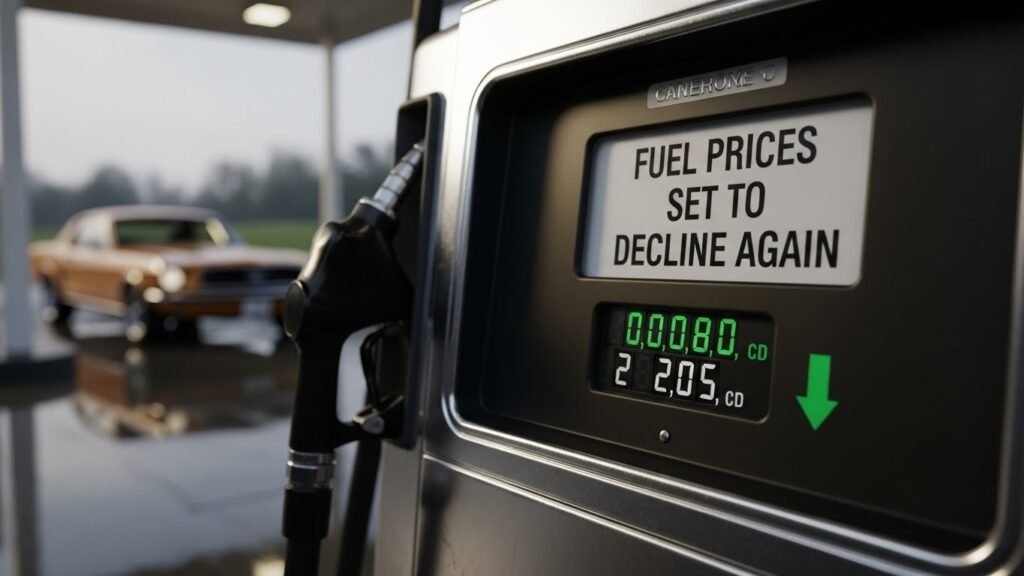
At the heart of the controversy, he said, lies a single but powerful policy instrument: the fuel price floor.
According to Mr Ahlijah, the dispute goes beyond tensions between one oil marketing company and an industry association.
“This is not merely a disagreement between an oil marketing company and an industry body,” he said, describing it instead as a deeper policy challenge about how Ghana manages liberalised markets in politically sensitive sectors.
He warned that policies introduced as safeguards can sometimes reintroduce distortions deregulation was designed to eliminate, particularly when market interventions become semi-permanent.
Ghana formally deregulated petroleum pump prices in 2015, ending years of administered pricing and subsidy arrears that strained the national budget and disrupted fuel supply.
Mr Ahlijah explained that the logic was simple: allow prices to respond to international market conditions, exchange rate movements, taxes, and distribution costs, while competition disciplines profit margins. For nearly a decade, he noted, that framework largely worked as intended.
Why the Price Floor Was Introduced
However, concerns gradually emerged within the industry that aggressive price undercutting by some players, especially during periods of foreign exchange volatility, was leading to below-cost pricing.
Mr Ahlijah said this practice threatened smaller or less-capitalised operators and raised fears about long-term supply stability.
In response, the National Petroleum Authority (NPA), following consultations with stakeholders, introduced amended pricing guidelines in 2024. These guidelines empowered the regulator to publish minimum pump price floors within each pricing window.
“The NPA’s justification focussed on a narrow and technical foundation,” he explained, adding that the floor was designed to reflect statutory taxes, levies, and fixed distribution costs, while still allowing marketers to compete on margins above that baseline. “In theory, competition would remain alive just not destructive,” he added.
Yet, he cautioned, the current controversy suggests that the gap between theory and reality may be widening.
Mr Ahlijah described Star Oil’s withdrawal from COMAC as an expression of “structural discomfort” rather than a dramatic break. According to him, the company’s core concern is that the price floor interferes with downward price transmission.
“When global prices soften or the cedi strengthens, pump prices do not adjust as quickly or as visibly as consumers expect.”
Energy law expert Lom Nuku Ahlijah
In such situations, the floor can act as a price anchor, dampening the benefits of favourable market movements.
From a competition perspective, he said this raises a critical question: “Can a mechanism designed to prevent under-pricing end up protecting prices themselves?”
COMAC’s Defence and Governance Concerns

COMAC has defended the price floor as a stabilising tool, arguing that it protects the market from abuse and predatory pricing.
Mr Ahlijah acknowledged that this defence has merit, noting that no credible jurisdiction tolerates pricing strategies aimed at eliminating competitors.
However, he stressed that perception plays a powerful role in regulatory legitimacy.
“When the largest contributor to an industry body feels its views are not fairly represented, governance credibility becomes part of the policy problem.”
Energy law expert Lom Nuku Ahlijah
In his view, the controversy has exposed the need for industry bodies to demonstrate that they represent diverse commercial models, rather than only consensus positions.
Public opposition to the price floor, Mr Ahlijah noted, often evolves into calls for a price ceiling to ensure consumers immediately benefit from favourable exchange rate or international price movements. Politically, such calls resonate in an inflation-sensitive economy.
Technically, however, he warned that price ceilings are fraught with risk. A ceiling that is not cost-reflective, he said, can recreate old problems such as fuel shortages, selective station closures, quality compromises, smuggling incentives, and hidden subsidies.
“The choice, therefore, is not between a floor and a ceiling.
“It is between smart regulation and blunt intervention.”
Energy law expert Lom Nuku Ahlijah
Call for Evidence and Transparency

Mr Ahlijah identified several issues that now demand urgent attention, including the lack of publicly available data to justify the continued use of the price floor.
If destructive undercutting was the original problem, he said regulators should publish evidence showing changes in pricing behaviour, margins, supply reliability, and competition metrics.
He also warned that deregulation cannot mean “market prices when convenient, intervention when uncomfortable,” cautioning that a permanent price floor risks blurring that line.
Consumer trust, he added, depends less on controls and more on transparency. He proposed greater disclosure of price build-ups, including international product prices, exchange rate assumptions, taxes, and distribution costs.
“Star Oil’s exit from COMAC is not the crisis. It is the warning light,” Mr Ahlijah said, arguing that Ghana must now confront whether its petroleum pricing framework is quietly drifting from deregulation toward managed prices under another name.
Stability, competition, and consumer welfare, he stressed, are not mutually exclusive. “Good regulation does not choose one at the expense of the others,” he said, calling for transparent, lawful, and evidence-based engagement by the NPA with all stakeholders.
As debate intensifies, the fuel price floor has become more than a pricing tool, it is now a test of Ghana’s commitment to smart regulation in a liberalised energy market.
READ ALSO: Mahama’s Accra Reset Gains Expanding Global Leadership Support