
The Chamber of Petroleum Consumers (COPEC) has cautioned that the introduction of price floors in Ghana’s deregulated petroleum market, without corresponding price ceilings, risks distorting competition and undermining the very principles of deregulation.
The consumer advocacy group argues that such regulatory intervention weakens market efficiency and ultimately does little to protect consumers.
Executive Secretary of COPEC, Duncan Amoah, has been vocal in his criticism of the approach adopted in the National Petroleum Authority’s (NPA) 2024 petroleum products pricing guidelines. He stressed that selective intervention in a deregulated system contradicts market fundamentals.
“If you talk of a deregulated market, you would expect the market to evolve.
“Any attempt to intervene by way of setting floors without considering the ceiling, to me, is anarchist.”
Duncan Amoah, Executive Secretary of COPEC

He explained that in a truly deregulated environment, prices should be shaped by competition among players, operational efficiencies, and consumer demand rather than fixed benchmarks imposed by regulators.
According to COPEC, price floors restrict the flexibility of oil marketing companies (OMCs) to adjust prices in response to changes in global crude oil prices, exchange rate movements, and operational costs. Instead of fostering healthy competition, the policy could entrench inefficiencies and reduce incentives for price reductions.


Impact on Competition and Pricing
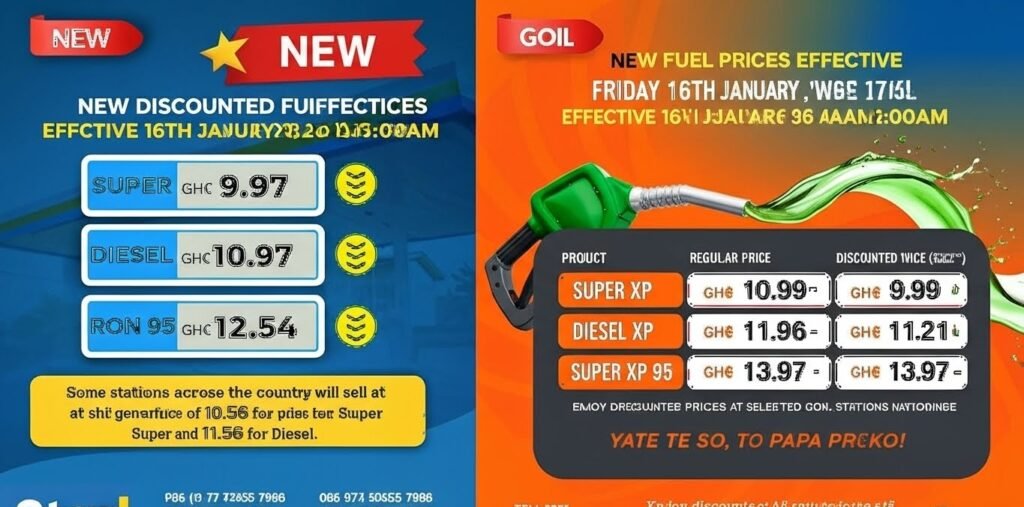
COPEC believes the price floor policy limits competition by preventing petroleum service providers from offering lower prices, even when their cost structures allow it. Mr. Amoah argued that this undermines the ability of efficient operators to pass on savings to consumers.
“You simply allow others to sell at any rate they want,” he noted, pointing to past pricing trends among major industry players. Amoah recalled instances where market checks showed disparities between benchmark prices and actual pump prices.
“There were windows that, and per our checks with average BDC prices, taxes, margins, sometimes their prices were overshot by GHS 0.50 to GHS 1.”
Duncan Amoah, Executive Secretary of COPEC
According to COPEC, these discrepancies highlight the need for balance in regulatory oversight.
Amoah insists that if the regulator believes a price floor is necessary, then a ceiling should also be defined to create a controlled pricing band. “So if you need to define a floor, define a ceiling also so that they can play within,” he added.
Call to Scrap Outdated Guidelines

Beyond criticism, COPEC called for decisive action from the NPA. The group has urged the regulator to remove the price floors outlined in the 2024 pricing guidelines, describing the policy as outdated and counterproductive in a deregulated downstream petroleum market.
The guidelines currently prevent petroleum service providers from selling fuel below a regulator-set minimum price. COPEC argues that this approach no longer aligns with the realities of the market, where deregulation was intended to empower competition and innovation.
Mr Amoah has maintained that the price floor does not offer any tangible benefit to consumers. In an earlier interview with Citi Business News, he argued that the policy only serves to keep prices artificially high, even when market conditions could allow for reductions.
He suggested that scrapping the price floor would give OMCs the flexibility to lower prices further when global oil prices decline or when operational efficiencies improve. Such competition, COPEC believes, would directly benefit consumers through more affordable fuel prices.
Balancing Regulation and Market Freedom
While acknowledging the role of regulation in ensuring safety and fair play, COPEC insists that pricing controls must be consistent with deregulation principles.
The group warns that partial controls, such as price floors without ceilings, risk creating uncertainty and discouraging investment in the downstream petroleum sector.
As discussions around fuel pricing intensify, COPEC’s position adds to the growing debate on how best to balance consumer protection with market freedom.
The chamber maintains that a transparent, competitive pricing environment remains the most effective way to deliver value to consumers while sustaining industry growth.
With fuel prices continuing to influence the cost of living and economic activity, stakeholders will be watching closely to see whether the NPA revisits its pricing framework in response to these concerns.
READ ALSO: Ghana Future-Proofs Automotive Industry With Phase II Policy