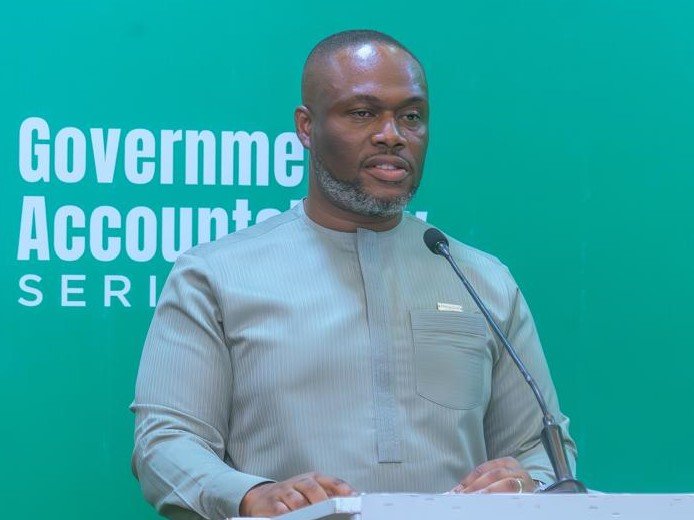
The government has reaffirmed its commitment to addressing Ghana’s persistent flooding challenges, with the Minister for Works, Housing and Water Resources, Hon. Kenneth Gilbert Adjei, outlining a series of ongoing and planned drainage and flood control interventions across the country.
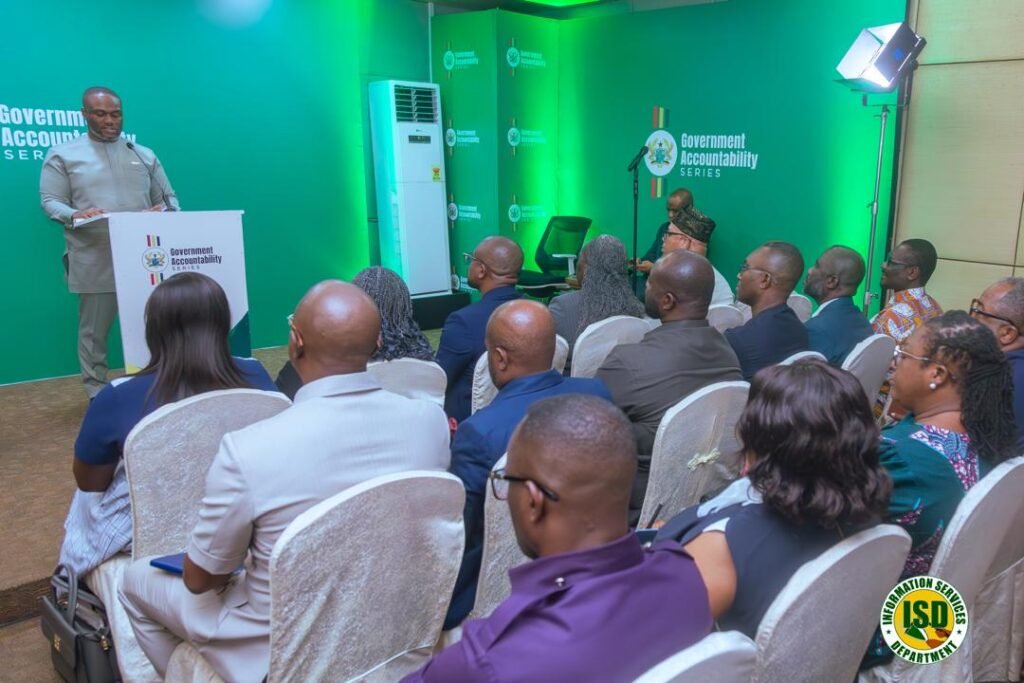
Speaking at the Government Accountability Series at the Jubilee House, the Minister said flooding remains one of the most critical infrastructural threats to lives, property and economic activity, particularly in rapidly urbanising centres.
According to Hon. Adjei, flood management has been elevated as a top national priority since the government assumed office. To strengthen coordination and oversight, a Presidential Task Force on Flooding has been established and is led by the Deputy Chief of Staff for Operations at the Office of the President, Stan Dogbe.
“This high-level team, as part of its efforts, has carried out comprehensive assessments on major drainage infrastructure within key hydrological basins.
“These assessments have assisted in prioritising critical flood-prone areas for interventions, as well as guided the design and execution of long-term flood mitigation strategies”.
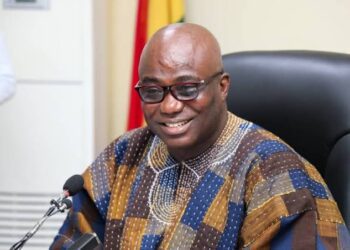
Minister for Works, Housing and Water Resources, Hon. Kenneth Gilbert Adjei
Under the National Flood Control Programme, implemented over the 2020, 2023 and 2024 periods, the Ministry has carried out extensive drainage works aimed at reducing flood vulnerability.
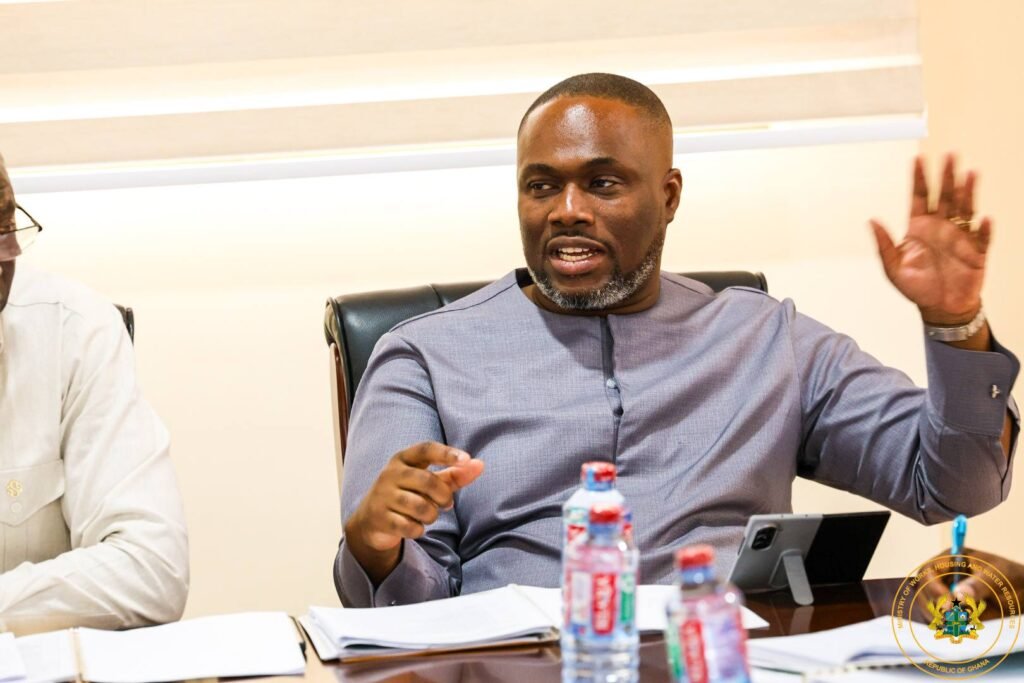
These interventions, according to the Minister for Works, Housing and Water Resources, Hon. Kenneth Gilbert Adjei, include the construction of new storm drains, the rehabilitation of deteriorated drainage channels, and the desilting of heavily silted waterways.
Construction of 1.7km of Storm Drains
As of December 2025, the Minister disclosed that approximately 1.76 kilometres of storm drains had been constructed nationwide under the programme, contributing to improved drainage capacity in several high risk areas.
In Greater Accra, where flooding has historically caused severe damage during the rainy seasons, Hon. Adjei highlighted progress under the Greater Accra Resilient and Integrated Development Project, widely known as GARID.
Performance-based dredging of the Odo Channel has continued in sections around Caprice and Circle, two areas frequently affected by flooding. A post dredging survey, he said, confirmed that over 90,000 cubic metres of sediment had been removed and transported to designated handling sites, significantly improving water flow through the channel.
Beyond dredging, the GARID project has also supported extensive upgrading works in several vulnerable communities. Construction of storm drains, local drains, major culverts and associated roadworks are currently at varying stages of completion in Akweteyman and Nima.
The Minister indicated that these projects are between 58 and 65 percent complete, while additional drainage improvement works have commenced in Achimota, Paloma and Kaneshie.
Recognising that structural interventions alone are not sufficient, the Ministry has also invested in non structural flood management measures. Hon. Adjei revealed that specialised equipment has been acquired and installed at key water bodies across Accra to support flood early warning systems.
The development of these systems, he said, is at an advanced stage, with services already installed and configured for the Ghana Hydrological Authority, the National Disaster Management Organisation, and the Ghana Meteorological Authority. These systems are expected to enhance preparedness, improve response time, and reduce the human and economic toll of flooding.
Attention on Greater-Kumasi Metropolis
Attention is also being directed to the Greater-Kumasi metropolitan area, where rapid urban expansion has heightened flood risks. Drawing lessons from the GARID experience, the government has secured grant funding to conduct strategic flood-risk assessments across three major drainage basins in Kumasi, namely Sisa, Wiwi, and Aboabu.
“The consultants engaged to assess community-specific vulnerabilities in low-income areas such as Aboabu and Asawase, as well as identify flood-prone zones within the broader Kumasi urban area, have submitted draft reports to the Ministry, recommending a range of flood mitigation measures.”
Minister for Works, Housing and Water Resources, Hon. Kenneth Gilbert Adjei
In the short term, proposals include dredging and drainage cleansing, stricter enforcement of building regulations, flood-sensitive land use planning, and the establishment of a Kumasi flood early warning system.
For the medium to long term, the reports advocate the removal of key bottlenecks in major drains, the adoption of a room for the river approach to restore natural floodplains and the introduction of a coordinated and sustainable waste management system for the metropolis.
Hon. Adjei acknowledged that implementing these recommendations would require significant resources, but assured that the Ministry is actively mobilising support to commence the necessary works.

He stressed that government remains resolute in its determination to bring lasting relief to flood affected communities, particularly in urban centres where flooding continues to undermine livelihoods and public safety.
Reflecting on the broader mandate of his Ministry, the Minister noted that recent achievements in drainage and flood control form part of a wider national reset across the works, housing and water resources sectors.
He said these efforts underscore the government’s commitment to transforming lives, strengthening communities and laying a resilient foundation for Ghana’s sustainable development.
READ ALSO: Rubio Calls For NATO To Be Reimagined