The Mahama’s government has moved to accelerate long-delayed resettlement efforts for communities displaced by the Akosombo Dam spillage, with the Minister for Works, Housing and Water Resources, Hon. Kenneth Gilbert Adjei, outlining concrete progress in reconstructing homes for affected families.
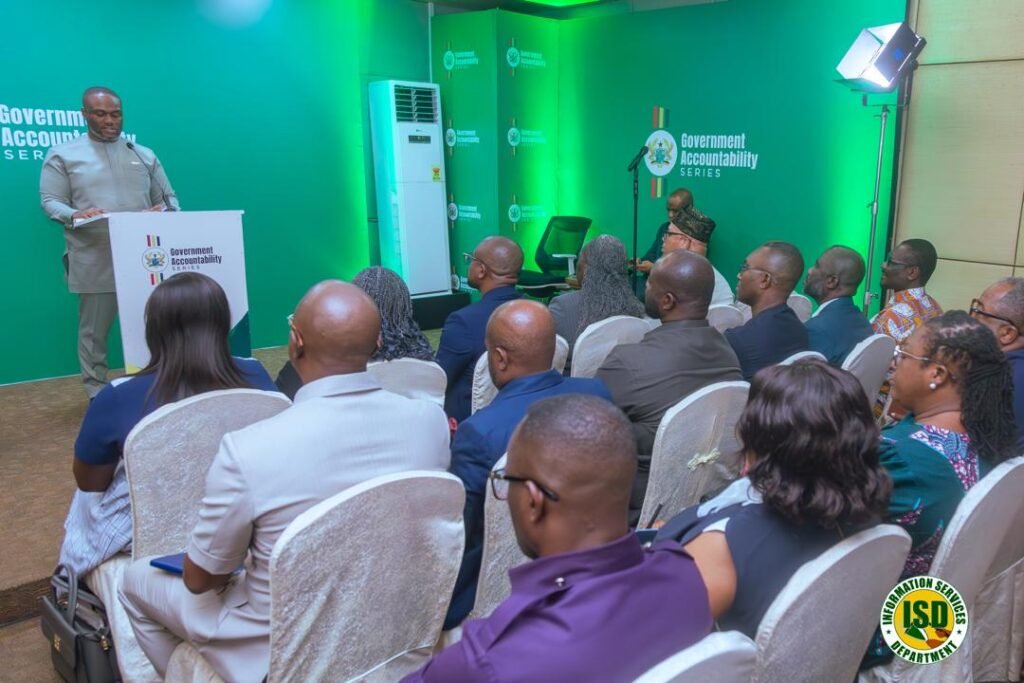
Speaking at the Government Accountability Series at the Jubilee House, the Minister said the resettlement programme forms a critical part of the government’s broader commitment to restoring dignity, stability and livelihoods to flood victims.
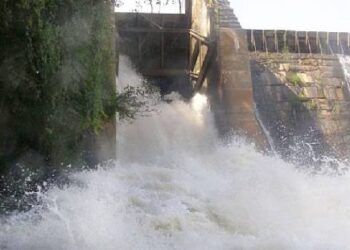
The Akosombo Dam spillage of September 2023 was a necessary intervention by the Volta River Authority to protect the structural integrity of the dam after water levels rose to a critical height of 277.26 feet.
However, the controlled release of excess water triggered extensive flooding downstream, affecting multiple districts and displacing tens of thousands of residents. The scale of the devastation required a coordinated national response that went beyond emergency relief to include permanent housing solutions.
According to the Minister, his Ministry worked closely with nineteen affected Metropolitan, Municipal and District Assemblies to conduct a comprehensive validation exercise to determine the true housing needs of flood victims.
That process, he said, resulted in the confirmation of 2,225 housing units to be reconstructed across four regions for families whose homes were destroyed or rendered uninhabitable by the floods. He described the validation exercise as necessary to ensure transparency, fairness and accuracy in the allocation of new housing units.
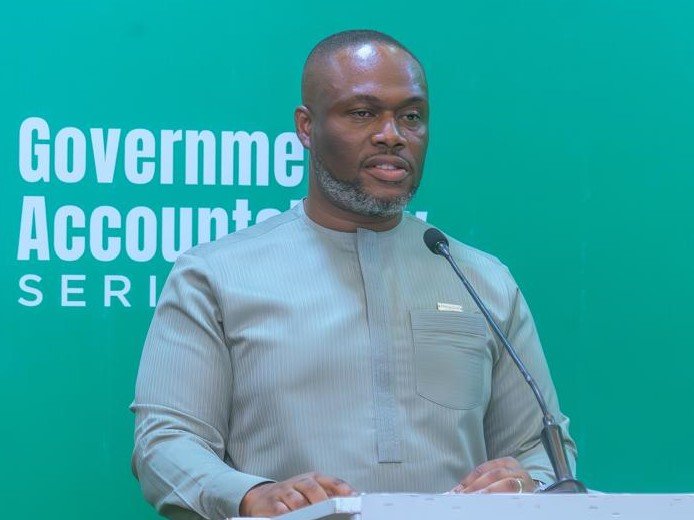
“Phase one of the resettlement efforts consists of one thousand and ten housing units. Within the three critical impact zones, namely North Tongu, Central Tongu, and South Tongu districts in the Volta region”.
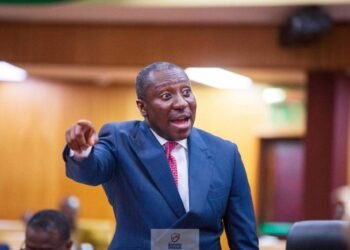
Minister for Works, Housing and Water Resources, Hon. Kenneth Gilbert Adjei
Hon. Adjei said these districts bore the brunt of the flooding, with several communities submerged for days, forcing residents to seek refuge in schools, churches and temporary shelters.
Construction Works Underway
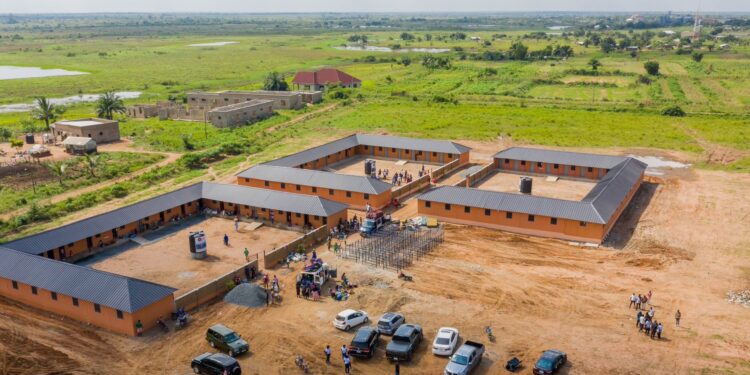
Construction activities are currently underway at eight different sites across the three districts. The Minister explained that site mobilisation has been completed, contractors are actively working on the ground and housing units are at various stages of completion.
He added that the designs being implemented prioritise durability, safety and basic amenities to ensure that beneficiaries receive decent and resilient homes capable of withstanding future climate related risks.
The resettlement effort comes against the backdrop of significant humanitarian and socio-economic losses caused by the September 2023 floods. Official data indicate that approximately 35,857 people were displaced, including more than 17,000 children.
Entire communities were cut off, livelihoods were destroyed and social services were severely disrupted. In some areas, particularly in North, Central and South Tongu, floodwaters remained for weeks, compounding the suffering of affected residents.

Education was among the sectors hardest hit. More than seventy schools were directly affected by the flooding, leaving close to 20,000 children temporarily unable to attend classes.
In several cases, school buildings were either submerged or converted into emergency shelters for displaced families. Hon. Adjei acknowledged that the disruption to education had long term implications for children in the affected communities and underscored the importance of stable housing in restoring normalcy.
The floods also inflicted heavy economic losses, especially in agriculture and agro based industries. Large tracts of farmland were destroyed, wiping out crops and threatening food security.
Major commercial entities operating along the lower Volta Basin reported substantial losses, running into millions of euros, due to damaged plantations and infrastructure. For smallholder farmers and fishing communities, the impact was even more devastating, as many lost their only source of income.
Land Ownership Dispute Slowing Resettlement
Despite these challenges, resettlement efforts have faced setbacks over the past two years. Hon. Adjei acknowledged that land ownership disputes and legal challenges in some communities slowed progress and prolonged the stay of displaced families in temporary shelters.
He said the government had since intensified engagement with traditional authorities, landowners and district assemblies to resolve these issues and clear the way for construction. The Minister stressed that the current phase of housing delivery signals a renewed determination by the government to move from planning to tangible results.
He said the resettlement programme is being implemented as part of a broader reset agenda across the works, housing and water resources sectors, aimed at strengthening community resilience and improving disaster response infrastructure nationwide.
Hon. Adjei concluded by reaffirming the government’s commitment to completing the remaining phases of the resettlement programme. He said lessons learned from the Akosombo Dam spillage would inform future flood management and resettlement policies, ensuring that affected communities are not left behind in times of national crisis.
According to him, rebuilding homes is not only about replacing physical structures but also about restoring hope, security, and confidence in the state’s ability to protect and support its citizens.
READ ALSO: Ghana’s LPG Target Faces Growing Headwinds